Corded vs. Bluetooth OBD2 Scanner: Which Is Better?
Quick Answer
A corded OBD2 scanner is generally better for reliable, uninterrupted data streaming, advanced bi-directional testing, and heavy-duty diagnostic work without battery or connection dropouts. However, a Bluetooth OBD2 scanner is better for everyday convenience, wireless portability, real-time dashboard monitoring on your smartphone, and quick fault-code clearing without cables getting in your way.
Understanding the Core Differences Between Corded and Bluetooth OBD2 Scanners
On-Board Diagnostics (OBD2) scanners are essential tools for anyone looking to diagnose check engine lights, monitor live sensor data, or clear diagnostic trouble codes (DTCs). When choosing between a corded handheld device and a wireless Bluetooth adapter, the decision ultimately comes down to how you intend to use the tool and what level of diagnostic depth you require.
Corded OBD2 scanners feature a physical cable that connects directly from the scan tool unit to the vehicle’s diagnostic link connector (DLC) usually located underneath the dashboard. These devices range from basic code readers to advanced professional scan tools with built-in screens and operating systems.
Bluetooth OBD2 scanners, on the other hand, consist of a compact dongle that plugs directly into the OBD2 port. Instead of having an integrated screen, they transmit data wirelessly via Bluetooth to a smartphone, tablet, or laptop running a compatible diagnostic application such as Torque, OBD Fusion, or manufacturer-specific software.
When a Corded OBD2 Scanner is the Better Choice
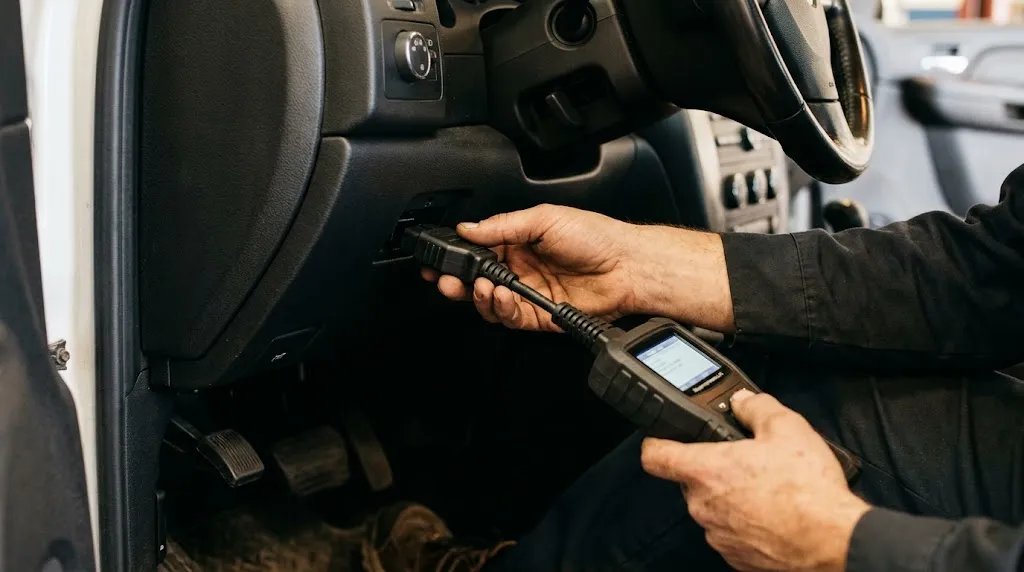
Corded scanners remain the gold standard for serious troubleshooting, professional repair work, and deep vehicle programming. Their physical connection provides several distinct advantages.
Uninterrupted Data Transmission and Reliability
Wireless connections can occasionally suffer from signal interference, dropped pairing, or lag when streaming hundreds of live sensor parameters simultaneously. A corded scanner ensures a direct, stable hardware connection from start to finish, which is critical when flashing modules or performing lengthy diagnostic routines.
Independence from External Devices
Traditional corded units are standalone devices with their own dedicated power sources or power draws through the DLC port. You do not need to worry about your smartphone battery dying, incoming phone calls interrupting your session, or dealing with app compatibility updates and operating system mismatches.
Advanced Bi-Directional Controls and Coding
If you need to perform advanced diagnostic functions—such as ABS bleeding, injector coding, electronic parking brake retraction, or active component actuation—corded mid-range and professional scanners usually offer robust software support built specifically for those heavy-duty tasks.
When a Bluetooth OBD2 Scanner is the Better Choice
Wireless Bluetooth adapters have surged in popularity because they transform your mobile device into a powerful, portable diagnostic suite. They excel in specific scenarios where convenience and continuous monitoring are priorities.
Real-Time Dashboard Monitoring and Virtual Gauges
One of the biggest strengths of Bluetooth adapters is their ability to act as digital auxiliary gauges. By pairing the dongle with a smartphone app, you can monitor boost pressure, transmission temperature, coolant temp, and fuel trim in real time while driving or dyno testing.
Portability and Ease of Storage
Bluetooth dongles are small enough to fit in your glove box, center console, or even your pocket. You can leave certain low-profile adapters plugged into the port permanently without striking your knees against a dangling wire while getting in and out of the driver’s seat.
Cost-Effective Access to Advanced Software
High-end professional corded scanners can cost hundreds or thousands of dollars. A quality Bluetooth dongle paired with an affordable or subscription-based app can often unlock manufacturer-specific diagnostics, coding features, and custom logging for a fraction of the hardware cost.
Direct Comparison: Corded vs. Bluetooth OBD2 Scanners
To help clarify which option aligns best with your diagnostic needs, the following breakdown compares their core operational differences across key performance areas.
| Feature | Corded OBD2 Scanner | Bluetooth OBD2 Scanner |
|---|---|---|
| Connection Stability | High (Hardwired cable, zero interference) | Moderate (Subject to wireless dropouts/pairing quirks) |
| Portability | Bulkier; requires carrying a dedicated unit | Extremely compact; fits in a pocket or glove box |
| Display & Interface | Built-in physical screen and keypad or touchscreen | Uses your smartphone, tablet, or computer screen |
| Power Source | Vehicle DLC port, internal battery, or USB | Vehicle DLC port (plus mobile device battery) |
| Best Suited For | Deep diagnostics, coding, and garage repairs | Quick code checks and live gauge monitoring |
Reviewing these operational tradeoffs ensures you select the format that matches your technical skill level and repair environment.
Key Factors to Consider Before Buying
Before purchasing either type of scanner, evaluate your vehicle fleet, mechanical expertise, and specific diagnostic goals to avoid buying a tool that falls short of your expectations.
Key Insight
Hardware is only half the equation; the software package or app bundled with the scanner determines whether you can read manufacturer-specific enhanced codes (like ABS, SRS, and transmission faults) or only generic powertrain emissions codes.
Consider whether you need advanced bi-directional control to command components on your specific make and model. Many budget Bluetooth dongles read generic engine codes perfectly, but require paid app upgrades to access manufacturer-specific modules, whereas mid-range corded scanners often bundle comprehensive make-specific software out of the box.
Common Mistakes When Choosing an OBD2 Scanner
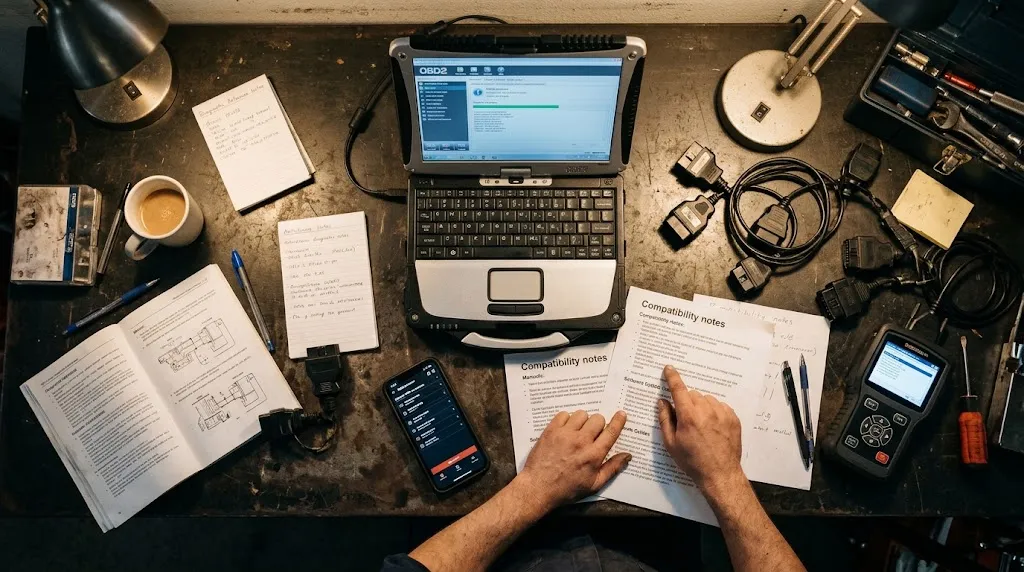
Shoppers frequently run into compatibility or usability issues by overlooking critical technical limitations.
- Assuming all Bluetooth adapters work with every app: Certain high-end apps require specific proprietary hardware adapters to unlock full coding and programming capabilities.
- Ignoring vehicle protocol support: Ensure the scanner supports newer communication protocols like CAN FD and DoIP if you are diagnosing modern vehicles built within the last few years.
- Overlooking software update costs: Some professional corded units require annual subscription renewals for software updates, while many Bluetooth apps rely on one-time purchase models or tiered subscriptions.
Related Product
Automotive OBD2 Diagnostic Scanner Tool Category
Explore a wide selection of corded and wireless diagnostic scan tools to match your vehicle maintenance needs.
As an Amazon Associate, we earn from qualifying purchases.
Frequently Asked Questions
Can a Bluetooth OBD2 scanner damage my car’s computer?
No, certified Bluetooth OBD2 adapters only listen to and request data from the vehicle bus following standardized communication protocols. They cannot rewrite or corrupt your Engine Control Unit (ECU) unless you are actively running a specialized flashing application with proper security clearance.
Do Bluetooth scanners drain the car battery if left plugged in?
Yes, many low-cost Bluetooth adapters stay powered on even when the ignition is turned off, which can slowly drain your battery over several days of non-use. It is best to unplug wireless dongles when you finish driving unless the unit features an automatic sleep mode.
Can I use a corded scanner on older pre-1996 vehicles?
Standard OBD2 scanners only work on 1996 and newer vehicles in the United States (and 2001+ for petrol EU cars) because the 16-pin OBD2 port was not federally mandated before then. Diagnosing older OBD1 vehicles requires specific adapters or manufacturer-specific diagnostic tools.
Do I need an internet connection to use a Bluetooth OBD2 scanner?
You do not need an active internet connection to read codes or view live sensor data, as the adapter communicates directly with your phone locally via Bluetooth. However, an internet connection is required when downloading diagnostic apps, updating vehicle software databases, or looking up error code definitions online.
Which option is better for beginners?
Bluetooth scanners are often more intuitive for beginners because smartphone apps present diagnostic data, code definitions, and repair tips in a clean, graphical user interface. Basic corded code readers are also very user-friendly if you prefer a standalone plug-and-play tool without dealing with phone pairing.
Can wireless OBD2 scanners clear check engine lights?
Yes, both corded and wireless Bluetooth scanners can clear diagnostic trouble codes and reset the check engine light. However, if the underlying mechanical or electrical fault is not repaired, the warning light will eventually return once the vehicle runs its self-diagnostics cycles.
Conclusion
Choosing between a corded and a Bluetooth OBD2 scanner depends entirely on your diagnostic priorities. If you need rock-solid connection stability, advanced bi-directional control, and a dedicated standalone tool for serious garage repairs, a corded scanner is the superior choice. If you value ultra-portable convenience, real-time dashboard monitoring on your smartphone, and quick code clearing on the go, a wireless Bluetooth adapter delivers unmatched versatility. Matching the right tool to your mechanical routine ensures you can diagnose and resolve vehicle issues efficiently.

I’m Alex Rahman, a car enthusiast and automotive writer focused on practical solutions, car tools, and real-world driving advice. I share simple and honest content to help everyday drivers make better decisions.
