Can Clearing Codes Affect an Emissions Test? Yes, Here’s How
Quick Answer
Yes. Clearing codes can cause an emissions test failure even when the check engine light is off, because clearing also resets your readiness monitors to “not ready.” Until enough of those self-tests run again, the test station cannot confirm your emissions systems are working, so it may reject the vehicle.
That result surprises many drivers. The car may feel normal, the light may be off, and no new code may be stored. The problem is not what the test sees in that moment. It is what the test cannot yet verify.
Why Clearing Codes Changes the Test Result
When you clear codes with a scan tool, the vehicle does more than turn off the light. It erases the stored fault codes, the related freeze frame snapshot, and the readiness status for the emissions monitors.
Readiness monitors are self-tests the computer runs on systems such as the catalytic converter, oxygen sensors, evaporative system, and exhaust gas recirculation system. After a clear, those tests must run again under the right driving conditions before the computer can report them as ready.
This is why clearing codes and turning off the check engine light are not the same as fixing the fault. The light is a warning. The monitors are the proof that the system has been checked again since the warning.
Disconnecting the battery can have a similar effect, because it also interrupts the computer memory that holds readiness status. A repair, a battery change, or a scan-tool clear can therefore leave a vehicle temporarily untestable, even when nothing new is wrong.
What an Emissions Test Actually Checks
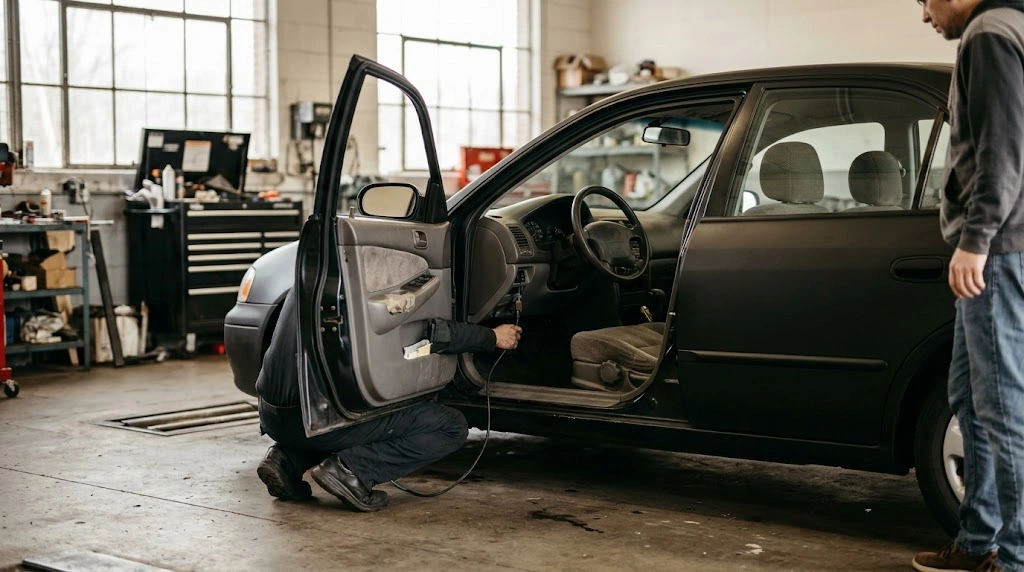
For most 1996 and newer light-duty vehicles in the United States, an OBD emissions test is not mainly a tailpipe measurement. The test equipment connects to the diagnostic port and checks three things: whether the malfunction indicator lamp is commanded on, whether emissions-related codes are stored, and whether enough readiness monitors have completed.
A lit check engine light is normally an automatic failure. A stored emissions code can also fail the vehicle, even if the exhaust seems clean. And too many “not ready” monitors can lead to rejection or failure, even with the light off and no stored code.
That last point is the key distinction. “Not ready” does not mean “failed.” It means the test has not run yet. The inspection program cannot pass a system it has not been able to verify, so it treats incomplete testing as an incomplete result.
The U.S. Environmental Protection Agency’s inspection and maintenance resources describe how state programs use OBD checks to identify vehicles that need repair. Your state program sets the exact pass, fail, and rejection rules, so local requirements always matter.
How Many Monitors Can Stay Not Ready?
Many programs follow EPA guidance, but they are not all identical. Some states are stricter, some allow a specific monitor such as EVAP to remain incomplete, and some have separate rules for diesels or older vehicles. Check your state inspection rules before you assume a borderline result will pass.
| Model years | Common EPA guidance |
|---|---|
| 1996 to 2000 | Up to two non-continuous monitors may be not ready |
| 2001 and newer | Up to one non-continuous monitor may be not ready |
Continuous monitors, which cover misfire, fuel system, and comprehensive components, run often while the engine operates and should normally be ready. The allowance above applies to non-continuous monitors, which need specific driving conditions to run.
“Not supported” is different again. If your vehicle does not have a system, its monitor is not counted as incomplete. Only supported monitors that have not yet run count toward the limit.
Warning
Clearing codes on the way to the test station does not make a faulty vehicle pass. It usually replaces a code failure with a readiness failure, and it also removes diagnostic evidence a technician could have used.
Clearing After a Repair Is Not the Same Problem
Clearing codes is a normal step after a genuine repair. The code must be cleared so the computer can start a fresh check and confirm the repair worked. The mistake is timing, not the clear itself.
If you clear after a repair and then drive until the monitors run, the vehicle can pass because the systems have actually been tested again. If you clear and test immediately, the vehicle may fail for readiness even though the repair was correct.
Clearing to hide a fault is a different situation with the same short-term reset. The monitors still need to run, and when they do, they are likely to detect the fault again and set the code and light once more. That is why a clear without a repair rarely solves an emissions problem for long.
If a code returns after clearing, that return is useful information. Our guide to whether a code comes back after clearing explains what a repeat code usually means and why it points back to the underlying fault rather than to the scan tool.
How to Check Readiness Before You Go

Do not rely on the light alone. Many scan tools have an inspection and maintenance readiness screen that lists each supported monitor as ready, not ready, or not supported. Check that screen before booking or driving to the test.
Use this short pre-test check:
- Confirm the check engine light is off and not commanded on during a scan.
- Confirm no stored emissions codes are present.
- Count the supported monitors still showing not ready.
- Compare that count with your state allowance for your model year.
- Note which monitor is incomplete, especially EVAP, catalyst, or oxygen sensor.
If more monitors are incomplete than your program allows, driving to the station early will not help. You need more of the right driving first, not simply more miles on any road.
For a deeper look at the reset itself, see how readiness monitors are reset and why monitors stay not ready. Those guides cover the mechanism and common causes, while this article focuses on the test outcome.
How Long It Takes for Monitors to Become Ready Again
There is no single mileage that guarantees readiness. Some monitors complete during normal mixed driving in a day or two. Others, especially EVAP, may need a cold start, a specific fuel level, steady cruising, and enough time parked before they run.
A drive cycle is a sequence of conditions designed to let the monitors run, not just a long highway trip. A typical pattern includes a cold start, a short idle period, steady-speed driving, and deceleration, but the exact sequence varies by manufacturer and model. No universal drive cycle works for every vehicle.
Common reasons monitors stay incomplete include short trips only, a fuel tank that is nearly full or nearly empty for the EVAP test, extreme temperatures, and a fault that prevents a monitor from completing. If one monitor stays incomplete for many days of varied driving, that pattern itself deserves diagnosis rather than more random driving.
Tip
After a repair and a clear, keep the fuel level roughly between one-quarter and three-quarters of a tank, include a cold start and a mix of city and steady highway driving, then recheck readiness before the test.
The Permanent Code Exception
On many 2010 and later vehicles, clearing codes does not erase everything. A permanent diagnostic trouble code is stored in non-volatile memory and cannot be removed by a scan tool or battery disconnect.
The computer itself clears a permanent code only after the related monitor runs and passes. Until then, the inspection equipment can still see that a confirmed emissions fault occurred and has not yet been verified as repaired.
This matters because a permanent code can fail a test even when the ordinary code list looks clean and the light is off. It is designed to stop the exact shortcut of clearing codes just before an inspection. A repair followed by successful monitor completion is the normal way past it.
The clear command behind this process is Mode $04, which erases stored codes and resets readiness. For what that service does and does not erase, see what OBD2 Mode $04 is.
When to Reschedule Instead of Testing

Reschedule when you have recently cleared codes, replaced a battery, or completed a major emissions repair and your readiness check still shows too many incomplete monitors. Testing early risks a rejection that wastes time and, in some programs, counts against your test history.
Also pause before testing if a code has just returned, a pending code is present for an emissions system, or a monitor repeatedly fails to complete. Those signs point to an unresolved fault, not a readiness delay.
A useful rule is simple: fix first, clear once, drive until the readiness check passes your state limit, and only then test. That order protects both the result and the diagnostic evidence.
Related Product
OBD2 Scanner with I/M Readiness Check
A scanner with a readiness screen lets you check ready, not ready, and not supported monitors at home before an emissions test.
As an Amazon Associate, we earn from qualifying purchases.
Frequently Asked Questions
Does clearing codes always cause an emissions test failure?
No. Clearing resets readiness, but failure depends on how many monitors are still not ready at test time and on your state rules. If only the allowed number remains incomplete and no code or permanent code is present, the vehicle may still pass.
How soon after clearing codes can I take an emissions test?
Only after a readiness check shows you are within your state limit. For some vehicles that takes a day of mixed driving, while EVAP and catalyst monitors can take longer. Test timing should follow the readiness result, not a fixed number of miles.
Will driving 50 or 100 miles guarantee readiness?
No. Distance alone does not set monitors. Cold starts, steady speeds, deceleration, fuel level, and temperature can all affect whether a monitor runs, so varied driving and a readiness recheck matter more than a mileage target.
Can I pass with the check engine light off but monitors not ready?
Sometimes, if the incomplete count is within the allowed limit. If too many supported monitors are not ready, the station may reject or fail the vehicle even though the light is off and no stored code is present.
Does disconnecting the battery affect an emissions test like clearing codes?
Yes, in a similar way. Battery disconnect can reset readiness monitors to not ready, so the same advice applies: recheck readiness after driving before testing, rather than assuming the vehicle is ready because the light is off.
What should I do if a permanent code is still stored after a repair?
Drive under normal varied conditions until the related monitor runs and passes, then recheck. A scan tool cannot force a permanent code away. If the monitor will not complete or the code returns, the repair or the monitor conditions still need attention.
Conclusion
Clearing codes affects an emissions test mainly through readiness, not through the light alone. A clear wipes the proof that emissions systems have been tested since the last fault, and a test station cannot pass what it cannot verify. Fix the fault, clear once, check readiness against your state limit, and test only when that check passes. That sequence turns a common readiness failure into a preventable delay.

I’m Alex Rahman, a car enthusiast and automotive writer focused on practical solutions, car tools, and real-world driving advice. I share simple and honest content to help everyday drivers make better decisions.
