Can an OBD2 Scanner Work on Older Cars? Compatibility Guide
Quick Answer
Yes, an OBD2 scanner can work on older cars, but with major limitations depending on the vehicle’s manufacturing year. While the standardized OBD2 port became mandatory in the United States in 1996 for gasoline vehicles (and 2004 for diesel), many vehicles built before that year used proprietary pre-OBD2 or OBD1 diagnostic systems. To scan an older car, you typically need an older vehicle-specific adapter, manufacturer-specific software, or a high-end diagnostic tool that supports legacy protocols.
Understanding the OBD2 Standard and Vehicle Compatibility
The On-Board Diagnostics version 2 (OBD2) protocol revolutionized automotive troubleshooting by creating a universal diagnostic interface across all manufacturers. Enacted by the Environmental Protection Agency (EPA), the mandate required all light-duty gasoline vehicles sold in the United States starting from the 1996 model year to feature a standardized 16-pin diagnostic link connector (DLC) under the dashboard and support common communication protocols.
For vehicles manufactured before 1996, the automotive landscape was fragmented. Manufacturers like General Motors, Ford, Chrysler, Toyota, and Honda utilized proprietary diagnostic systems commonly referred to as OBD1 or pre-OBD legacy systems. Because these systems lacked a universal standard, each brand used different plug shapes, pin configurations, and computer communication languages.
Plugging a standard modern OBD2 scanner directly into a pre-1996 vehicle is physically impossible in many cases because the physical port shape does not match. Even if an adapter allows physical connection, a standard generic OBD2 code reader will generally fail to communicate with the older engine control unit (ECU) because the computer lacks the software protocols required to translate data through the standardized OBD2 format.
How Diagnostic Systems Evolved Across Eras
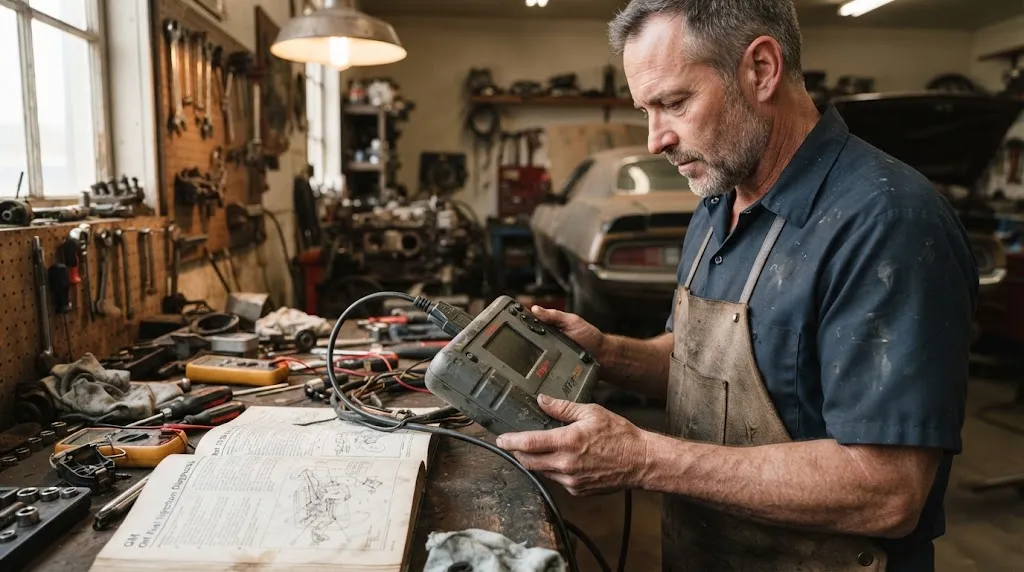
To understand whether a scanner can interface with an older car, it helps to examine how vehicle computer diagnostics developed over decades. Early electronic fuel injection systems introduced in the late 1970s and early 1980s featured rudimentary self-diagnostic capabilities, but accessing trouble codes usually required specialized dealership equipment or manual workarounds.
| Vehicle Era | Diagnostic Standard | Connector Type | Scanner Compatibility |
|---|---|---|---|
| Pre-1980s | None / Analog | None | Manual troubleshooting only (multimeter, vacuum gauges) |
| 1980–1995 | OBD1 / Proprietary | Manufacturer-specific under-hood or cabin plugs | Requires OBD1 adapter cables and brand-specific software |
| 1996–Present | OBD2 Standardized | 16-pin trapezoidal under dash | Universal compatibility with standard OBD2 scanners |
During the OBD1 era, mechanics frequently retrieved fault codes using the “paperclip trick” on older GM vehicles, counting the flashes of the check engine light on the dashboard, or utilizing specialized analog scan tools equipped with brand-specific cartridge modules.
Exceptions in the Transition Years (1994–1995)
A common point of confusion involves vehicles built between 1994 and 1995. During this transitional phase, some manufacturers voluntarily adopted the 16-pin OBD2 connector port before it became legally mandatory. However, many of these “transition cars” still ran on OBD1 software protocols underneath. Plugging a basic OBD2 code reader into a 1994 vehicle with an OBD2-style port may result in a “link error” because the computer language does not match the scanner’s expectations.
Methods for Diagnosing Pre-OBD2 and OBD1 Vehicles
When working on a classic or vintage vehicle manufactured before the universal standard took effect, standard off-the-shelf code readers will not function out of the box. Diagnosing these older computer-controlled engines requires alternative hardware setups and technical workarounds.
Advanced automotive diagnostic suites often include legacy adapter kits. These kits feature physical adapters that bridge the gap between a modern handheld scan tool and the round, square, or rectangular proprietary plugs found under the hoods of 1980s and early 1990s cars. In addition to physical adapters, the scanner itself must support legacy communication protocols such as ALDL (Assembly Line Diagnostic Link for GM), EEC-IV (Ford), or MUT (Mitsubishi).
Tip
If you regularly service vehicles from the late 1980s to mid-1990s, look for bi-directional diagnostic scanners that explicitly list OBD1 adapter bundles in their product specifications rather than relying on standard budget code readers.
For budget-conscious DIY enthusiasts working on older vehicles without advanced scanners, manual diagnostic methods remain viable. Many older electronic fuel injection systems store fault codes that can be retrieved by bridging specific pins in the diagnostic service port using a jumper wire or a specialized LED test light, then interpreting the sequence of flashes emitted by the dashboard check engine indicator.
Limitations of Trying to Scan Older Cars
Attempting to diagnose vintage automotive electronics with modern scanning technology presents several inherent roadblocks. Understanding these constraints prevents wasted time and improper tool purchases.
First, data parameter availability is extremely limited on older vehicles. Modern OBD2 live data streams track dozens of real-time sensor metrics including fuel trim, oxygen sensor voltage, mass airflow rates, and catalyst efficiency. In contrast, an OBD1 computer monitors only basic inputs such as coolant temperature, throttle position, and manifold absolute pressure.
Second, proprietary trouble code definitions vary wildly across manufacturers. A code 32 on a 1988 Nissan indicates an entirely different component failure than a code 32 on a 1988 Ford or Chevrolet. Universal OBD2 standardized code definitions (such as P0300 for random misfires) did not exist during the pre-OBD2 era, requiring technicians to cross-reference factory service manuals for exact code interpretations.
Warning
Never force an incompatible connector into an older vehicle’s diagnostic port or attempt to bridge arbitrary pins with a jumper wire without verifying the correct pinout diagram in a factory repair manual. Incorrect wiring can permanently damage delicate vintage engine control computers.
Practical Steps for Troubleshooting Pre-1996 Vehicles
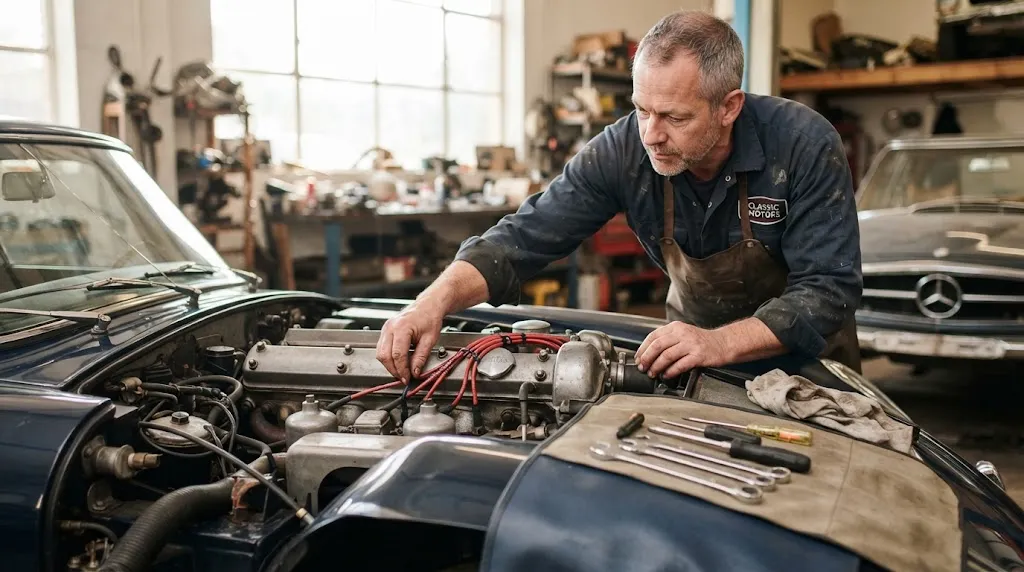
When a check engine light illuminates on a vintage car or truck, troubleshooting requires a structured diagnostic approach that combines electronic checks with traditional mechanical inspection.
- Verify the vehicle manufacturing date and market: Check the driver-side door jamb sticker to confirm the exact production month and year, noting whether the vehicle was built for the US market where OBD regulations applied early.
- Locate the diagnostic port: Search under the dashboard near the steering column, inside the center console, or under the hood near the fuse box for legacy diagnostic connectors.
- Consult factory documentation: Reference a vehicle-specific repair manual to identify the exact pin configuration and manufacturer fault code charts.
- Choose the correct diagnostic method: Use an OBD1-compatible scanner with appropriate adapter cables, or perform a manual flash-code sequence if supported by the ECU.
- Perform fundamental mechanical checks: For vehicles built before widespread electronic engine management, verify basic necessities like fuel pressure, spark delivery, and vacuum integrity before chasing elusive electronic sensor faults.
Related Product
Advanced Diagnostic Scanners with OBD1 Adapter Kits
A comprehensive diagnostic tool featuring legacy adapter cables helps bridge the gap when troubleshooting older pre-1996 vehicles.
As an Amazon Associate, we earn from qualifying purchases.
Frequently Asked Questions
Can I plug a standard OBD2 scanner into a 1995 car?
Generally no. While a few 1995 models featured the physical 16-pin OBD2 port during the transition period, most 1995 vehicles still operated on manufacturer-specific OBD1 computer protocols that standard generic OBD2 readers cannot interpret.
Do diesel vehicles follow the same 1996 OBD2 rule?
No. Passenger cars and light trucks running on diesel engines were not legally mandated to adopt standardized OBD2 connections in the United States until the 2004 model year, meaning older diesel pickups require specialized heavy-duty or legacy scanning equipment.
What is the paperclip trick for reading old check engine lights?
The paperclip trick is a manual diagnostic method used on many pre-OBD2 General Motors vehicles. By inserting a jumper wire or paperclip into specific terminals of the under-dash ALDL connector, the driver causes the check engine light to flash in a coded sequence that spells out stored numeric fault codes.
Are there Bluetooth OBD2 adapters that work on older cars?
Standard plug-and-play Bluetooth OBD2 dongles designed for mobile apps only function on 1996 and newer vehicles equipped with compliant OBD2 protocols. They cannot communicate with older pre-OBD2 computer systems without specialized protocol converter interfaces.
Where is the diagnostic port located on older vehicles?
On pre-1996 vehicles, diagnostic ports are rarely found under the dashboard. They are frequently located under the hood near the main fuse box, attached to the inner fender, or positioned near the windshield washer fluid reservoir.
Can an OBD2 scanner damage an older car’s computer?
Plugging a standard OBD2 scanner into an incompatible pre-OBD2 port typically results in a communication error rather than damage. However, improperly bridging diagnostic pins with a jumper wire without verifying correct wiring diagrams can potentially short out sensitive vintage control modules.
Conclusion
While standard modern OBD2 scanners are built exclusively for 1996 and newer vehicles, older cars can still be diagnosed successfully with the right equipment and knowledge. Recognizing the limitations of legacy automotive computer systems, utilizing appropriate adapter kits, and referencing factory repair manuals ensure that troubleshooting older vehicles remains manageable and effective.

I’m Alex Rahman, a car enthusiast and automotive writer focused on practical solutions, car tools, and real-world driving advice. I share simple and honest content to help everyday drivers make better decisions.
