Can an OBD2 Scanner Diagnose a Used Car? Yes, Partly
Quick Answer
Yes, partly. An OBD2 scanner can diagnose many electronic and emissions-related faults in a used car, but it cannot give a complete verdict on the car. It reports what the car’s computers have detected, not the condition of parts, bodywork, or systems those computers do not monitor.
A used car can look clean and drive smoothly while carrying a fault the dashboard is not showing. The useful question is not whether a scanner works, but what kind of diagnosis it can support.
What “Diagnose” Really Means With a Scanner
In everyday language, diagnosis sounds final: the tool finds the broken part. With OBD2, the result is usually narrower. A scanner reads diagnostic trouble codes, sensor readings, and self-test results, then points to a system that needs further checking.
That distinction matters for a used car. A code for an oxygen sensor circuit, for example, does not prove the sensor itself has failed. It could reflect wiring, an exhaust leak, or a fuelling problem. Treating the code as the repair is one of the easiest ways to misread a scan.
In short, a scanner narrows the search. It can show which system is unhappy and whether the fault is current or developing. It does not, on its own, confirm the root cause.
What a Scanner Can Actually Diagnose on a Used Car
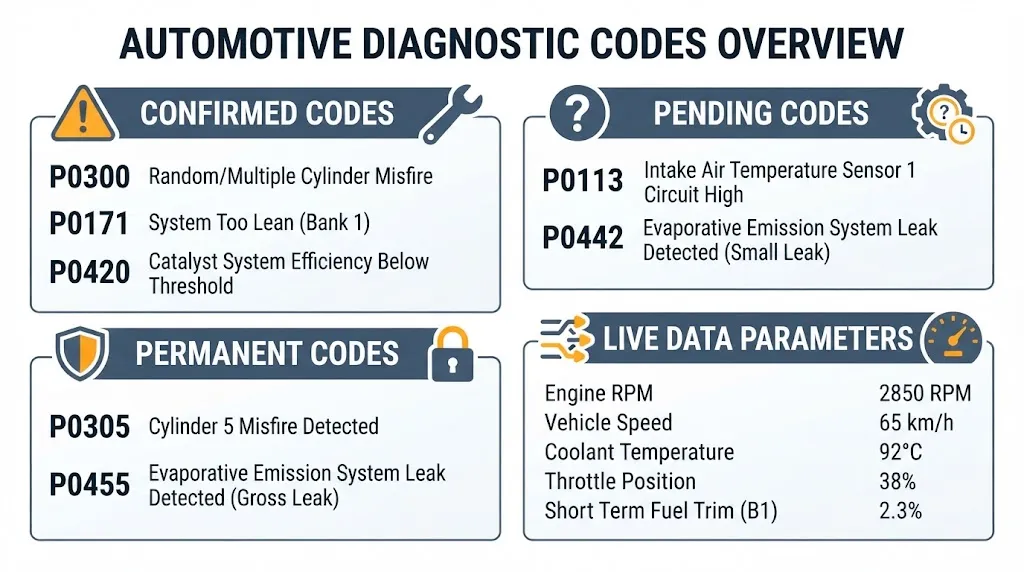
Most light-duty gasoline vehicles sold in the United States since model year 1996 use OBD2, with the port usually under the driver’s side dashboard. On a compatible car, a scan can reveal several kinds of evidence.
Confirmed codes show faults the computer has detected repeatedly enough to record. Pending codes show faults detected once or intermittently, but not yet confirmed. That early signal can matter, because a pending fault may become a warning light later. A fuller explanation is available in the guide to what a pending fault code means.
Permanent codes are a separate category on many newer vehicles. They remain until the car itself verifies that the fault has gone, so they cannot simply be erased to hide an emissions problem. Freeze-frame data adds context by recording speed, load, and temperature at the moment a fault was set.
Live data can support a diagnosis further. Fuel trim, oxygen sensor behaviour, coolant temperature, and misfire counts can show whether a system is working normally or compensating for a problem. Used carefully, live data turns a single code into a pattern.
The broader picture depends on the scanner and the car. A basic generic reader mainly covers powertrain and emissions codes. A more capable tool may also read transmission, ABS, airbag, and body modules, but only when the vehicle and tool support them. The overview of what an OBD2 scanner can tell you explains that boundary in more detail.
| Scan evidence | What it can support |
|---|---|
| Confirmed code | A current, recorded fault in a monitored system |
| Pending code | A developing or intermittent fault worth investigating |
| Freeze frame | Conditions when the fault was recorded |
| Live data | How a system is behaving right now |
| Readiness monitors | Whether emissions self-tests have completed since a reset |
Read together, these results can diagnose a useful class of problems: misfires, sensor and emissions faults, catalyst efficiency problems, evaporative leaks the computer can detect, and some transmission or safety-system faults on supported vehicles.
What a Scanner Cannot Diagnose
A scan is limited to what the car’s computers can sense. That leaves large parts of a used car unchecked.
- Body, frame, paint, and previous collision repair that left no electronic fault.
- Brake pad thickness, tyre wear, suspension wear, and other mechanical wear that has not triggered a sensor.
- Many fluid leaks, rust, interior damage, and missing equipment.
- Oil consumption, unless it has caused a monitored fault or a visible symptom.
- Every intermittent fault, especially one that only appears under conditions the car has not repeated during the scan.
- The car’s service history, accident history, or title history.
A scanner also cannot judge remaining life. A sensor reading can look normal today and fail next month. That is why scan results are best used as one part of an inspection, not as a substitute for a visual check, a test drive, service records, and, when the stakes justify it, a professional pre-purchase inspection.
Key Insight
A code is a clue about a system, not a verdict on a part. A clean scan is the absence of detected electronic faults, not proof that a used car has no problems.
The Used-Car Trap: A Clean Scan After Codes Were Cleared
The most important limit on a used car is timing. If codes were recently cleared, or the battery was disconnected, the warning light can stay off while the car’s self-tests have not yet run again.
Readiness monitors are the check for that situation. They show whether emissions self-tests have completed since the last reset. Several monitors marked not ready do not prove dishonesty: a recent repair or battery replacement can produce the same result. They do mean the car has not yet verified those systems.
The practical response is to pause, not to accuse. Ask when and why the system was reset, and whether the car can be scanned again after normal driving. The guide to how an OBD2 scanner checks emissions readiness covers what those results mean, and the related question of whether a used car can pass a scan after clearing codes explains why a pass immediately after a reset is unreliable. Its point here is diagnostic: a diagnosis is only as complete as the self-tests behind it.
Some scanners also show distance since codes were cleared. A very low value alongside several incomplete monitors strengthens the case for waiting and rescanning. It still does not prove intent.
How Scanner Capability Changes the Diagnosis
Two scans of the same used car can legitimately give different pictures, usually because of coverage rather than a fault in either tool.
A generic code reader answers the narrowest question: are there powertrain or emissions codes, and are the readiness monitors ready? That can spot a serious engine or emissions issue, but it can miss faults in other modules.
An all-system or enhanced scanner, where supported, can read manufacturer-specific codes and additional modules. On one car, that might reveal an ABS or transmission fault a generic reader never saw. On another, it may still be limited by the manufacturer’s protocol.
Airbag coverage is a good example. A generic reader may show no airbag code even when an airbag-system fault exists, simply because it cannot access that module. The guide to whether a generic OBD2 scanner can read airbag codes explains why absence of a code is not the same as absence of a fault. The same logic applies to ABS and transmission systems: check what the tool actually accessed before treating a blank result as reassurance.
Compatibility also matters. Older vehicles, some diesels, hybrids, and imported models may offer only partial coverage. If a scanner shows only a subset of modules, that is a limitation to record, not a result to ignore.
How to Turn Scan Results Into a Decision
A diagnosis becomes useful when it changes what happens next.
If the scan shows a confirmed code, treat it as a fault that needs confirmation, not as an automatic reason to reject the car. Note the code and freeze frame, then ask what check would actually confirm the cause. A misfire code, for example, still needs checks for ignition, fuelling, compression, or wiring before any part is blamed.
If the scan shows only a pending code, treat it as an early warning. Ask whether service records mention it, and whether a rescan after a longer drive repeats it.
If the scan is clean but monitors are incomplete, treat the diagnosis as unfinished. Wait for the self-tests to complete and scan again. If the scan is clean and monitors are ready, the electronic picture is stronger, but it still does not cover mechanical wear, bodywork, or history.
If the scan shows faults in safety-related modules, or codes suggesting expensive engine, catalyst, or transmission work, get a professional inspection before committing. The scan has then focused the inspection on the systems that matter most. The U.S. Environmental Protection Agency also provides background on inspection and maintenance programs, which helps explain why readiness and emissions self-tests carry weight beyond a single viewing.
Warning
Do not clear codes on a car you do not own. Clearing erases the evidence a buyer, seller, or mechanic needs to judge the car, and it resets the readiness monitors that would otherwise show whether the systems have been tested.
Mistakes That Make a Diagnosis Wrong
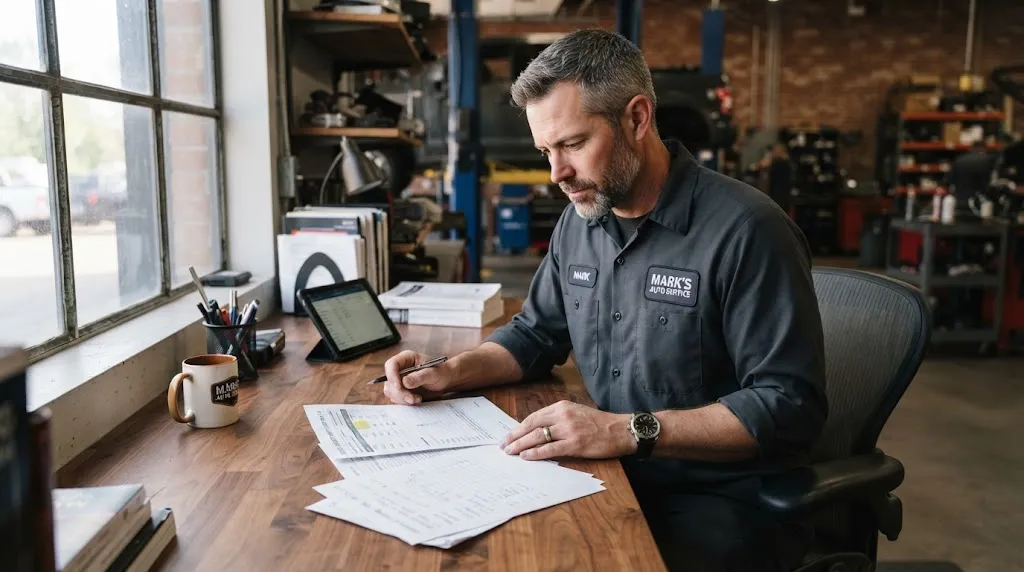
Most bad used-car diagnoses come from interpretation, not from the scanner itself.
- Reading a code as a part name, then assuming that part must be replaced.
- Treating no codes as no faults, while ignoring incomplete monitors or modules the tool never accessed.
- Judging live data from one moment at idle, without checking how readings change under load.
- Scanning only before a test drive, and missing a fault that appears once the car is warm or driven harder.
- Comparing a used car’s readings with a generic normal range, without allowing for model, engine, temperature, and driving conditions.
Save or photograph the full result, including code types, monitor status, and any modules scanned, so a mechanic can check the interpretation later.
Related Product
OBD2 Scanner With Readiness and Live Data
A scanner that shows readiness monitors and live data helps separate a finished diagnosis from a scan taken too soon after a reset.
As an Amazon Associate, we earn from qualifying purchases.
Frequently Asked Questions
Can an OBD2 scanner tell me if a used car is good?
No, not on its own. It can reveal electronic and emissions faults, pending problems, and incomplete self-tests, but it cannot assess bodywork, mechanical wear, service history, or systems it cannot access.
Does having no codes mean a used car has no problems?
No. No codes means no faults were detected in the systems and modules the scanner accessed at that time. Mechanical wear, hidden damage, and faults in unaccessed modules can still exist.
Can a scanner prove a seller cleared codes before a sale?
No, it cannot prove intent. Incomplete readiness monitors and a very low distance since clearing are strong signs of a recent reset, but a legitimate repair or battery change can cause the same pattern. Treat it as a reason to wait and rescan.
Can a basic scanner check ABS, airbag, and transmission systems?
Not reliably. Basic generic readers mainly cover powertrain and emissions codes. Those other systems need a tool and vehicle that support the relevant modules.
Should I still get a professional inspection if the scan is clean?
Yes, when the purchase price or risk justifies it. A clean scan with ready monitors is reassuring, but a mechanic can check leaks, wear, suspension, brakes, and body repairs a scanner cannot see.
Can a scanner diagnose a car that will not connect?
No diagnosis is possible from a failed connection alone. Check the port, ignition state, and scanner compatibility first, and do not treat a failed connection as a clean result.
Conclusion
An OBD2 scanner can diagnose a meaningful part of a used car: the faults its computers have recorded, the problems still developing, and the self-tests that have not yet finished. What it cannot do is declare the whole car sound. Keep the code in its place as a clue, check readiness and module coverage before trusting a clean result, and use the scan to focus the next check.

I’m Alex Rahman, a car enthusiast and automotive writer focused on practical solutions, car tools, and real-world driving advice. I share simple and honest content to help everyday drivers make better decisions.
