10 Best Dash Cam With Cloud Storage for Secure, Remote Video Access
Dash cams record the road ahead and can provide useful evidence after a crash, theft, or other incident. Models with cloud storage add remote access, allowing us to view saved clips, receive alerts, and check a parked vehicle from a phone when the camera has an internet connection.
The best dash cams with cloud storage combine clear video, reliable connections, simple apps, and storage plans that fit our needs. We also need to consider how the camera connects to the internet, whether it records while parked, how much cloud storage costs, and whether key features require a subscription. We tested and researched leading models to find the dash cams with cloud storage that offer the most useful features and dependable performance.
Best Dash Cams With Cloud Storage
We reviewed top dash cams with cloud storage to identify models that offer reliable recording, useful safety features, and simple remote access. Our list includes options for different budgets, driving needs, and storage preferences.
FocuWay L7 4G LTE Dash Cam
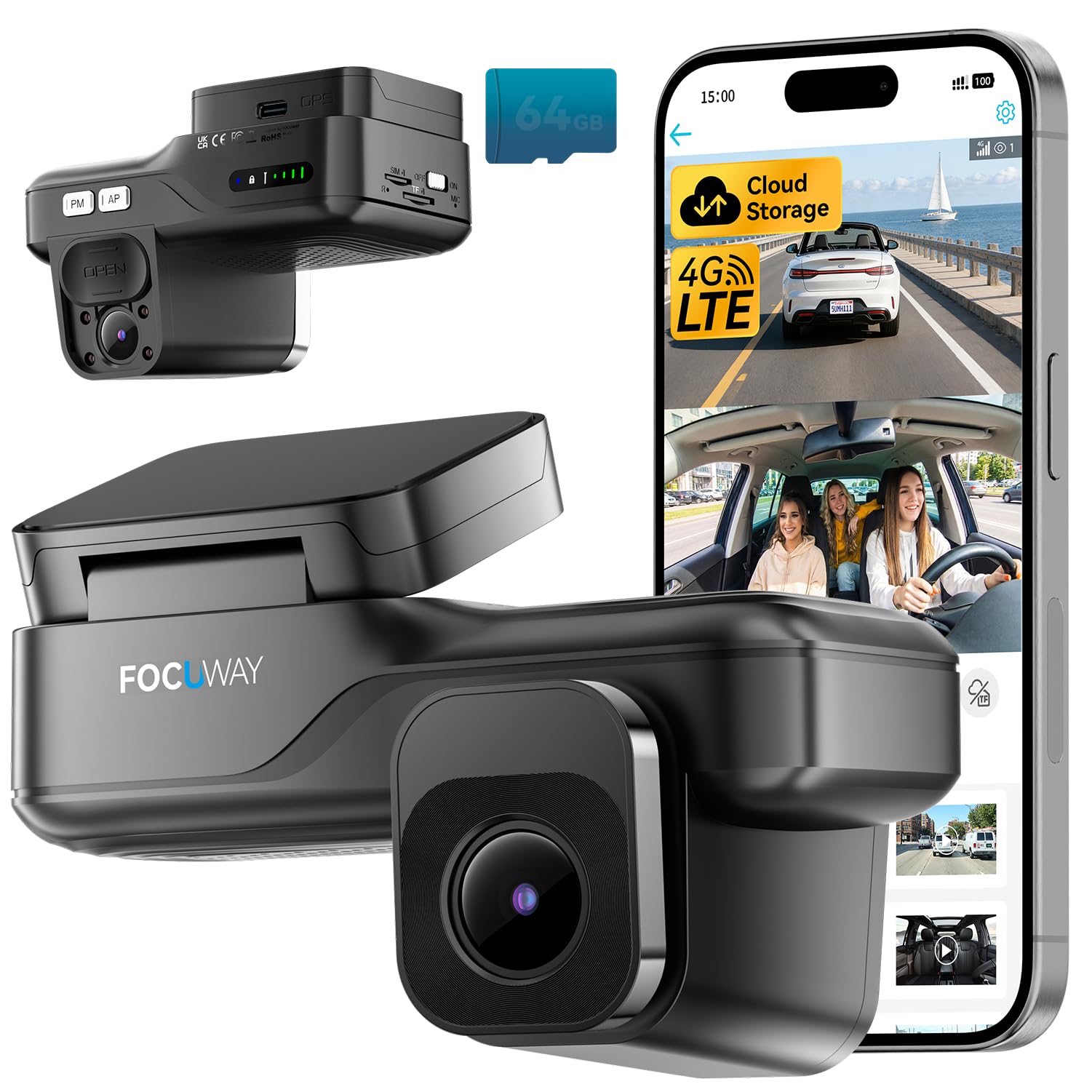
We recommend this dash cam for drivers who want remote viewing, cloud backups, and cabin monitoring without installing a separate rear camera.
Key Pros
- Remote live view and alerts through the UBoxPro app
- Automatic cloud uploads for detected incidents
- Clear front and cabin video with infrared night vision
Key Cons
- Requires a paid LTE and cloud plan after the trial
- No built-in screen
- Built-in SIM card cannot be replaced
We found the FocuWay L7 easy to install using the included OBD cable. It powered the camera for parking monitoring without requiring fuse-box wiring, and the small, screen-free design stayed fairly discreet behind the mirror.
The 2K front camera captured useful road detail, while the 1080p interior camera helped monitor the cabin. Infrared lighting kept the inside view usable at night, and the physical lens cover gave us a simple way to block the cabin camera when privacy mattered.
The main benefit is remote access. Through the app, we could check the car’s location, view a live feed, receive motion alerts, and use two-way audio. Cloud uploads also add protection if someone damages or removes the camera.
We did find the service costs important to consider. LTE access and cloud features require a paid plan after the trial, and the camera depends on the U.S.-only cellular setup. Since it has no screen, we also needed the app for setup and viewing.
Nexar Beam Cloud Dash Cam
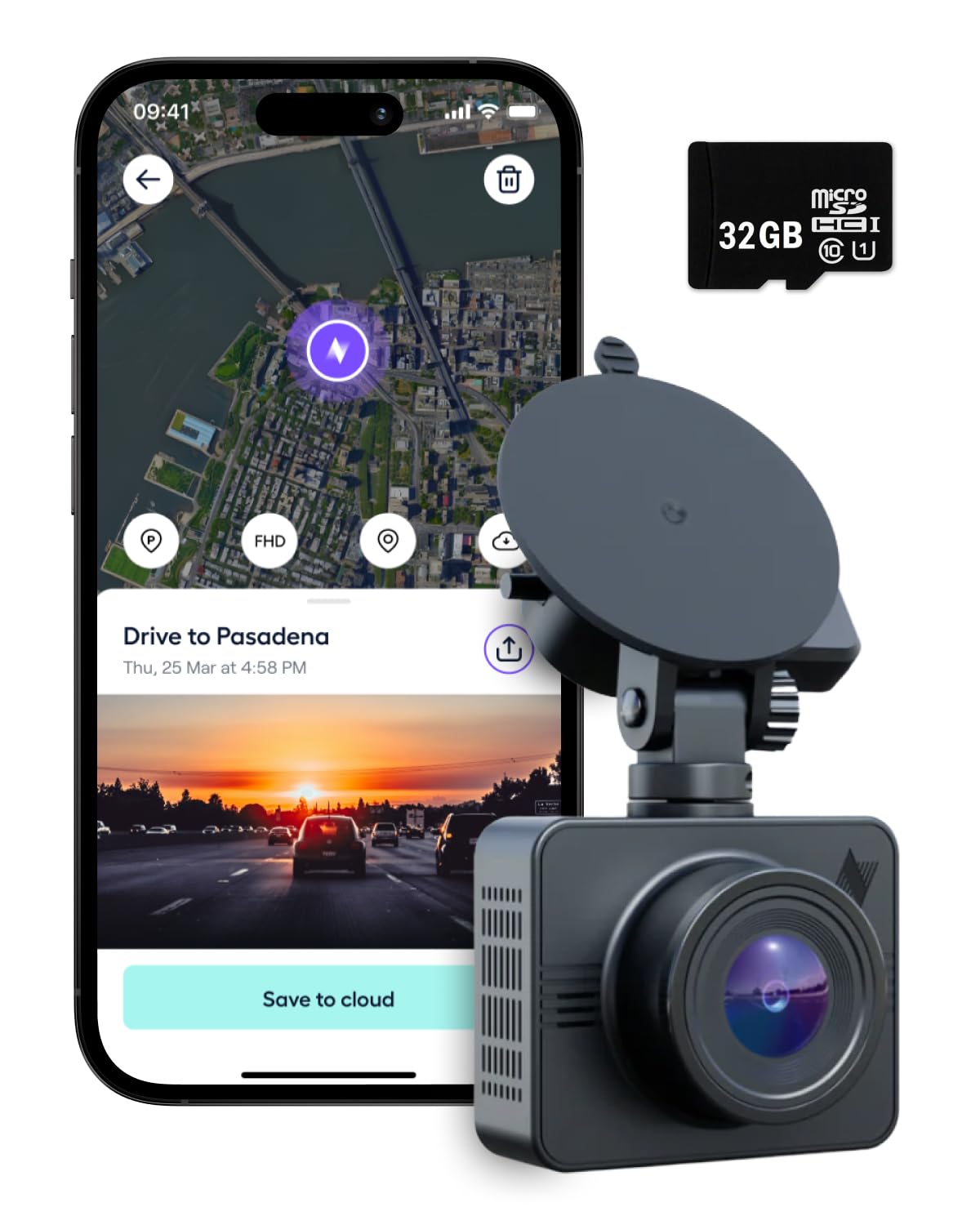
We recommend the Nexar Beam for drivers who want simple app control, automatic incident backups, and cloud storage without managing video files manually.
Key Pros
- Easy setup and automatic recording
- Cloud backup for important clips
- Helpful parking and incident alerts
Key Cons
- Requires a compatible smartphone
- App connection can use phone battery
- Some users report occasional glitches
We found the Beam quick to install and easy to use. Once paired with a phone, it starts recording when we drive and sends saved trips or key events to the Nexar app. The app can run while we use a navigation app, which makes daily driving more convenient.
The 1080p video provides clear evidence in normal daylight, while night footage remains useful but may lose detail. Automatic incident detection helps save clips after sudden braking or a collision, and the included 32GB card handles local storage.
Parking Mode adds protection while the car sits unattended. It needs a suitable power connection, and we must reconnect the phone before receiving some alerts. The camera also depends heavily on the smartphone and app, so connection problems can affect the experience.
The free Nexar Classic plan includes unlimited cloud storage, which makes finding important clips easier. Still, some owners report inconsistent app connections, battery drain, or glitches over time. We would choose this model for drivers who value cloud access and simple controls more than a fully independent camera.
DeerAsk 4G LTE Dual-Camera Dash Cam

We recommend this dash cam for drivers who want cloud backup, remote viewing, and both road and cabin coverage without relying on nearby Wi-Fi.
Key Pros
- Remote live view through 4G LTE
- Front and cabin recording with infrared night vision
- Easy OBD-II setup with GPS tracking
Key Cons
- Remote features require a compatible data plan
- Cloud storage depends on cellular service
- Parked-car monitoring may use the vehicle’s battery
We found the OBD-II installation simple because it avoids fuse-box wiring. After connecting the camera and app, we could check the vehicle remotely, view its location, and review route history through the 4G connection.
The dual-camera design suits rideshare drivers, families, and work vehicles. The front camera records the road, while the interior camera captures the cabin. Infrared lighting helps keep the inside view useful in low light.
Cloud event backup adds another layer of protection for impacts or suspicious activity. The camera also saves regular footage to the included memory card, though we would check the data plan and cloud terms before relying on remote access.
Radar motion detection, the G-sensor, and sentry mode help monitor a parked vehicle. We like the alert system, but cellular coverage and vehicle power conditions can affect how well these features work over long periods.
IIWEY L9 4G LTE Dash Cam
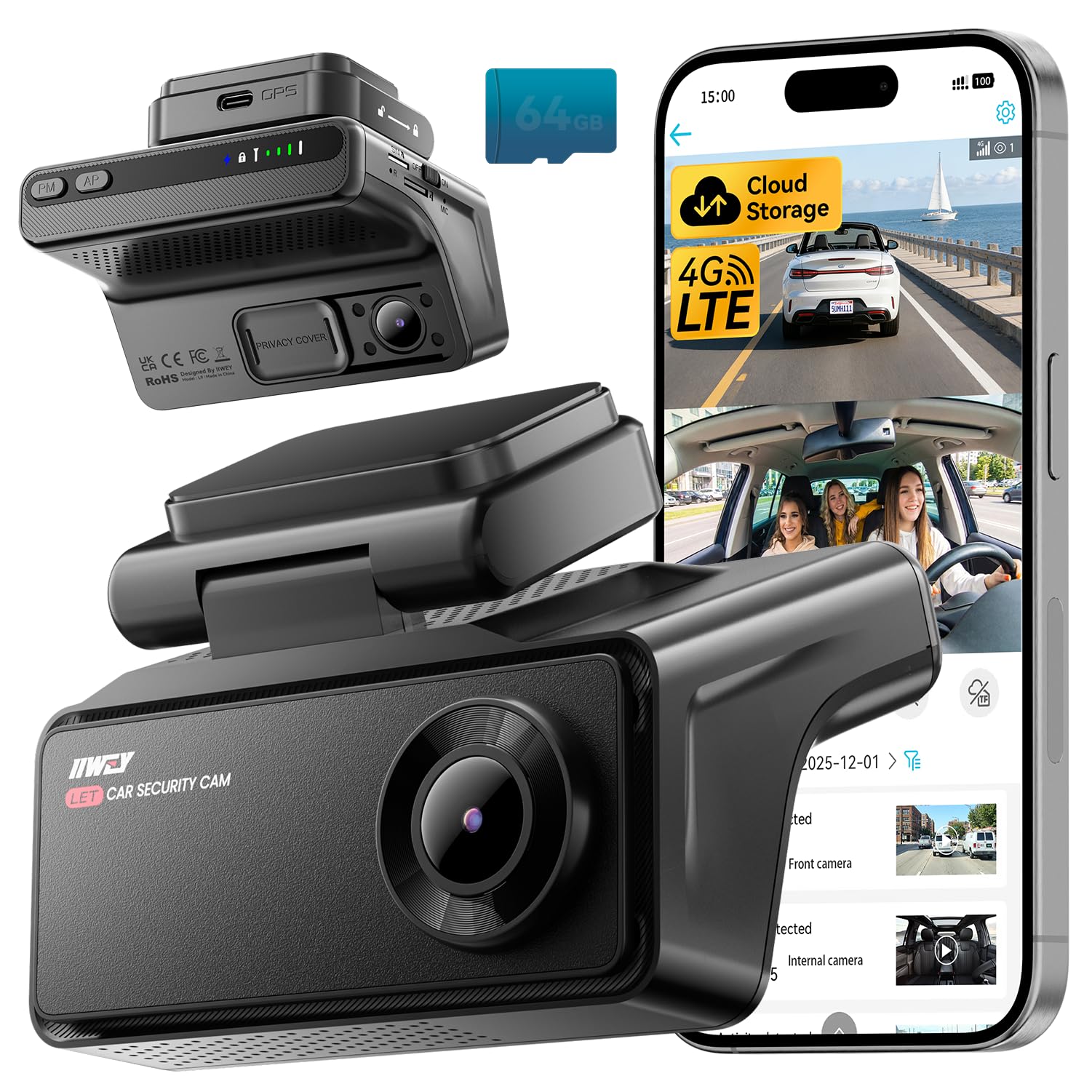
We recommend the IIWEY L9 for drivers who want remote viewing, parking alerts, and cloud backup, provided they accept the required mobile data plan.
Key Pros
- 4G access enables remote live viewing and GPS tracking.
- Cloud uploads help protect important clips if the camera or SD card is damaged.
- The cabin camera provides useful infrared footage at night.
Key Cons
- Continued LTE service requires a paid data plan after the trial.
- The camera has no built-in display, so we must use the app to review footage.
- Some users may experience weak or lost 4G service.
We found the L9 more useful for parked-car security than a basic dash cam. Its AI radar and motion alerts can notify us when someone approaches, while the app lets us check the vehicle from a distance. Alert accuracy may depend on sensitivity settings and the parking location.
The 2K front camera records clear daytime footage, and the 1080p cabin camera remains useful in low light because of its infrared night vision. Rideshare drivers can also cover the lens or activate Privacy Mode when they do not want the interior recorded.
Installation was fairly simple with the included OBD cable, although the extra wiring takes some time to arrange neatly. The camera switches between driving and parking modes automatically, but ongoing cloud and LTE features add cost beyond the purchase price.
We also like having both cloud and SD storage. Important events can upload automatically, while the included 64GB card handles local recording. However, remote features depend on a reliable 4G connection, and one review reported trouble accessing video after losing signal.
ROVE R2-4K Dual Dash Cam
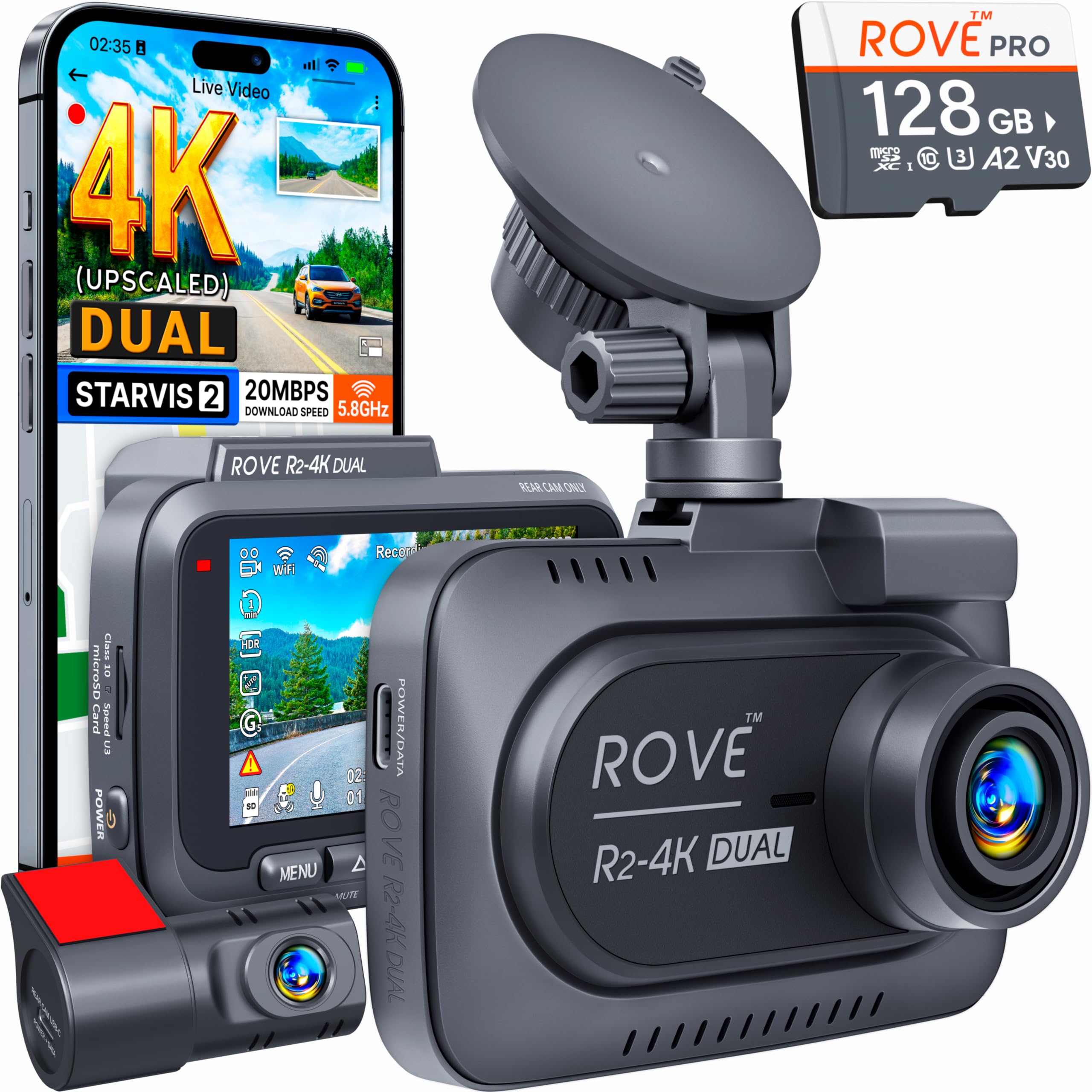
We recommend this dual-camera dash cam for drivers who want sharp front footage, useful app controls, and GPS without buying a memory card separately.
Key Pros
- Clear front and rear recording
- Fast phone transfers over 5.8GHz Wi-Fi
- Includes a 128GB microSD card
Key Cons
- Front video uses upscaled rather than native 4K
- Cloud storage is not built in
- Parking mode needs a separate hardwire kit
During our test drive, the ROVE R2-4K Dual produced detailed front footage and useful 1080p rear video. The wide views helped cover nearby lanes, while HDR and the STARVIS 2 sensor improved clarity in dim streets and changing light.
The ROVE app made it easy for us to view clips and move them to a phone. Its fast Wi-Fi connection reduced waiting time, and built-in GPS added speed and location data to recordings. We also liked the included 128GB card, which made setup quicker.
This model does not offer true cloud storage. We need to transfer videos through the app or remove the microSD card, so drivers seeking automatic remote backups should consider a cloud-connected alternative.
Parking mode offers time-lapse, motion, and impact recording, but we must add a compatible hardwire kit for continuous parking protection. The camera includes helpful installation tools, a rear cable, and both suction and adhesive mounts.
REDTIGER F7N TOUCH Dash Cam
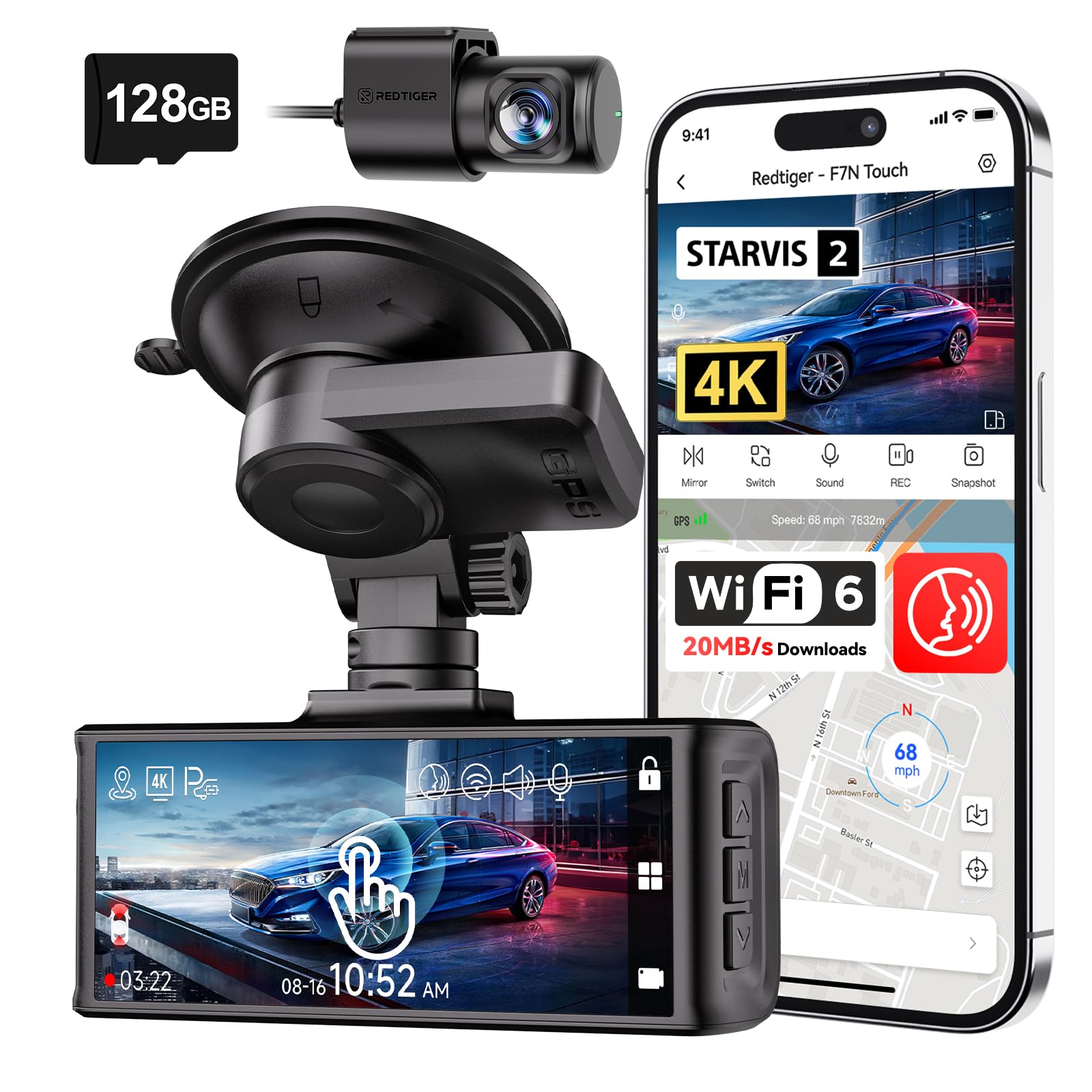
We recommend this dash cam for drivers who want sharp front video, useful rear coverage, and simple phone access without paying for a separate cloud plan.
Key Pros
- Clear 4K front video with 1080p rear recording
- Fast Wi-Fi transfers and built-in GPS
- Includes a 128GB card and responsive touchscreen
Key Cons
- Cloud storage is not included
- Parking monitoring needs a separate hardwire kit
- The rear camera requires a long cable run
The F7N TOUCH gives us a clear view of the road, especially during the day. The front camera captures useful detail, while the rear camera adds solid coverage behind the vehicle. Its wide view helps record more of nearby traffic.
We found the touchscreen easy to use for locking clips, changing settings, and turning on Wi-Fi. Voice controls also reduce the need to reach toward the camera while driving. The REDTIGER app lets us transfer clips to a phone, though this setup uses Wi-Fi rather than true remote cloud access.
Installation feels manageable with the included mount, clips, and long rear-camera cable. We still needed to spend time hiding the wires for a clean finish. The included 128GB card provides useful storage, and loop recording replaces older unlocked clips automatically.
Built-in GPS adds location and speed data to recordings, which can help when reviewing an incident. Parking recording works only with the optional hardwire kit, so buyers should include that cost if they want around-the-clock protection.
Vantrue N4S 3-Channel Dash Cam

We recommend the Vantrue N4S for drivers who want front, cabin, and rear coverage with clear video and convenient phone access.
Key Pros
- Sharp video from all three cameras
- Rotating rear camera adds flexibility
- Fast 5GHz Wi-Fi transfers
Key Cons
- Cloud storage is not built in
- Requires a separate microSD card
- Parking mode needs extra wiring for full use
We found the N4S useful for covering more than the road ahead. Its front camera records at 2.7K, while the cabin and rear cameras capture 1440P video. This setup suits rideshare drivers, families, and anyone who wants a record of activity inside and behind the vehicle.
Video stayed clear in daytime use, and the HDR modes helped balance bright headlights and darker roads at night. License plates were easier to read than with many basic cameras, though results still depend on speed, weather, and lighting.
The rear camera rotates, so we could aim it toward traffic or turn it inward to watch passengers, pets, or cargo. Installation was manageable with the included clips and adhesive mounts, but routing the long rear-camera cable takes some time.
The phone app made it simple to view and download clips without removing the memory card. We should note that this model stores footage on a microSD card rather than offering built-in cloud storage. Its parking features also work best with a separately installed hardwire kit.
REDTIGER F7NP 4K Dash Cam
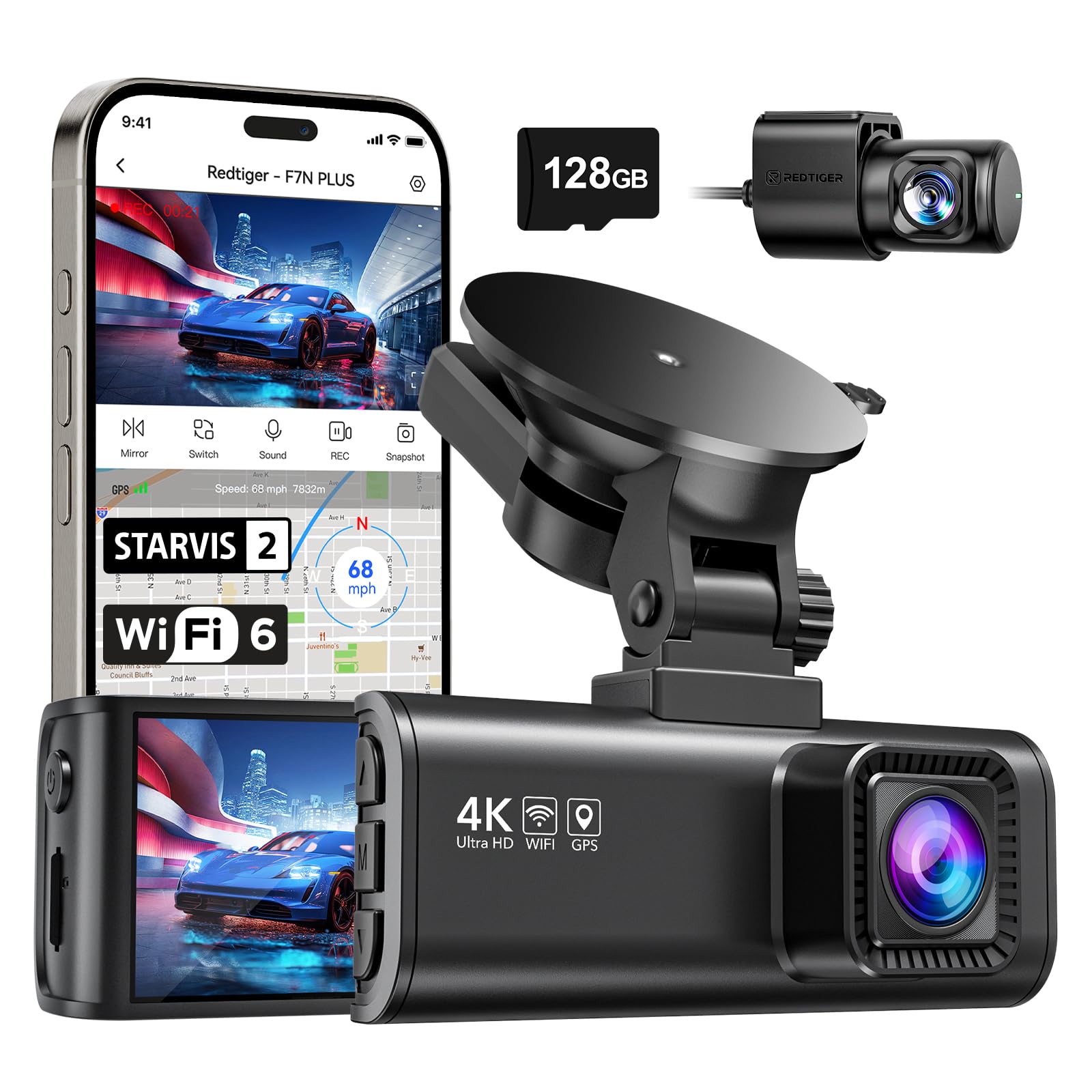
We recommend the REDTIGER F7NP for drivers who want clear front and rear coverage, simple phone access, and a memory card included.
Key Pros
- Sharp front footage with useful rear coverage
- Fast Wi-Fi transfers through the mobile app
- Includes a 128GB memory card
Key Cons
- Cloud storage is not built in
- Parking mode needs a separate hardwire kit
- Wi-Fi may conflict with Android Auto
The F7NP gives us a practical dual-camera setup without taking up much windshield space. Its front camera records in 4K, while the rear unit captures 1080p footage. This combination helps us read more detail ahead while still watching traffic behind the vehicle.
Night footage benefits from the STARVIS 2 sensor, wide apertures, and WDR processing. We still expect some glare from headlights and streetlights, but the camera handles changing light better than basic dash cams.
The built-in Wi-Fi makes it easy for us to preview clips and download them through the Redtiger Cam app. GPS data can also show the route, speed, and location. However, the camera creates its own Wi-Fi connection, which may interrupt Android Auto in some vehicles.
Loop recording replaces older files as the card fills, while the G-sensor locks clips after a detected impact. The included 128GB card lets us start recording immediately. For continuous parking monitoring, we need to buy and install the optional hardwire kit.
One important limitation stands out for shoppers seeking the best dash cam with cloud storage: the F7NP stores footage locally and does not provide true cloud backup. Its supercapacitor should also handle heat and long-term use better than a small built-in battery, and REDTIGER backs the camera with an 18-month warranty.
BlackVue DR770X II
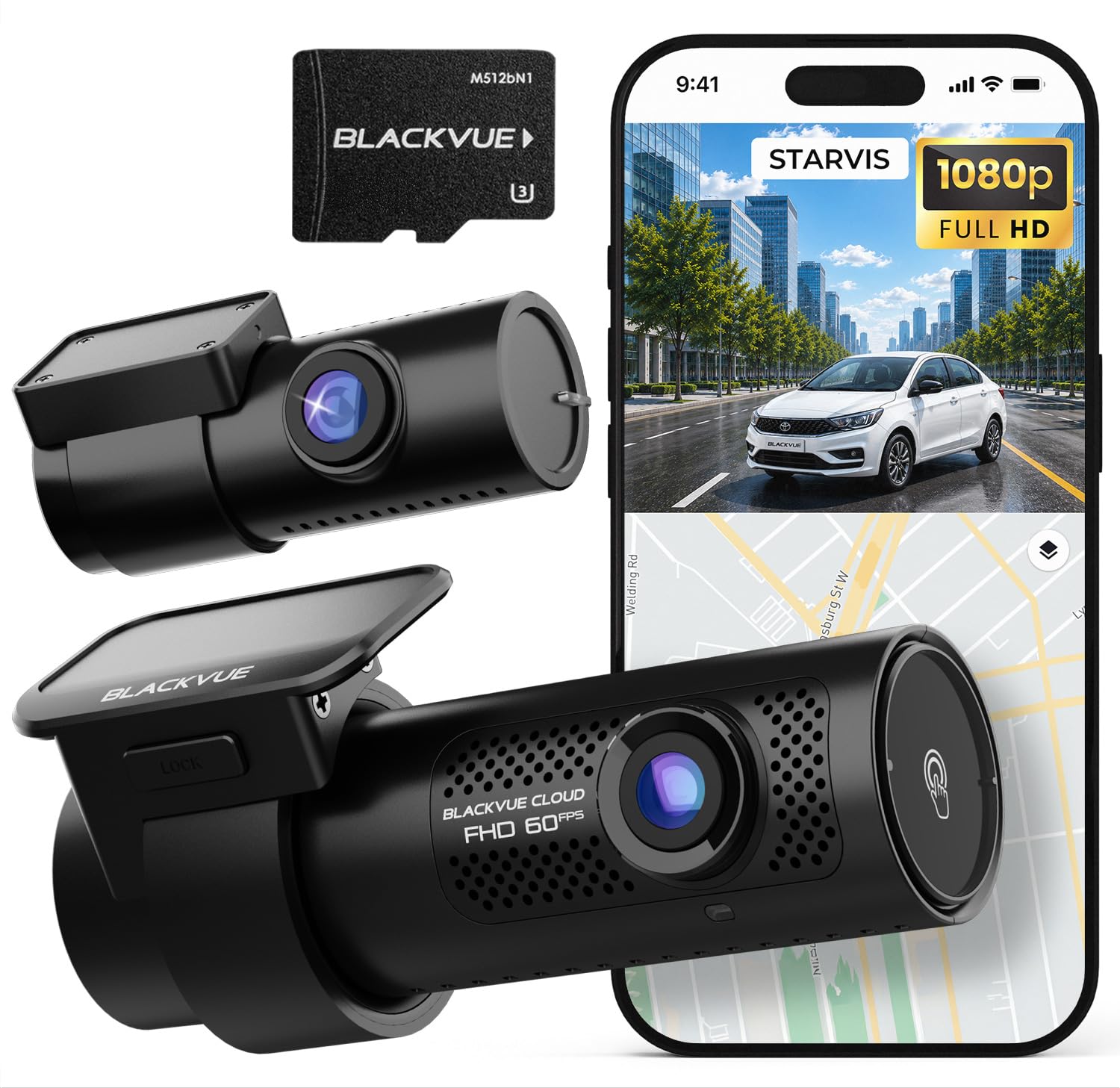
We recommend this dash cam for drivers who want clear front and rear video, plus useful cloud features through Wi-Fi or an optional LTE module.
Key Pros
- Sharp 1080p front and rear recording
- Easy phone access through Wi-Fi and BlackVue Cloud
- Reliable event protection and parking monitoring
Key Cons
- LTE cloud access costs extra
- Parking mode needs hardwiring
- Wi-Fi setup may be frustrating for some users
After using the DR770X II, we found the dual-camera setup practical for daily driving. The front camera records at up to 60 frames per second, while the rear camera captures the road behind us at 30 frames per second. Sony STARVIS sensors also help preserve detail in dim conditions.
The BlackVue app lets us view and download clips without removing the memory card. With an internet connection, the camera can support live viewing, remote playback, GPS tracking, alerts, and automatic backups through the cloud. Real-time uploads require Wi-Fi or the optional CM100G LTE module.
Installation felt tidy because the included USB-C cable was easy to route. The compact camera design also stayed fairly discreet behind the windshield. We could use the included 64GB card, while support for cards up to 1TB gives us more room for long trips and parking recordings.
For parked-car protection, the camera can record motion or impact events, or use time-lapse recording. Hardwiring is required, so installation takes more work than a basic plug-in setup. The 10-second pre-event buffer and protected event files help preserve useful footage after a sudden impact.
70mai A810 Lite 4K Dash Cam
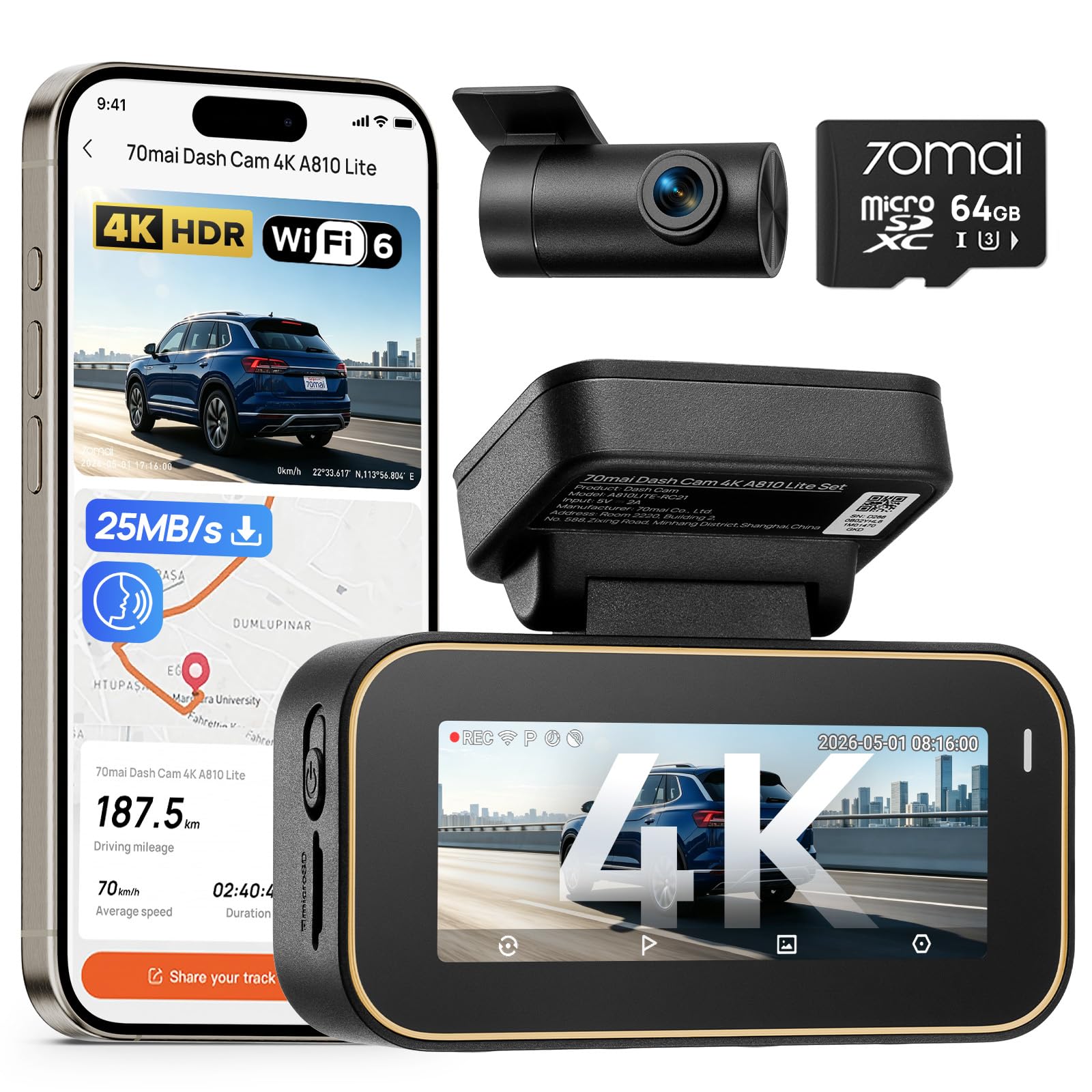
We recommend this dash cam for drivers who want sharp front footage, rear coverage, and optional remote access through a 4G hardwire kit.
Key Pros
- Sharp 4K front video with 1080p rear recording
- Fast phone transfers through Wi-Fi 6
- GPS, voice control, and parking-mode support
Key Cons
- 4G access and parking mode require extra wiring
- Some users report failures after installation
- Rear-camera positioning may not suit every vehicle
The front camera captures clear daytime footage, and the rear camera adds useful coverage behind the vehicle. We found the compact design easy to place behind the mirror without taking up much windshield space.
Night footage benefits from HDR and the wide aperture, though real-world results can vary with glare, weather, and windshield reflections. The included 64GB card supports a simple start, while the camera accepts larger cards for longer storage.
The app lets us review clips, adjust settings, check GPS data, and transfer files without removing the card. Wi-Fi 6 makes those transfers quicker, but remote viewing and vehicle tracking need the optional UP05 4G hardwire kit.
Parking mode also needs a compatible hardwire kit. We like the supercapacitor design for heat resistance, but reports of mounting, cable, and reliability problems suggest checking the installation carefully.
Buying Guide
We should choose a dash cam with cloud storage based on how it connects, records, and protects footage. We also need to check ongoing costs, since cloud features often require a subscription or mobile data plan.
| Feature | What to look for |
|---|---|
| Cloud access | Remote viewing, video downloads, and alerts through a secure app |
| Internet connection | Built-in cellular service or reliable connection through a paired device |
| Video quality | Clear footage in daylight and low light, with a wide enough viewing angle |
| Storage | Automatic cloud backup plus local storage for uninterrupted recording |
| Parking mode | Motion or impact recording when the vehicle is parked |
| Power use | A safe installation method that will not drain the vehicle battery |
| Privacy | Account security, encryption, and clear data-retention settings |
We should confirm whether the camera uploads footage automatically or only after an event. Automatic uploads can use more data, while event-based uploads may better control costs.
We should also check the camera’s mounting options, temperature range, microphone controls, and app compatibility. A simple app makes it easier for us to review, save, and share recordings when needed.
Before buying, we should review the subscription terms, cellular coverage, warranty, and return policy. We should also verify that the camera supports the vehicle’s power system and that installation will not block the driver’s view.
Editor’s Choice
We recommend the Garmin Dash Cam Live for drivers who want cloud access without relying only on local storage. It records in 1440p, supports remote live viewing, and can send parking-related alerts through the Garmin Drive app when paired with a constant power source.
We value its compact design and clear controls. The camera also supports GPS, voice control, and automatic video uploads through a paid Vault subscription. Cloud features require an internet connection and a compatible plan, so buyers should include those costs in their budget.
| Feature | Details |
|---|---|
| Video quality | 1440p |
| Cloud storage | Garmin Vault subscription |
| Remote access | Live view and saved clips |
| Parking monitoring | Available with constant power |
| Storage option | microSD card |
The camera works best for drivers who want quick access to footage after a collision or while the car remains parked. We recommend checking mobile coverage where the vehicle stays, because weak service can limit cloud uploads and remote access.
Conclusion
We should choose a dash cam with cloud storage based on our driving habits, budget, and privacy needs. Cloud access can help us check a parked vehicle, review footage after a crash, and share clips without removing the memory card.
A reliable camera should offer clear video, stable mobile access, automatic uploads, and strong night performance. We should also check whether cloud storage requires a monthly plan, since subscription costs can affect the long-term price.
Before buying, we should confirm that the camera includes the needed hardwire kit, supports our phone, and works well with our vehicle. The best choice is the model that provides dependable recording and cloud features without adding costs or complexity we do not need.
FAQS
Do all dash cams include cloud storage?
No. We should check the product details before buying. Some models include cloud access, while others require a paid subscription or an optional connected service.
How does cloud storage work?
A dash cam sends selected video clips to online storage through Wi-Fi or a mobile data connection. We can then view, download, or share footage through the brand’s app.
Does cloud storage work when the car is parked?
It depends on the model, power setup, and subscription. Parking mode may need a hardwire kit and an active internet connection to upload alerts or video clips.
Do we need a subscription?
Some cameras offer limited free cloud storage. Others charge a monthly or yearly fee for features such as longer video history, live viewing, or location tracking.
Is cloud storage better than a memory card?
Each option has a different benefit. A memory card stores footage locally without a monthly fee, while cloud storage can protect clips if someone removes or damages the camera.
What should we check before buying?
- Cloud fees and storage limits
- Mobile data requirements
- Parking-mode support
- App quality and device compatibility
- Video download and sharing options
- Privacy and data security policies

I’m Alex Rahman, a car enthusiast and automotive writer focused on practical solutions, car tools, and real-world driving advice. I share simple and honest content to help everyday drivers make better decisions.
