Does OBD2 Work Worldwide? Regional Compatibility Explained
Quick Answer
OBD2 does not work identically worldwide. The 16-pin connector is widely used, but legal compliance and the underlying diagnostic protocols vary by region, fuel type, and model year. A generic scanner may read basic emissions codes in many countries, but full manufacturer-level access often depends on region-specific software, vehicle market, and the tool’s coverage list.
What “OBD2” Usually Means Outside the United States
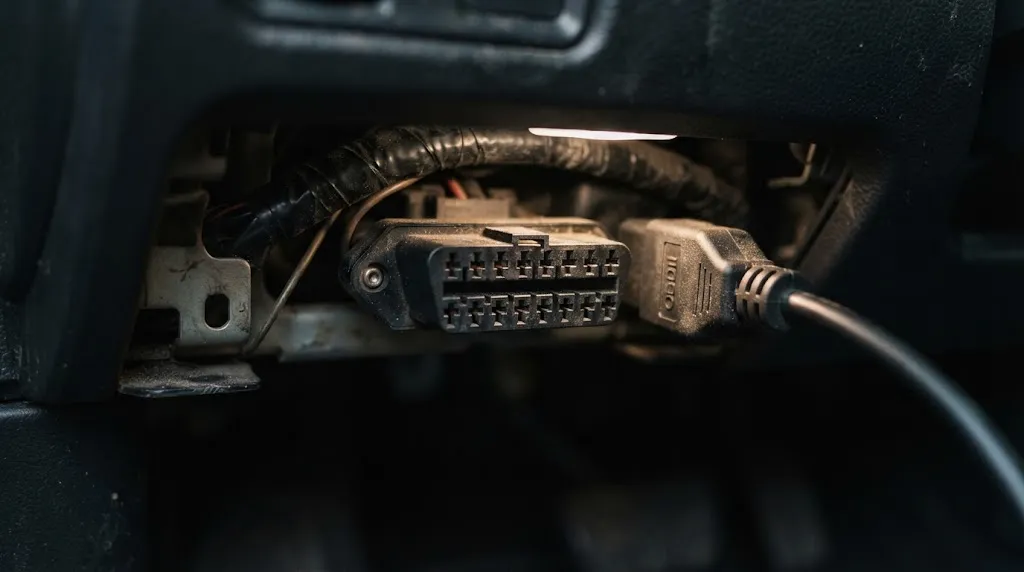
In everyday use, “OBD2” has become shorthand for the standardized 16-pin diagnostic port and the basic emissions-related data a scanner can pull from a vehicle. That shorthand is useful, but it hides an important distinction.
Strictly speaking, OBD-II is a United States regulation. It was mandated for new light-duty vehicles sold in the US from the 1996 model year. Other markets created their own versions: EOBD in Europe, JOBD in Japan, ADR 79/01 in Australia, and China’s national OBD requirements. These systems share core international standards—particularly SAE J1979 and ISO 15765—but they are not interchangeable regulations.
The result is a global landscape where the physical plug is often the same, but the legal requirement, the supported protocols, and the depth of available data can differ from one country to the next.
The Plug Is Standardized; the Rules Behind It Are Not
The familiar 16-pin trapezoidal connector is defined by SAE J1962. It is used across a wide range of markets, which is why a scanner purchased in one country can often physically plug into a vehicle sold in another.
Physical fit, however, is not proof of compliance. A vehicle can have the correct socket and still use an older or manufacturer-specific protocol that a basic OBD2 scanner cannot interpret. This is especially common in transition years and in markets where the connector appeared before the regulation did.
Warning
A 16-pin connector is not proof of OBD2 compliance. Many pre-mandate vehicles in Europe, Asia, and Australia have the socket but still communicate using older KWP2000, ALDL, or manufacturer-specific protocols. As our guide to OBD2 compatibility with older cars explains, the model year and market of original sale matter more than the shape of the plug.
Regional OBD Standards and Approximate Mandatory Dates
The table below summarizes the main light-duty OBD regimes and the model years when compliance became mandatory for new vehicles. Dates are approximate and can vary by vehicle class, fuel type, and whether a model was newly introduced or already in production.
| Region / Market | Standard Name | Key Mandate Years (Light-Duty) | Notes |
|---|---|---|---|
| United States | OBD-II | 1996 (petrol); later for diesel | The original OBD2 regulation. Diesel requirements followed in later years. |
| European Union | EOBD | 2001 petrol; 2004 diesel | For new types, dates were often one year earlier. Full compliance applied to all new registrations by the dates shown. |
| Japan | JOBD / J-OBDII | 2008 (full compliance for new production) | JOBD uses the same 16-pin connector but may not expose all data to a generic OBD2 scanner. |
| Australia | ADR 79/01 | 2005 petrol; 2006 diesel (new models); later for all vehicles | ADR 79/01 is the Australian equivalent of OBD-II and aligns with Euro 3/4 requirements. |
| China | China OBD (National III onward) | 2009 petrol; 2011 diesel (approximate national rollout) | Beijing introduced OBD earlier. National requirements tightened under China IV and later standards. |
| Canada | OBD-II | 1998 | Aligned closely with US OBD-II. |
The dates are a starting point, not a guarantee. A 2004 European diesel may be EOBD-compliant, but a 2004 model from a non-EU market may not be. The same logic applies across Asia, South America, and the Middle East, where national requirements arrived at different times.
Why a Generic Scanner May Not Work Everywhere
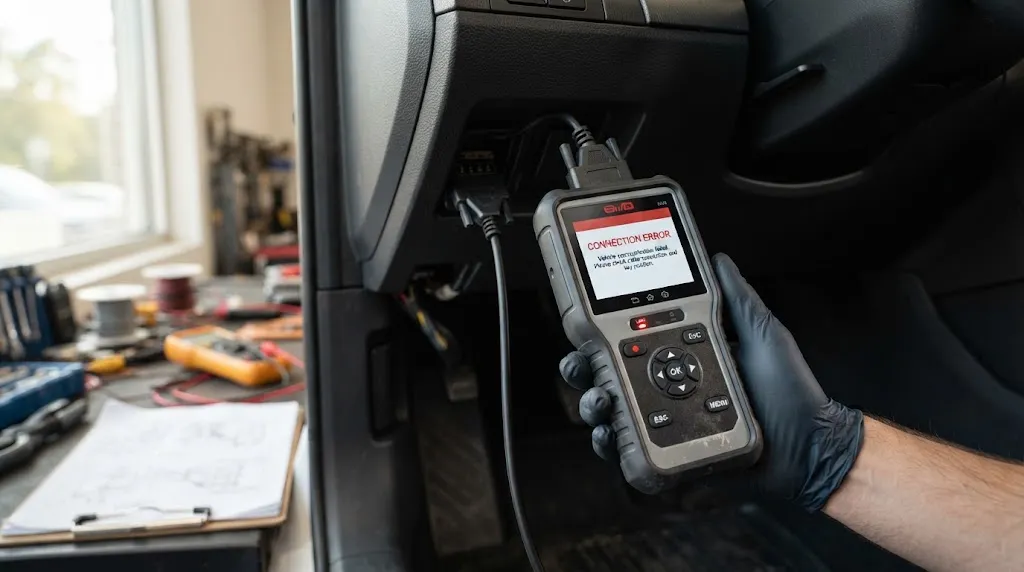
A scanner that supports “OBD2” in the United States is not automatically a global diagnostic tool. Three practical barriers appear again and again.
Protocol coverage varies
OBD2 is not a single protocol. It is a family of protocols, including ISO 15765 (CAN), ISO 9141, KWP2000, and SAE J1850. A basic scanner may support only the protocols common in its home market. A vehicle sold elsewhere may use a protocol the tool does not recognize, even if the connector fits.
The SAE J1979 standard defines the diagnostic test modes used across legislated OBD systems, but it does not force every market to implement every protocol in the same way.
Manufacturer software can be region-locked
Many advanced functions—such as bidirectional tests, service resets, and module coding—are not part of the generic OBD2 mandate. These features depend on manufacturer-specific software, and some tools lock those features to a specific region.
For example, some aftermarket scan tools sold in North America are restricted to US and Canadian vehicles and will not perform advanced functions on a European or Asian model, even if the vehicle is physically present in North America. This is a licensing and distribution decision, not a limitation of the OBD2 port itself.
Compliance is not universal in non-regulated markets
In countries without a mandatory OBD2 regulation, manufacturers may sell vehicles with the 16-pin connector but without full OBD2 compliance. A community explanation from ScanTool.net puts it plainly: only the United States, Canada, Japan, and EU countries require compliance, so in a non-legislated country you can see a mix of compliant and non-compliant vehicles of the same make and year.
Key Insight
The presence of a 16-pin port tells you almost nothing on its own. The useful question is not “Does this car have OBD2?” but “Was this vehicle built for a market that required OBD2, EOBD, JOBD, or an equivalent standard at the time of manufacture?”
How to Check Whether a Vehicle Is Compliant
Before relying on a generic scanner, confirm the vehicle’s regulatory context. The emission control information label is the most reliable starting point.
- Find the emission label. It is usually under the hood, on the engine valve cover, or near the radiator shroud. Look for wording such as “OBD II,” “EOBD,” or “JOBD.”
- Check the model year and original market. A 2003 petrol car sold new in the EU should be EOBD-compliant. A 2003 petrol car sold new in a market without an OBD mandate may not be.
- Look up the VIN or build sheet. Manufacturer data can confirm whether the vehicle was built to a regulated OBD standard.
- Try a basic scan. If the tool powers up but cannot connect, protocol mismatch or non-compliance is more likely than a faulty port. Our guide to EOBD and European diagnostics explains the European side of this check in more detail.
A scan tool that powers up is not proof of compliance, and a tool that fails to connect is not proof that the vehicle has no diagnostics. It may simply be speaking a language the tool does not understand.
What to Look for in a Scanner If You Drive Across Regions
If you need one tool for vehicles from different markets, focus on coverage rather than marketing claims.
- Published protocol support. Look for explicit support for ISO 15765 (CAN), ISO 9141, KWP2000, and SAE J1850. A tool that lists only “OBD2” may be narrower than it appears.
- Regional software editions. Some manufacturers sell separate US, European, Asian, or global versions. A “global” edition is usually the safer choice for mixed fleets, but verify the specific functions you need.
- Vehicle coverage lists. Reputable tools publish which makes, models, and regions are supported for advanced functions. Do not assume that basic code reading implies full system access.
- Diesel and hybrid coverage. OBD2 compliance for diesel and hybrid vehicles is not identical across markets. Our guides to OBD2 on diesel cars and OBD2 on EVs explain where generic tools stop and specialized software begins.
The country-by-country compliance list published by Veepeak is a useful quick reference for approximate mandate years, but it should be treated as a starting point rather than a legal document.
The Practical Bottom Line for Real-World Use
For basic emissions code reading on a compliant vehicle from a regulated market, a generic OBD2 scanner often works across borders. The connector is standard, and the basic diagnostic modes are shared.
For anything beyond that—module scans, service functions, coding, or reliable coverage on vehicles from mixed or non-regulated markets—the tool’s protocol support, regional software, and manufacturer licensing matter more than the OBD2 label on the box.
Related Product
Bluetooth OBD2 Scanner
A compact Bluetooth scanner paired with a compatible app is a practical way to read basic emissions codes on OBD2, EOBD, and JOBD vehicles without buying a dedicated handheld tool.
As an Amazon Associate, we earn from qualifying purchases.
Frequently Asked Questions
Can a US OBD2 scanner read a European car?
Sometimes, for basic emissions codes, if the European car is EOBD-compliant and uses a protocol the scanner supports. But advanced functions, module access, and service resets often require European-specific software or a tool with verified coverage for that market.
Is EOBD the same as OBD2?
EOBD is the European equivalent of OBD2. It uses the same 16-pin connector and shares core diagnostic standards, but the mandating regulation, supported protocols, and some data requirements differ. A tool that works on US OBD-II is not automatically a full EOBD tool.
Does a 16-pin port mean a car is OBD2-compliant?
No. The 16-pin connector is standardized, but compliance depends on the vehicle’s original market and model year. Some vehicles have the socket without full OBD2 compliance, especially in countries without a mandatory OBD regulation.
Will a generic scanner work in Africa, South America, or the Middle East?
It depends on the individual vehicle. In markets without a national OBD2 mandate, you may encounter a mix of compliant and non-compliant vehicles of the same make and year. Check the emission label and the vehicle’s original market before assuming compatibility.
Can I use a US-bought scanner in Australia or Japan?
For basic code reading on a compliant vehicle, often yes, provided the scanner supports the relevant protocols. But advanced functions may be region-locked, and some tools sold for the US market are explicitly restricted to US and Canadian vehicles for certain features.
Why does my scanner connect but show no data on some cars?
A connection with no usable data usually points to a protocol mismatch or a non-compliant vehicle rather than a faulty port. The scanner may be using a protocol the vehicle does not fully support, or the vehicle may not expose the requested data to generic OBD2 requests.
Conclusion
OBD2 is best understood as a family of regional standards built on shared technical foundations, not a single global guarantee. The 16-pin connector travels well, but compliance, protocol support, and software access do not. Before trusting a scanner in an unfamiliar market, check the vehicle’s emission label and original market, and confirm that the tool supports the protocols and functions you actually need.
For basic code reading on a clearly compliant vehicle, a generic scanner is often enough. For anything deeper, or for mixed-market fleets, the tool’s regional coverage and software edition matter more than the “OBD2” label on the packaging.

I’m Alex Rahman, a car enthusiast and automotive writer focused on practical solutions, car tools, and real-world driving advice. I share simple and honest content to help everyday drivers make better decisions.
