Does Clearing Codes Reset the Check Engine Light?
Quick Answer
Yes, in most cases. Clearing a stored fault code with a scanner turns off the check engine light right away, because it erases the code and the command to keep the light on. It does not repair anything, and it also resets the emissions readiness monitors to not ready.
That distinction is the whole point. The light is an output, not the fault itself. Clearing changes what the computer reports. It does not change a loose wire, a leaking hose, a weak sensor, or a failing converter. If the fault is still present, the system can detect it again and turn the light back on.
What Clearing a Code Actually Does
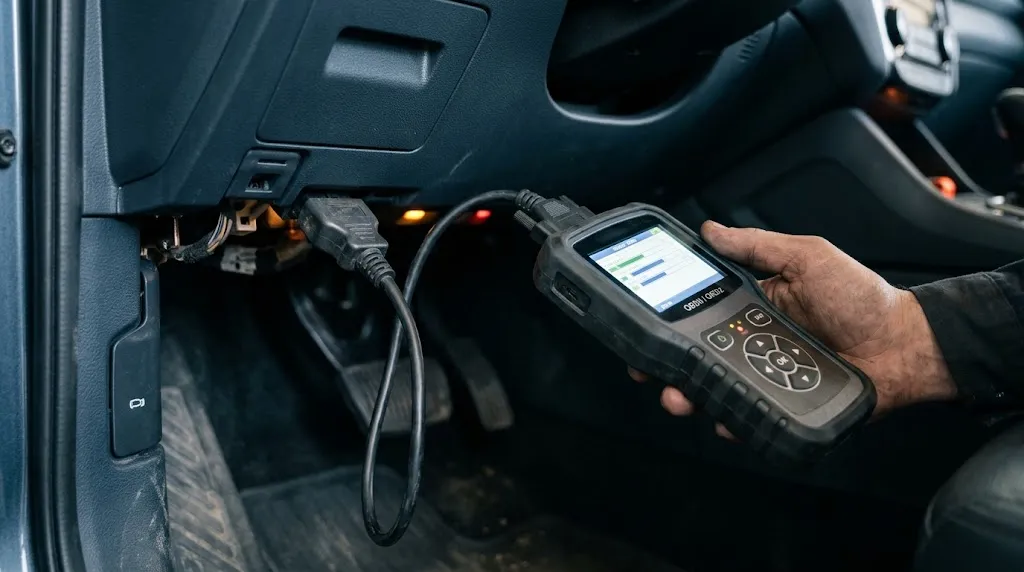
When you press clear, erase, or reset on a scanner, you are sending a reset command to the powertrain computer. For an ordinary stored code, that command normally does four things at once.
- It erases the stored diagnostic trouble code from the computer’s active fault memory.
- It switches off the malfunction indicator lamp, the check engine light, if that code was commanding it on.
- It erases the freeze frame snapshot saved when the code was set.
- It resets the emissions readiness monitors to not ready.
The freeze frame matters more than many drivers realise. It records conditions at the moment of failure, such as coolant temperature, engine speed, load, and fuel trim. Once cleared, that snapshot is gone. So read and record the code, its status, and the freeze frame before clearing anything.
Clearing also does not erase every kind of record. In particular, it does not erase a permanent code. A permanent code is a separate, protected record of a confirmed emissions fault. It stays until the vehicle’s own monitor runs and passes, even if the ordinary code and the light are gone.
Why the Light Goes Off So Quickly
The check engine light is commanded on when a confirmed fault is stored. Clearing removes that confirmed fault from active memory, so the reason for commanding the light on is removed as well. The dashboard responds immediately. There is no waiting period built into that part of the process.
That immediate result can be misleading. A light that is off does not mean the system has passed a test. It means only that no confirmed fault is currently commanding the light on. The monitors still have to run their own tests before the system can say the related parts are working correctly.
This is also why a scanner can show different results after a clear. The stored-code list may be empty while several monitors show as incomplete. Both can be true: one describes faults already confirmed, the other tests not yet completed.
Key Insight
Light off, code gone, and system passed are three different states. Clearing gives you the first two. Only completed monitors can give you the third.
Scanner Clear, Battery Disconnect, and Letting the Car Clear Itself
There are three common ways a light can go off, and they are not equivalent.
| Method | What happens | Main drawback |
|---|---|---|
| Scanner clear | Erases stored codes and freeze frame, turns the light off, resets monitors | Diagnostic evidence is lost if you have not saved it |
| Battery disconnect | Can clear stored codes and reset monitors by removing power | May also reset clocks, radio presets, and learned idle behaviour |
| Natural self-clear | The computer erases the code and light after repeated fault-free tests | Slow, and it only happens if the fault truly stops occurring |
A scanner clear is the cleanest manual option because it targets diagnostic memory without cutting power to everything else. A battery disconnect is blunter: it can work on an older vehicle, but on a modern car it may create extra relearn and convenience-system annoyances.
The natural route is different. The computer does not simply forget a code after a fixed number of miles. It erases the code and turns the light off when the fault is not detected during repeated monitor tests. Varied driving over several trips is therefore more useful than one long drive.
When the Light Does Not Stay Off
If the light returns, it is not proof that the clear command failed. It usually means one of four things happened.
First, the fault is still present. A hard fault, such as an open circuit or a sensor reading far outside its expected range, can be detected almost immediately. The code may return on the next drive, or even before you leave the driveway.
Second, the fault is intermittent. The system may store a pending fault code on the first failed test, without turning the light on. If the fault fails again on a later trip, that pending code can become confirmed, and the light returns. That delay does not mean the first clear worked and then something new broke.
Third, a permanent code is still stored. Clearing the ordinary code can turn the light off, but the permanent record remains until its monitor passes. On some vehicles and in some inspection programs, that remaining record still matters even while the dashboard looks clear. For the full distinction, see the guide to what a permanent OBD2 code is.
Fourth, a different fault is now being detected. A repair may have fixed the original problem but disturbed a connector, hose, or sensor nearby. In that case, the new code deserves its own diagnosis rather than another clear.
If the light comes back quickly with the same code, the root cause usually has not been fixed yet. Clearing again only restarts the same cycle. Note when it returns: immediately, after a cold start, at highway speed, or only after several days.
What Else Clearing Resets
Most drivers focus on the light, but the readiness reset is often more consequential. After a clear, monitors for the catalyst, oxygen sensors, and evaporative emissions return to not ready. They must run again under conditions that can include a cold start, steady cruising, deceleration, and a suitable fuel level.
That is why clearing just before an emissions test is a poor strategy. An inspection system can see that the monitors have not completed, even if the light is off and no stored code is present. A car can therefore fail, or be rejected for testing, because the system has not yet had a chance to prove itself. The guide to why OBD2 monitors are not ready explains the main reasons those tests stay incomplete.
Clearing can also make a used-car check harder. A recently cleared system looks clean at a glance, but not-ready monitors and a short time since clearing can reveal that the tests have not run yet. That alone is not proof of dishonesty, but it is a reason to drive and rescan before deciding.
Warning
Do not clear codes to hide a fault before an inspection or a sale. The readiness reset and any permanent code can expose the reset, and the underlying fault still needs repair.
A Sensible Clear-and-Check Sequence
Clearing is most useful after a repair, as a controlled test. Used that way, it turns a vague hope into a checkable result.
- Record the code, its status, and the freeze frame before clearing.
- Repair the suspected cause, rather than clearing first and hoping.
- Clear the stored codes with a scanner, then confirm the light is off.
- Drive normally across varied conditions, including cold starts and steady cruising where safe and legal.
- Rescan for stored codes, pending codes, permanent codes, and readiness status.
If no code returns and the relevant monitors complete, that is a much stronger result than a light that merely went off. If a pending code appears, do not clear it and call the job done. It is early evidence that the fault may still be present, and watching whether it becomes confirmed is often more informative than erasing it.
Also check the status words on your tool. Menu labels vary, so stored, confirmed, current, pending, and permanent may appear under different names. What matters is the distinction: a fault already confirmed, a fault seen once but not yet confirmed, and a protected record that only a passing monitor can remove.
Should You Clear the Code Now?
If you have recorded the code and freeze frame and just completed a repair, clearing makes sense. It gives the system a clean baseline and lets you test whether the repair worked.
If you have not diagnosed the fault yet, clearing usually costs more than it gains. You lose the freeze frame, reset the monitors, and may delay a diagnosis that would have been easier with the original evidence intact. Record everything and investigate first.
If an emissions test, a sale, or a purchase decision is imminent, do not clear unless you have enough time for the monitors to complete afterward. A light that is off is not the same as a system that is ready. For what happens next, the guide to whether an OBD2 code will come back after clearing covers return patterns, while the guide to how long a cleared code stays gone covers timing.
The EPA guidance on OBD logic describes the same reset in general terms: a scan-tool reset or battery disconnect can clear codes, freeze frame data, and the light command, while also resetting monitors to not ready. The computer can also erase a code on its own if the fault is not encountered during repeated tests.
Related Product
OBD2 Scanner
A basic OBD2 scanner lets you record codes and freeze frame data, clear stored codes after a repair, and check readiness before an inspection.
As an Amazon Associate, we earn from qualifying purchases.
Frequently Asked Questions
Does clearing codes reset the check engine light on every car?
On most OBD2 vehicles, clearing a stored code that commanded the light on will turn the light off. If another confirmed fault is present, or a permanent emissions record remains, the dashboard may look clear while a deeper record or inspection issue remains.
Will the light come back if I clear the code without fixing the problem?
Often, yes. Clearing does not change the faulty part or circuit. Once the relevant monitor runs again and detects the same fault, it can store the code again and command the light back on.
Is disconnecting the battery the same as using a scanner to clear codes?
The diagnostic result can be similar: stored codes may clear, the light may go off, and monitors reset to not ready. The side effects differ: a battery disconnect can also reset clocks, presets, and learned behaviour.
Can I pass an emissions test right after clearing codes?
Usually not, because clearing resets readiness monitors to not ready. Many inspection programs require those monitors to complete first, so you need enough varied driving for them to run and pass.
Why is my light off but a permanent code still shows?
A permanent code is a protected record that a scan-tool clear does not erase. The light can go off when the ordinary code is cleared, but the permanent code remains until the related monitor runs and passes.
How do I know whether clearing actually worked after a repair?
Do not judge by the light alone. Rescan after varied driving and look for three things: no stored or pending code for the repaired system, the relevant monitors complete, and no permanent code remaining for that fault.
Conclusion
Clearing codes does reset the check engine light in most ordinary cases, but that reset is only the start of the story. It erases the stored code and freeze frame, switches off the light command, and resets readiness monitors to not ready. It does not repair the fault, and it does not erase a permanent code. The useful test comes afterward: record first, repair, clear, drive under varied conditions, and rescan.

I’m Alex Rahman, a car enthusiast and automotive writer focused on practical solutions, car tools, and real-world driving advice. I share simple and honest content to help everyday drivers make better decisions.
