OBD2 vs EOBD: Key Differences Explained
Quick Answer
OBD2 and EOBD are not two unrelated systems. OBD2 is the United States standard, and EOBD is Europe’s version of the same basic idea: a standard port, standard fault codes, and emissions monitoring a generic scanner can read. They share the 16-pin connector and most generic codes, but differ in regulator, introduction dates, and some protocols and monitor details.
That shared foundation is why the names cause confusion. A scanner box may say OBD2, EOBD, or both, and a car may be described by either term depending on where it was sold. The useful question is whether your car uses the standard system, and what a generic scanner can and cannot read.
The difference in one paragraph
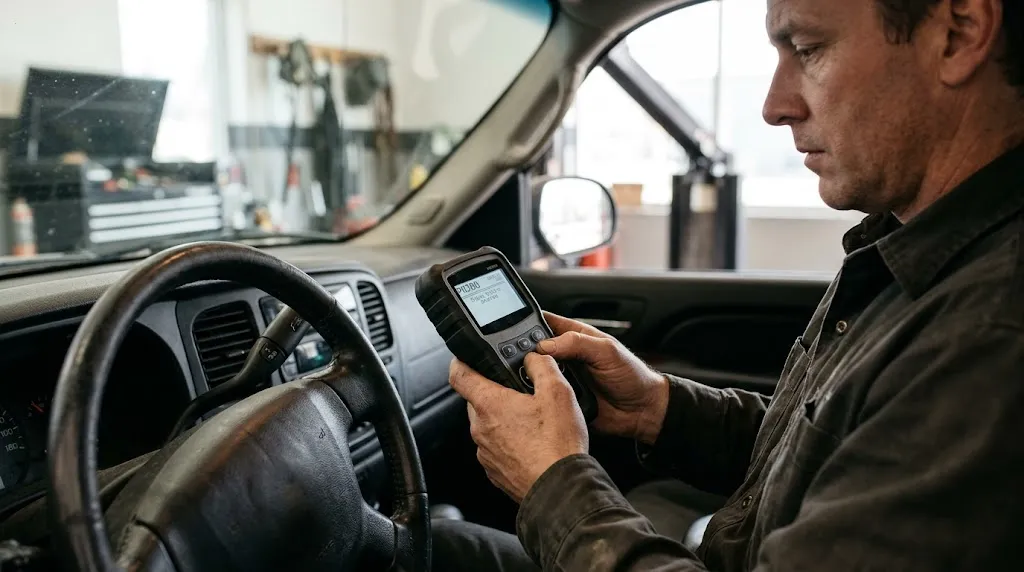
Think of OBD2 as the family name and EOBD as the European member of that family. Both were created so an independent workshop, an emissions tester, or a car owner would not need a different tool for every make. Both require the car to watch emissions-related systems, store a fault code when a problem is detected, and turn on the malfunction indicator lamp when the rules require it.
The split is mainly regulatory. In the United States, OBD2 grew out of requirements from the Environmental Protection Agency and the California Air Resources Board. In Europe, EOBD was introduced under Directive 98/69/EC alongside Euro emissions standards. The goal was similar, but the laws, dates, and some technical choices were not identical.
OBD2 vs EOBD at a glance
This table covers the points that change a buying or diagnostic decision. The details below explain the exceptions.
| Feature | OBD2 | EOBD |
|---|---|---|
| Main region | United States | European Union |
| Regulatory basis | EPA and CARB requirements | Directive 98/69/EC and Euro standards |
| Petrol cars | From model year 1996 | New types 2000; all new cars 2001 |
| Diesel cars | Phased in later than petrol | New types 2003; all new cars 2004 |
| Connector | 16-pin J1962 | 16-pin J1962 |
| Generic codes | Shared P0xxx format | Shared P0xxx format |
| Common protocols | J1850, ISO 9141-2, KWP2000, CAN | ISO 9141-2, KWP2000, CAN |
The table makes the practical point clear: the port and the generic code format do not tell you which regulation applies. The car’s market, year, and fuel type do.
What is actually the same
For most everyday checks, the overlap matters more than the label. Both systems use the same trapezoidal 16-pin diagnostic link connector, usually under the dashboard within reach of the driver. Pin 16 supplies power, pins 4 and 5 are grounds, and on modern CAN cars pins 6 and 14 carry the CAN bus. That is why one adapter can often plug into a US car and a European car without any change.
Generic codes are also shared in structure. A code starting with P0 is a generic powertrain code, so P0300 for random or multiple-cylinder misfire means the same kind of fault on either system. A generic scanner can normally read those codes, clear them after a repair, and show freeze-frame data, live data, and readiness monitors.
Readiness is another shared idea. The car runs self-tests, called monitors, on emissions-related systems. A scanner can show whether each supported monitor is complete or not ready, which is useful before an emissions test in either region, although exact pass rules are set locally. See how an OBD2 scanner checks emissions readiness for that check in practical terms.
Where they really differ: dates and coverage
The largest real difference is timing. OBD2 became mandatory for US light-duty petrol cars from model year 1996. EOBD arrived later in Europe: for lighter passenger cars, new vehicle types from 2000 for petrol and 2003 for diesel, and all new cars in those categories from 2001 for petrol and 2004 for diesel. Heavier vehicles and light commercials followed different dates, so a van or larger vehicle cannot be judged by the passenger-car dates alone.
That gap creates the most common compatibility trap. A European car built in 1998 may have a 16-pin-style port, or an earlier manufacturer system, yet not be EOBD compliant. A port alone does not prove compliance. Conversely, some European cars adopted the standard early, so a pre-2001 car is not automatically unreadable. Year and market are clues, not proof.
Coverage also differs by fuel. Diesel was a bigger part of the European market, and EOBD diesel monitoring developed around diesel emissions controls such as exhaust gas recirculation and, on later cars, particulate and nitrogen-oxide aftertreatment. US diesel light-duty coverage was phased in later. For a diesel-specific check, whether an OBD2 scanner works on diesel cars covers the year and weight-class limits in more detail.
Where they really differ: protocols and data
Early OBD2 in the United States allowed several protocols, including SAE J1850 PWM used by Ford and SAE J1850 VPW used by General Motors, alongside ISO 9141-2 and ISO 14230, known as KWP2000. Those J1850 variants were essentially US protocols. European EOBD cars normally used ISO 9141-2, KWP2000, and later CAN, rather than J1850.
Modern cars have largely converged on CAN. In the United States, CAN became mandatory for OBD2 from model year 2008, and European cars moved to CAN over a similar period, although the changeover varied by make and model. A scanner that supports CAN plus the older ISO and KWP2000 protocols will cover most compliant passenger cars on both sides, while a CAN-only tool may struggle with an older car.
The protocol explains why two cars with the same port can behave differently. ISO 9141 uses a slower K-line approach, while KWP2000 added faster initialisation and more structured sessions. “No communication” often means a protocol, power, or wiring problem, not proof that the car has no standard system.
Do codes and monitors differ too?
Generic codes are shared, but that is not the whole story. Manufacturer-specific codes, starting with P1, C1, B1, or U1, are defined by the maker and can differ by brand, model, and year. A generic scanner may show the code without a full definition.
Monitor lists and fault thresholds are also set by regulation and by the maker’s calibration. Two cars can therefore store the same generic code for different underlying faults, or one car can run a monitor the other does not support. The scanner result is a starting point. It identifies the monitored system and the stored fault; it does not by itself prove which part failed.
How to tell which system your car uses
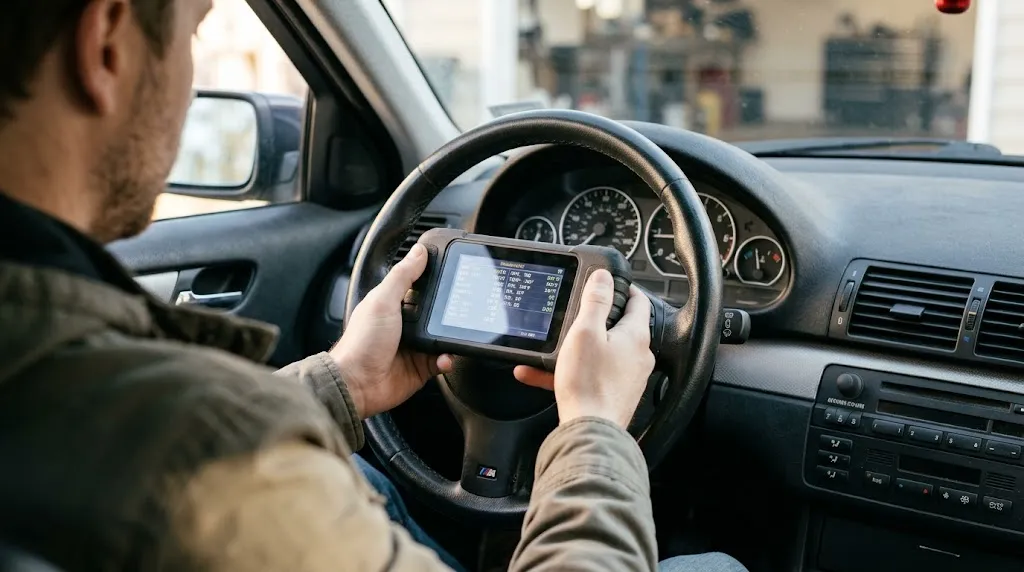
Start with market and year, then confirm with a scan. A US-market petrol car from 1996 onward should be OBD2. A European-market petrol car first registered from 2001 onward, or a diesel from 2004 onward, should be EOBD. Cars sold in other markets may follow either system, or a local variant.
Next, check the port and the result. Look under the dashboard for the 16-pin connector, then connect a generic scanner with the ignition on. If it identifies a protocol and shows codes or readiness, you have a usable generic connection. If it cannot communicate, check port power, try another adapter, and check whether the model needs a manufacturer-specific tool for that year.
Imported cars need extra care. A US car imported to Europe, or a European car imported elsewhere, keeps the system it was built to. Its registration country does not rewrite its diagnostics. See whether OBD2 is the same in Europe and the US if you are buying an import.
Will an OBD2 scanner work on an EOBD car?
For a generic emissions scan, usually yes. Most scanners sold today are not US-only or Europe-only tools. They support the shared connector, generic codes, and the main protocols, and are marketed as OBD2/EOBD scanners for exactly that reason. If your car is compliant and your scanner supports its protocol, reading and clearing generic codes should work in either direction.
The limits are also shared. A generic scanner does not automatically read every manufacturer system. Airbag, ABS, body, and many transmission or hybrid-specific functions may need enhanced or manufacturer-level coverage, even when generic engine codes read perfectly. That is a scanner-coverage limit, not a difference between the two standards.
When buying a scanner for cross-border use, check multi-protocol support including CAN, ISO 9141-2, and KWP2000; generic code, live data, freeze frame, and readiness support; and a coverage list for your make, model, and year if you need anything beyond generic engine data. Confirm the protocol list rather than trusting the label.
Key Insight
EOBD is not a different plug, a different code language, or a rival to OBD2. It is Europe’s regulatory version of the same standardised approach, so scanner compatibility depends on protocol and coverage, not on the OBD2 or EOBD name on the box.
Common misunderstandings to avoid
- A 16-pin port proves compliance. It does not. Some pre-standard cars have a similar port, and some compliant cars hide the port behind a cover.
- EOBD2 is a separate official standard. It is usually marketing language for a scanner or app that supports EOBD, not a distinct regulation.
- All 1996 European cars are EOBD. The US 1996 date does not apply in Europe. Use the European petrol and diesel dates, and verify with a scan.
- Clearing a code makes the systems identical. Clearing removes the stored code and resets readiness monitors. It does not change the car’s regulation, protocol, or monitor list.
- A generic code gives a complete diagnosis. It points to a monitored system. Further live data, freeze frame, and maker-specific information may still be needed.
If you want the European system explained on its own, rather than only in comparison, what EOBD is covers its dates, monitoring, and scanner limits without repeating this comparison.
Related Product
OBD2 / EOBD Scanner
A multi-protocol scanner lets you check generic codes, live data, and readiness on both OBD2 and EOBD cars without buying a separate tool for each region.
As an Amazon Associate, we earn from qualifying purchases.
Frequently Asked Questions
Is EOBD the same as OBD2?
Not exactly, but close. EOBD is Europe’s version of the OBD2 approach, with the same 16-pin connector and shared generic codes. The regulator, introduction dates, and some protocol and monitor details differ.
Can I use an OBD2 scanner on a European car?
Usually yes, if the car is EOBD compliant and the scanner supports its protocol. Most modern scanners support both, so check CAN, ISO 9141-2, and KWP2000 support rather than relying on the OBD2 label alone.
Why does my 1998 European car not connect to an OBD2 scanner?
It may predate EOBD. European petrol compliance generally starts with cars first registered from 2001, and diesel from 2004, so a 1998 car may use a manufacturer-specific system even if it has a similar-looking port.
Do OBD2 and EOBD use the same fault codes?
Generic P0xxx codes share the same format and broad meaning. Manufacturer-specific P1xxx codes and deeper system data can differ, so a generic scanner may show a code without the maker’s full definition.
Is CAN used by both OBD2 and EOBD?
Yes, on modern cars. CAN is now the dominant protocol for both systems, although older cars may use ISO 9141-2 or KWP2000. A scanner that covers all three is safer for older vehicles.
Does EOBD apply to cars outside Europe?
No, as a regulation it applies to cars sold under European rules. A car built for another market may still be readable by the same generic scanner, but its governing standard depends on where it was originally sold.
Conclusion
The difference between OBD2 and EOBD is mainly where and when each system was required, not a different plug or a completely different code language. Both give a generic scanner the same basic access: standard connector, generic codes, live data, freeze frame, and readiness. Confirm your car’s market and year, confirm your scanner supports its protocol, and test the connection. If those line up, one good multi-protocol scanner will normally serve both systems.

I’m Alex Rahman, a car enthusiast and automotive writer focused on practical solutions, car tools, and real-world driving advice. I share simple and honest content to help everyday drivers make better decisions.
