Will an OBD2 Code Come Back After Clearing? | Explained
Quick Answer
Yes, an OBD2 code will come back after clearing if the fault is still present. Clearing erases the stored code and turns off the warning light, but it does not repair anything. Once the vehicle runs the relevant self-test again and finds the same problem, it sets the code again. If the fault is genuinely fixed, or was only a one-time glitch, the code should stay away.
A cleared code is not a verdict. It is a reset, and whether it returns depends on the next test of the affected system, which may run in seconds, after a few trips, or only under specific driving conditions.
What Clearing a Code Actually Does
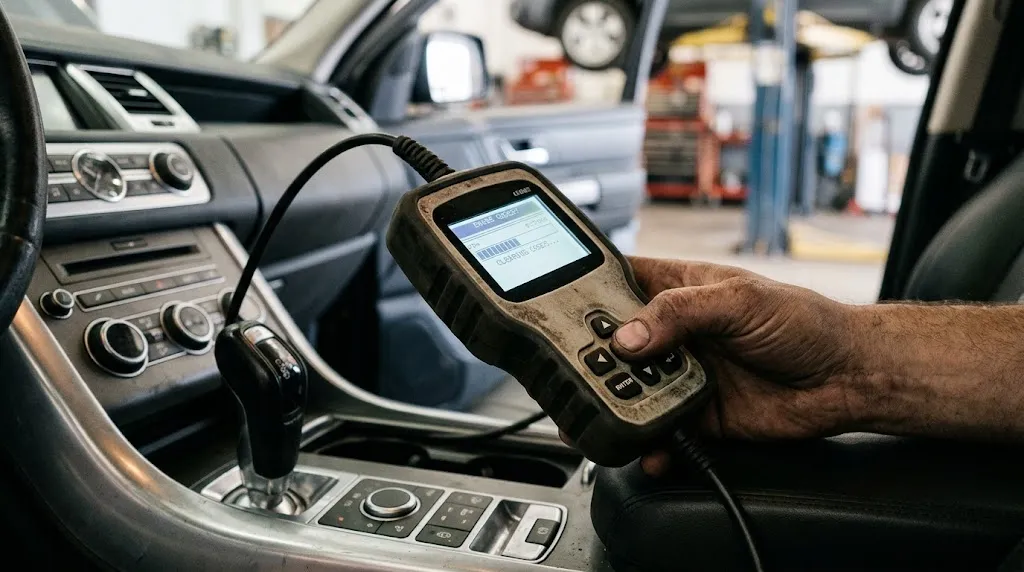
When a scanner clears diagnostic information, it erases stored trouble codes, turns off the malfunction indicator lamp, and clears freeze-frame data for those codes. It also resets the emissions readiness monitors to “not ready,” so the vehicle’s computer starts its self-testing from scratch.
Clearing does not replace a sensor, seal a leak, clean a connector, or restore a worn component, so an unchanged physical condition will lead the computer to the same conclusion when it tests again. That is why clearing OBD2 codes does not, by itself, fix the problem; a repair, a corrected connection, or the end of a temporary condition still has to happen first.
The Four Outcomes After Clearing
Almost every case falls into one of four outcomes. Identifying which one fits your situation is more useful than guessing how many miles the light might stay off.
| Situation | What usually happens | What it means |
|---|---|---|
| Fault still present | Code returns when the monitor retests | The problem needs diagnosis and repair |
| Fault genuinely fixed | Code stays away; monitors complete | The repair addressed the cause |
| One-time glitch | Code stays away | The triggering condition is no longer occurring |
| Repair missed the root cause | Same or related code returns | Further testing is needed before replacing another part |
A code that stays away for a week is not necessarily proof of a fix; the relevant monitor may not yet have run under the conditions needed to fail again. A code that returns quickly is often proof that the fault is constant and easy to detect.
Why Some Codes Return Immediately and Others Take Days
The return time is set by the monitor, not by a countdown timer. Each system has its own self-test, and each test has its own entry conditions. Some run continuously while the engine is running. Others run only after a cold start, at a steady speed, at a certain coolant temperature, or with the fuel tank within a particular range.
A hard fault returns fastest: a disconnected connector or a sensor giving no usable signal can be detected almost immediately. An intermittent fault takes longer, as a small vacuum leak or a fault that only appears when hot, cold, or under load may pass one test and fail the next.
Catalyst and evaporative-system monitors are among the slowest to complete, so their codes can stay away longer than a misfire code even when the fault is still there. For more on that timing, see how long a cleared code stays gone.
Pending Codes Explain the Delay
Many systems use a two-step process before turning the warning light back on. The first failed test often stores a pending code, meaning the fault was seen once but has not yet been confirmed. The light usually stays off at that stage. If the same fault is found again on a later trip, the pending code becomes a confirmed code and the light comes on.
If you scan after clearing and find a pending code with the same number, the fault has already recurred, even though the dashboard is still dark. See stored versus pending trouble codes for the full distinction.
Key Insight
A code that has not returned yet is not the same as a code that has passed. Until the relevant monitor has run and completed, the vehicle has not yet given a verdict. A “not ready” monitor means the test is still outstanding, not that the system is healthy.
Permanent Codes Are the Exception
For emissions-related faults, there is an important exception. A permanent code cannot be erased by a scanner command or by disconnecting the battery. It remains in a separate part of the vehicle’s memory until the vehicle itself runs the relevant monitor and passes it.
This prevents a code from being hidden just before an inspection: even with the warning light off, inspection equipment can still request permanent codes. A permanent code therefore will not “come back” after clearing, because it never left; it only disappears after the monitor confirms a pass. See what a permanent OBD2 code is.
How to Tell Whether a Cleared Code Is Really Gone
The strongest check is not time alone or the absence of a warning light. It is completed monitors, no returning pending code, and normal behaviour from the affected system.
- Record the code before clearing. Note the exact code number and symptoms. Clearing first destroys evidence that can narrow the diagnosis later.
- Fix the suspected cause, then clear. Clearing after the repair gives a clean starting point and avoids confusing an old code with a new failure.
- Drive under varied conditions. Short, identical trips may never trigger the monitor that needs to run. Mix cold starts, steady cruising, and deceleration where safe and legal.
- Recheck for pending codes. Scan again after several trips, even if the light is off. A returning pending code is an early sign the fault is still present.
- Check readiness monitor status. If the relevant monitor still shows “not ready,” the test has not completed. Do not treat the absence of a code as a pass yet.
Tip
Do not judge a repair by the first trip. Judge it after the relevant monitor has completed and a re-scan shows no pending code. That is the point at which the vehicle has actually retested its own work.
Why a Code Keeps Coming Back After a Repair
A returning code after a part has been replaced does not always mean the new part is faulty. In many cases, the code named a system or circuit, not a single component. Replacing the component named in the code description can therefore miss wiring, connectors, vacuum lines, fuel delivery, exhaust leaks, or a mechanical fault upstream of the sensor.
Consider a lean code: it can come from a cracked hose, a dirty airflow sensor, low fuel pressure, or an exhaust leak. Replacing one sensor without checking the others may change nothing, and a partial repair, such as a connector reseated but not locked, can have the same effect.
When a code returns repeatedly, stop clearing and start comparing: check the exact code number each time, look for any code appearing alongside it, and inspect wiring and connections before buying another part.
Clearing Before an Inspection Does Not Hide the Problem
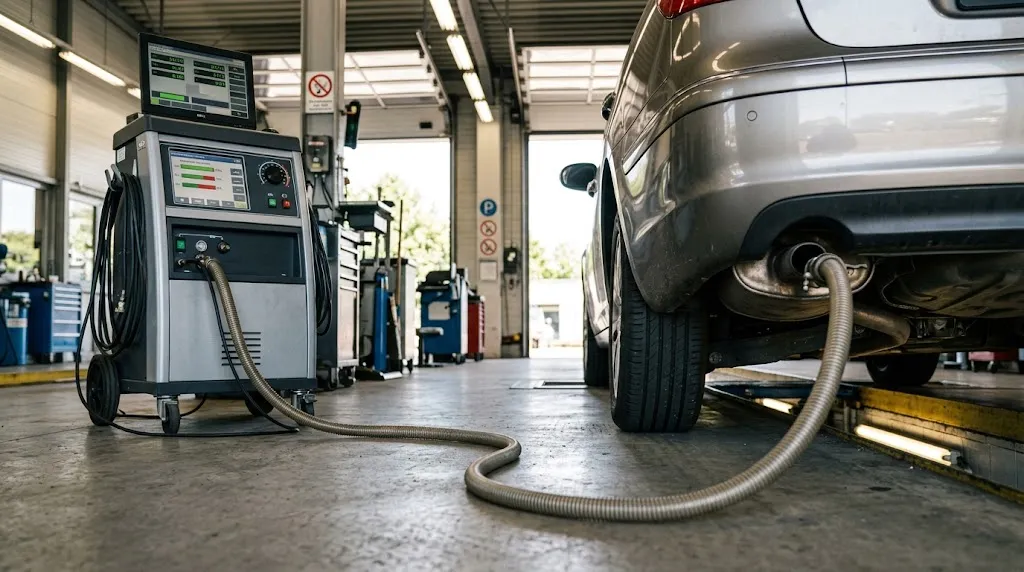
Clearing codes shortly before an emissions test can create a second reason to fail. Clearing resets readiness monitors to “not ready,” and inspection equipment checks that status as well as stored codes. A vehicle with too many incomplete monitors will be rejected for readiness, even if no code is present and the light is off.
Under the EPA guidance adopted by many state inspection programmes, 2001 and newer vehicles are generally allowed only one incomplete non-continuous monitor, while 1996 to 2000 vehicles are generally allowed up to two. Exact rules vary by programme and vehicle type, but the principle is consistent: a recent reset is visible to the test equipment. The New York Vehicle Inspection Program’s OBD II guidance summarises this EPA-based readiness approach.
So repair the fault first, clear the codes, complete the driving needed for the monitors to run, and confirm readiness before booking the test.
Warning
Do not keep clearing a flashing warning light, a severe misfire, overheating, loss of power, or a strong fuel smell. Those symptoms can indicate damage in progress, including harm to the catalytic converter. Stop driving if it is safe to do so and seek diagnosis promptly rather than resetting the warning and continuing.
What to Do If the Code Returns
If the same code returns quickly, treat the fault as constant and present, and check the most direct causes first: connections, wiring, and the system the monitor is testing. If it returns only under certain conditions, note them: heat, cold, speed, load, or fuel level can narrow an intermittent fault.
If a different code appears, do not assume the first problem is solved. Related codes often share a cause, such as a vacuum leak affecting several readings. If the code does not return but the monitor remains incomplete, the job is unfinished. If it returns after a professional repair, take the recorded codes and monitor status back with you.
Related Product
OBD2 Scanner
A scanner that shows pending codes and readiness monitor status helps you check whether a cleared code has truly stayed away, rather than judging by the warning light alone.
As an Amazon Associate, we earn from qualifying purchases.
Frequently Asked Questions
Will a code come back if I only tightened a loose fuel cap?
Usually not, once the cap is sealing properly and the evaporative system monitor has run and passed. The code may not disappear instantly, because the system needs the right conditions to retest. If it returns, look for a damaged cap seal, a cracked hose, or another evaporative leak.
How many times can I clear the same code?
A scanner will generally let you clear a stored code repeatedly, but that does not change the outcome if the fault remains, and each clear resets readiness monitors. If the same code returns twice after a supposed fix, investigate the cause instead.
Does disconnecting the battery clear a code differently from using a scanner?
For ordinary stored codes, the effect is similar, except disconnecting the battery can also erase presets and learned adaptations. Neither method erases a permanent code, and a scanner is cleaner because it records the code first.
Can a different code come back instead of the original one?
Yes. A repair may resolve one fault while revealing another, or two faults may share a root cause. For example, fixing a vacuum leak can change fuel-trim readings and expose a separate sensor issue. Record every new code rather than assuming it is unrelated.
If the light stays off for a week, is the code fixed?
Not necessarily. The light staying off only proves the fault has not yet been confirmed again. Check whether the relevant readiness monitor has completed and whether any pending code has returned. If the monitor is still incomplete, the vehicle has not yet finished its retest.
Will a cleared code still show up on a dealer or inspection scan?
An ordinary stored code that was cleared will not appear as a stored code, but the reset itself is visible through incomplete readiness monitors. A permanent emissions code, where one applies, can still be retrieved directly even after clearing.
Conclusion
An OBD2 code will come back after clearing whenever the fault that caused it is still there and the vehicle runs the test that detects it. Timing varies because monitors run under different conditions, and a pending code often appears before the warning light returns. Permanent codes add a further limit: they cannot be cleared away and only disappear after the vehicle confirms a pass.
The reliable test is not a dark dashboard. It is a completed monitor, no returning pending code, and the original symptom gone.

I’m Alex Rahman, a car enthusiast and automotive writer focused on practical solutions, car tools, and real-world driving advice. I share simple and honest content to help everyday drivers make better decisions.
