Is OBD2 the Same in Europe & US? Key Differences Explained
Quick Answer
No, OBD2 is not strictly identical in Europe and the US, though they share the exact same physical 16-pin connector plug and core diagnostic codes. In Europe, the equivalent system is known as EOBD (European On-Board Diagnostics), which was implemented several years later than the American OBD-II standard and features unique regional mandates for emissions tracking.
Understanding the Core Standards: OBD2 vs. EOBD
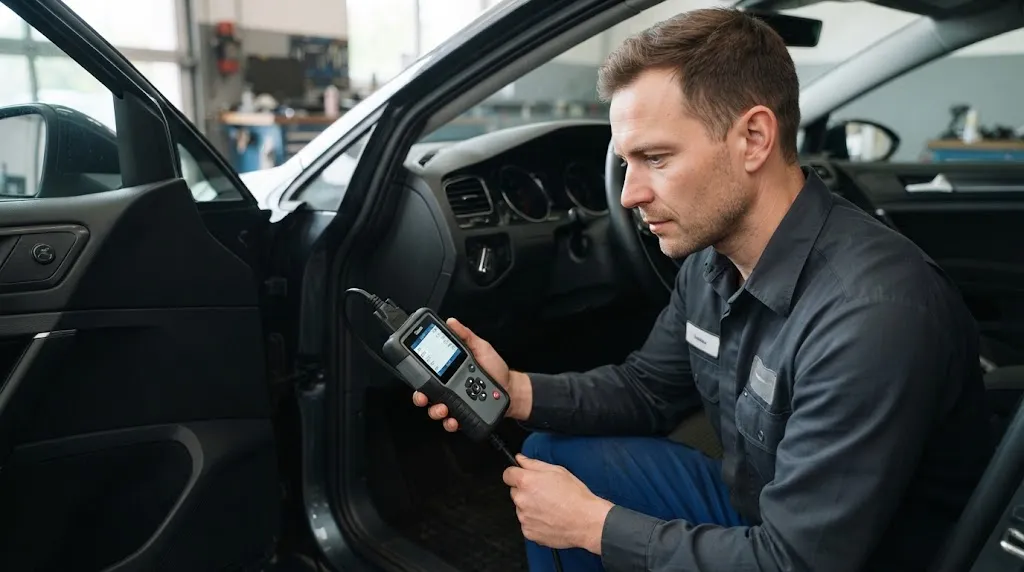
When working on modern cars, car owners and DIY mechanics often assume that diagnostic systems are completely universal across the globe. While the hardware looks identical, the underlying regional regulations differ. The term OBD2 specifically refers to the regulatory standard established in the United States by the California Air Resources Board (CARB) and the Environmental Protection Agency (EPA).
In contrast, Europe adopted its own equivalent regulatory framework known as EOBD. While EOBD is a direct derivative of the American OBD-II protocol, it was tailored specifically to match European emissions directives and fuel types. Despite these regulatory differences, both systems share the same physical 16-pin Data Link Connector (DLC) shape and utilize standardized Diagnostic Trouble Codes (DTCs) starting with letters like P, C, B, or U.
Key Insight
Although regional acronyms differ, the communication language—such as Controller Area Network (CAN) protocols—allows most standard OBD2 code readers to pull basic engine fault codes from EOBD-compliant vehicles.
Mandatory Implementation Timelines
One of the most noticeable differences between the US and European diagnostic systems is the rollout date. Because automotive markets and environmental laws evolved independently, the enforcement dates for mandatory onboard diagnostics varied significantly:
- United States: OBD-II became legally mandatory for all light-duty passenger vehicles and trucks starting with the 1996 model year.
- European Union (Gasoline/Petrol): EOBD became mandatory for all new petrol-powered passenger cars sold within the EU beginning on January 1, 2001.
- European Union (Diesel): Due to technical complexities surrounding diesel emissions and particulate monitoring, EOBD enforcement for diesel vehicles was delayed until January 1, 2003 (with full compliance often extending to 2004 models).
Because of this timeline gap, a vehicle manufactured in Europe between 1996 and 2000 may feature a physical diagnostic port, but it frequently lacks full EOBD compliance. Consequently, standard US OBD2 scanners may fail to communicate with these older European models.
Physical Port Location and Standardization
Both regions agreed on the physical shape and pin layout of the diagnostic port to ensure technicians could easily plug in equipment. Under both standards, the 16-pin trapezoidal connector must be located inside the passenger compartment.
In both American and European cars, the port is typically situated underneath the dashboard, within arm’s reach of the driver’s seat—usually near the steering column, center console, or fuse box. While manufacturers are permitted to add a snap-on plastic cover or place a small trim panel over the connector, no special tools are required to reveal or access the port.
Key Differences in Emissions Monitoring and Parameters
While clearing engine codes and reading generic data streams look identical on a handheld screen, the internal software algorithms monitor different environmental thresholds. EOBD places a heavy emphasis on specific European pollutants and components:
- Catalytic Converters: EOBD monitors catalyst degradation and efficiency with strict parameters designed around European test cycles.
- Diesel Particulate Filters (DPF): Because diesel passenger cars are far more common in Europe than in the US, EOBD includes deep monitoring parameters for exhaust soot, differential pressure, and regeneration cycles.
- Evaporative Emissions (EVAP): US OBD-II systems feature rigorous micro-leak detection for fuel vapor systems that historically differed from early European implementations.
These specialized checks mean that advanced diagnostic scanners designed solely for US market vehicles might lack deep factory-level access for specialized European chassis modules, such as transmission control units or body control modules.
Will a US OBD2 Scanner Work on a European Car?
For the vast majority of modern vehicle owners, compatibility is straightforward. If you purchase a standard code reader or Bluetooth adapter in the United States, it will successfully read and clear generic powertrain fault codes on any European petrol car built from 2001 onward (or diesel from 2004 onward).
However, limitations arise when attempting to access manufacturer-specific sub-systems. Generic OBD2 readers focus strictly on emissions-related powertrain codes (P-codes). If you need to diagnose ABS faults, airbag warnings, electronic parking brake resets, or transmission codes on a European luxury vehicle like a BMW, Audi, or Mercedes-Benz, a generic US scanner may only show a blank screen or fail to link to those secondary modules.
Warning
Do not assume a cheap, basic code reader can clear specialized service interval lights or proprietary module errors on imported European cars without brand-specific software support.
Choosing the Right Diagnostic Tool for Imported or Domestic Vehicles
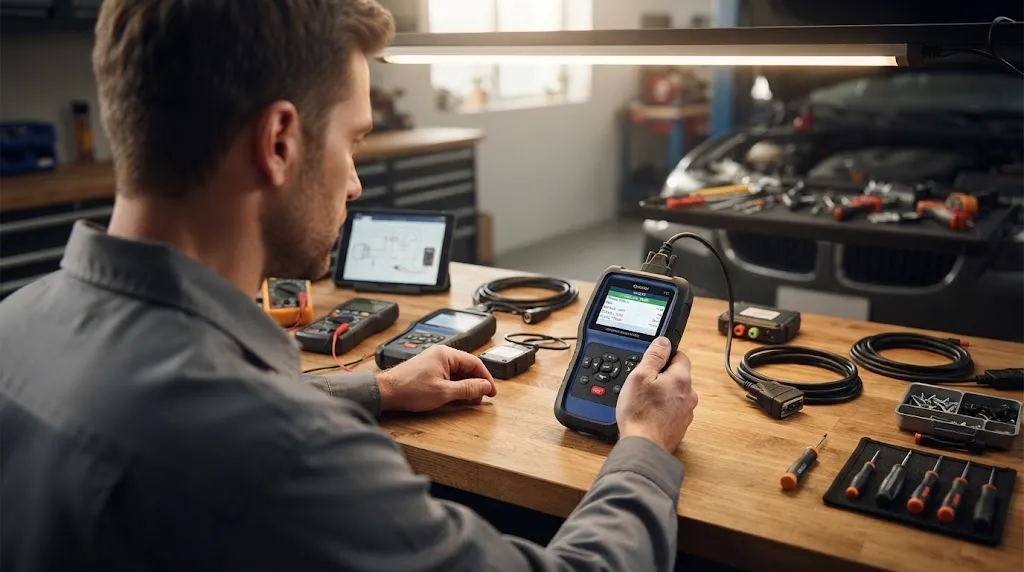
When selecting a scan tool, your choice should depend on the specific vehicles in your garage. If you exclusively service modern global platforms built after 2001, most mid-range code readers feature dual OBD2 and EOBD protocol compatibility out of the box.
For DIY mechanics dealing frequently with European imports, look for scanners that offer software updates supporting manufacturer-specific protocols (such as VAG-COM for Volkswagen/Audi groups or expanded European coverage packages). This ensures you can view live sensor data streams, monitor fuel trim values, and execute electronic resets safely across different regional engineering standards.
Related Product
OBD2 Diagnostic Scan Tools
A reliable multi-protocol scan tool helps read and clear fault codes across both US and European vehicle standards.
As an Amazon Associate, we earn from qualifying purchases.
Frequently Asked Questions
Are the diagnostic trouble codes (DTCs) the same in Europe and the US?
Yes, the standardized Diagnostic Trouble Codes—such as Powertrain (P) codes—are universal. A specific code like P0300 indicates a random engine misfire whether the car is registered in California or Germany.
Can I use a European EOBD scanner on an American car?
Generally yes. Because EOBD is a regional extension built on top of the foundational American OBD-II architecture, most modern diagnostic tools support both protocol suites seamlessly for post-2001 vehicles.
Why won’t my OBD2 scanner connect to my 1998 European car?
Cars manufactured in Europe between 1996 and 2000 often predate the mandatory EOBD enforcement date of January 1, 2001. Even though they may feature a physical 16-pin connector, their internal computer systems may lack standardized communication protocols.
Do diesel cars in Europe use the same diagnostic rules as petrol cars?
No. While petrol cars achieved mandatory EOBD status in 2001, diesel vehicles were given an extra two years, making EOBD mandatory for European diesel passenger cars starting in 2003.
Does the diagnostic plug look different on European cars?
No. The physical shape, trapezoidal orientation, and 16-pin configuration of the Data Link Connector (DLC) are standardized globally under international guidelines.
Can generic code readers clear airbag or ABS lights on European imports?
Usually no. Generic OBD2 readers focus strictly on emissions and engine powertrain codes. Diagnostic checks for airbags, ABS, and body electronics on European cars often require advanced, brand-specific diagnostic software.
Conclusion
While American OBD-II and European EOBD share identical physical ports and universal trouble code structures, they remain distinct regional regulations with different enforcement timelines. Understanding that European vehicles require EOBD compliance starting in 2001 helps prevent compatibility confusion when troubleshooting engine faults. Selecting a capable multi-protocol scanner ensures accurate diagnostics regardless of where a vehicle was manufactured.

I’m Alex Rahman, a car enthusiast and automotive writer focused on practical solutions, car tools, and real-world driving advice. I share simple and honest content to help everyday drivers make better decisions.
