What Does OBD2 Pin 16 Do? Power Function & Testing Guide
Quick Answer
OBD2 pin 16 supplies constant, unswitched 12-volt battery power directly from the vehicle’s battery to the diagnostic link connector (DLC). It remains active even when the ignition switch is turned off, providing the electrical current required to power code readers, scan tools, plug-in GPS trackers, and head-up displays without needing the engine running.
Where Pin 16 Sits on the OBD2 Port
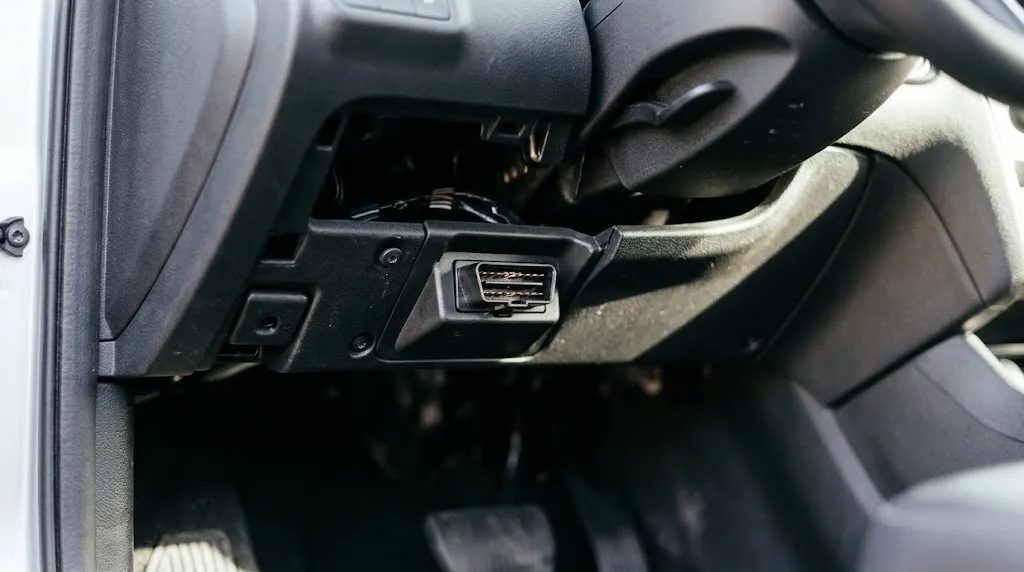
Every modern vehicle built for the US market and most global regions features a standardized 16-pin diagnostic connector defined by the SAE J1962 specification. Located underneath the dashboard—usually near the driver’s left knee or steering column—this trapezoidal port relies on a strict pin layout so that any generic scan tool can plug into any vehicle.
Pin 16 occupies the bottom-right corner if you look at a standard Type A connector mounted with its wider edge facing upward. Directly opposite on the top row is pin 1, while the two ground connections sit near the middle on pins 4 (chassis ground) and 5 (signal ground). Because pin 16 taps straight into the vehicle’s electrical distribution box or fuse panel, it stays live around the clock.
What Pin 16 Powers and Why Constant Voltage Matters
The primary engineering purpose of pin 16 is to supply steady operating voltage to diagnostic hardware. Older diagnostic plugs often required external battery clamps or cigarette lighter adapters to turn on a handheld scanner. The standardized 16-pin layout solved this by bringing unswitched battery power straight to the port.
When you plug a basic code reader or an advanced bidirectional scan tool into the port, the device instantly illuminates because it draws its operating current from pin 16. Beyond standard diagnostics, several aftermarket electronics rely on this constant feed:
- Plug-in GPS trackers: Fleet tracking modules and insurance dongles draw parasitic power from pin 16 to log vehicle movement or location even when parked.
- OBD2 dash cams: Specialized parking-mode power cables draw continuous 12V current from pin 16 to monitor a vehicle while the engine is off.
- Memory savers: Technicians plug OBD2 memory-saver devices into pin 16 during battery replacements to maintain constant power to the vehicle’s electronic control modules, preventing radio presets and computer settings from resetting.
Warning
Because pin 16 never sleeps, leaving high-draw auxiliary devices plugged in for days while a vehicle sits parked can slowly drain the car battery. If your vehicle sits unused for extended periods, unplug accessories from the diagnostic port to prevent a dead battery.
How Pin 16 Works with Ground Pins 4 and 5
Power cannot flow through a single wire; pin 16 requires a complete electrical circuit to deliver usable energy. That completion comes from the ground pins situated nearby on the lower row of the connector.
Pin 4 provides chassis ground, tying the circuit directly to the vehicle’s metal frame and handling the heavy return current required to power tool screens and microprocessors. Pin 5 acts as signal ground, creating an isolated ground reference specifically for sensitive data communication lines like the CAN bus. When a scan tool fails to power up at all, a blown fuse or a corroded ground wire on pin 4 is frequently the root cause rather than an issue with pin 16 itself.
Troubleshooting Low Voltage or No Power at Pin 16
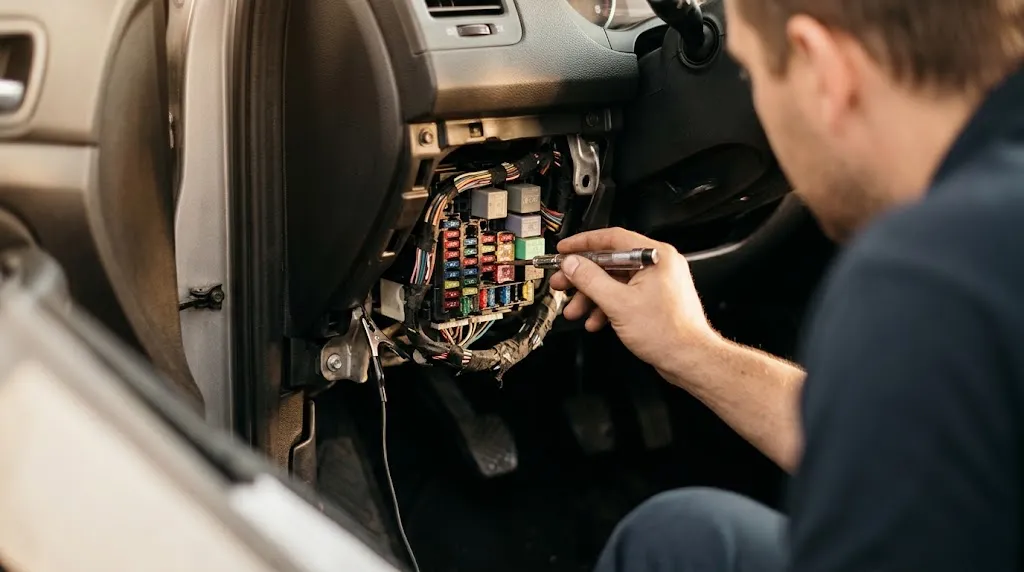
When a diagnostic scanner remains completely dark upon being plugged into the port, pin 16 is usually failing to deliver its standard 12 volts. Diagnosing this issue requires a digital multimeter set to DC volts.
To test the circuit, place the black multimeter probe on pin 4 (chassis ground) and the red probe into the cavity for pin 16. A healthy system should display full battery voltage—typically between 12.2 and 12.6 volts depending on the state of the car battery—regardless of whether the ignition key is turned on.
If the multimeter reads zero or shows a low, restricted voltage (such as 5V or 7V), check the following common failure points:
- Blown fuse: In many vehicles, the OBD2 port shares a fuse with the cigarette lighter, interior auxiliary power outlet, or cabin clock. A shorted phone charger often blows this fuse, cutting power to pin 16.
- Wiring harness damage: Water leaks from a windshield or sunroof can run down the interior kick panels, corroding the wiring splices and fuse blocks that feed the diagnostic port.
- Loose terminal pins: Repeatedly forcing oversized aftermarket plugs into the DLC can back out or widen the metal receptor inside cavity 16, causing an intermittent connection.
Tip
Always consult your vehicle owner’s manual or under-hood fuse box diagram to locate the specific fuse governing the diagnostic connector or accessory socket before replacing components.
Distinguishing Power Pins from Data and Manufacturer Pins
It helps to understand how pin 16 fits into the wider layout of the diagnostic port. The 16 pins are divided into functional groups that ensure power delivery never interferes with vehicle communication.
| Pin Number(s) | Function Category | Primary Role |
|---|---|---|
| Pin 16 | Power Supply | Constant unswitched 12V battery feed |
| Pins 4 & 5 | Ground | Chassis ground (Pin 4) and signal ground (Pin 5) |
| Pins 6 & 14 | Network Communication | Controller Area Network (CAN High and CAN Low) |
| Pins 1, 3, 8, 9, 11, 12, 13 | Manufacturer Specific | Optional lines reserved by automakers for specialized diagnostic functions |
While pins like 6 and 14 transmit the high-speed data packets that tell you why a check engine light is illuminated, they carry very little electrical current. Pin 16 handles the heavy lifting on the electrical side, ensuring that diagnostic tools receive steady operating voltage independently of the vehicle’s ignition state.
Related Product
Automotive Digital Multimeter
A reliable digital multimeter allows you to quickly test pin 16 voltage and check port grounding when troubleshooting a scan tool that won’t power on.
As an Amazon Associate, we earn from qualifying purchases.
Frequently Asked Questions
Does OBD2 pin 16 turn off when you remove the ignition key?
No. Pin 16 is wired directly to the vehicle’s electrical system via a continuous battery feed. It remains hot and supplies 12 volts even when the ignition is switched off, the key is removed, and the car is locked.
Why does my OBD2 scanner say “No Link” if pin 16 has power?
Power is only one part of the equation. While pin 16 powers the scanner’s screen, communication requires a working ground on pins 4 or 5 and active data signals on protocol lines like pins 6 and 14. A broken ground wire or a corrupted data bus will prevent communication even if pin 16 shows full voltage.
Can pin 16 cause a dead car battery?
Yes, if you leave a high-draw accessory—such as an always-on telemetry tracker, faulty diagnostic adapter, or custom dash cam hardwired incorrectly—plugged into the port for days without driving, it can slowly draw down the battery via pin 16.
What fuse controls OBD2 pin 16?
Fuse placement varies widely depending on the make, model, and year of the vehicle. In many modern cars and trucks, the diagnostic port shares a fuse with the cigarette lighter or interior accessory power outlet. Check your owner’s manual fuse diagram to find the exact location.
Is pin 16 voltage 12 volts on heavy-duty trucks?
Standard passenger cars and light trucks use a 12-volt architecture on pin 16. However, heavy-duty commercial vehicles utilizing Type B diagnostic connectors can feature 24-volt systems on their power pins, which requires specialized diagnostic adapters to avoid damaging 12-volt tools.
Can I use pin 16 to power external accessories permanently?
While pin 16 can supply power to low-current devices, tapping into it for heavy accessories is strongly discouraged. Doing so can overload the factory diagnostic circuit, blow cabin fuses, or interfere with sensitive vehicle network traffic.
Conclusion
OBD2 pin 16 serves as the constant electrical lifeline of your vehicle’s diagnostic port, delivering unswitched 12-volt battery power directly to scanners, code readers, and plug-in monitors. Because it remains active even when the ignition is off, it allows tools to power up instantly. Understanding its continuous power role—alongside its partnership with ground pins 4 and 5—makes troubleshooting a dead diagnostic port straightforward and protects your vehicle’s electrical infrastructure.

I’m Alex Rahman, a car enthusiast and automotive writer focused on practical solutions, car tools, and real-world driving advice. I share simple and honest content to help everyday drivers make better decisions.
