
10 Best Dash Cam for Beginners: Easy-to-Use Models for Safer Driving
Dash cams record the road ahead and can provide useful evidence after a crash, traffic dispute, or other incident. They can also help new drivers review risky situations and improve their awareness behind the wheel. A beginner-friendly model should offer clear video, simple controls, and dependable recording without requiring advanced setup.
For beginners, the most important features are easy installation, a reliable loop-recording mode, clear night video, and a secure way to save important clips. We should also consider the camera’s viewing angle, parking mode, app quality, storage needs, and whether the package includes a memory card or hardwiring kit. We tested and researched dash cams to find the models that make recording the road simple and dependable.
Best Dash Cams for Beginners
We reviewed beginner-friendly dash cams for video quality, ease of setup, and useful safety features. Our list includes reliable options for drivers who want simple controls and clear recording.
ROVE R2-4K Dual Dash Cam
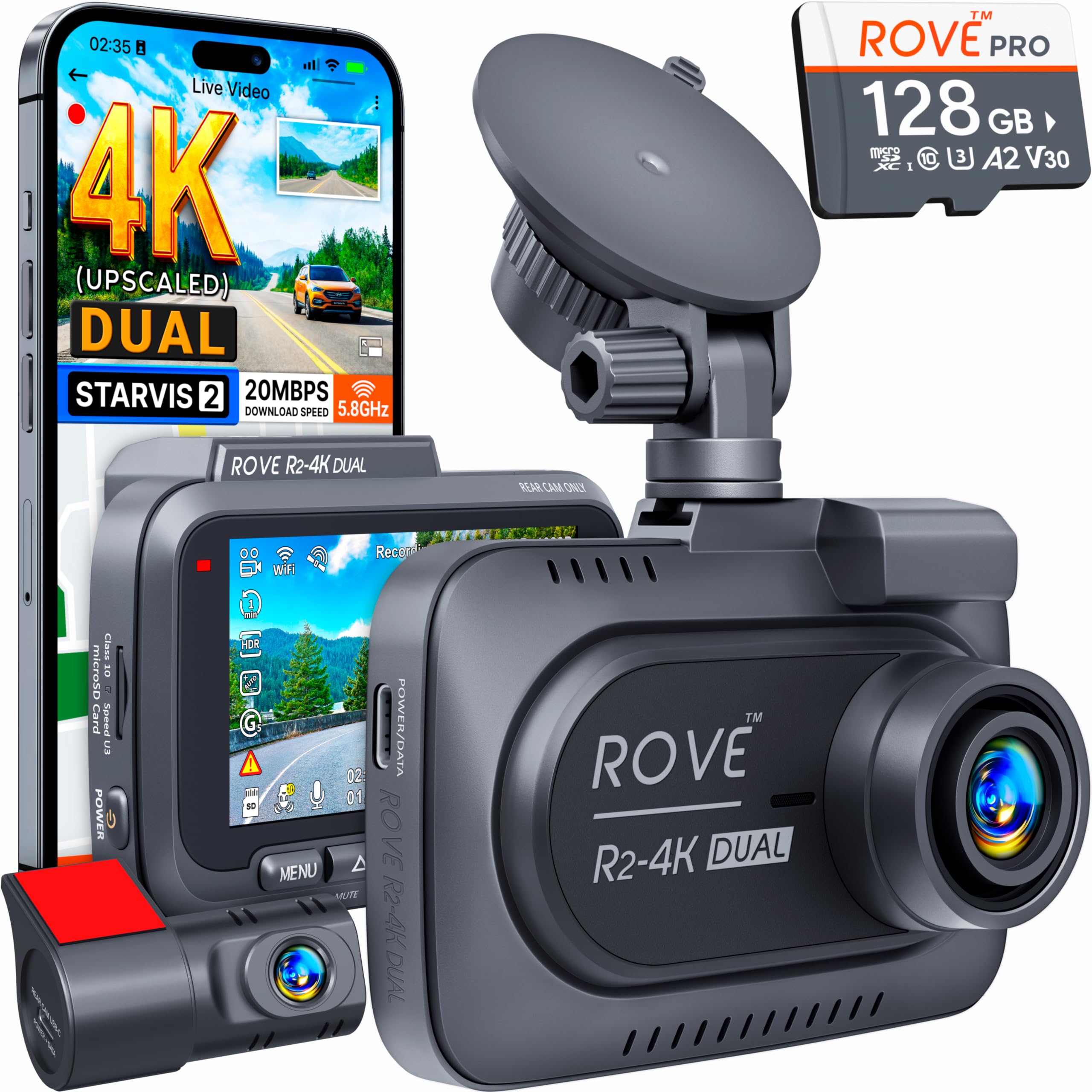
We recommend this dual-camera dash cam for beginners who want clear front and rear coverage, simple phone access, and useful safety features.
Key Pros
- Sharp front video with helpful low-light performance
- Rear camera and GPS come included
- Fast Wi-Fi transfers and a 128GB card included
Key Cons
- Front footage uses upscaling rather than native 4K
- Parking mode needs a separate hardwire kit
- Setup takes time when routing the rear-camera cable
We found the ROVE R2-4K Dual easy to use once installed. The front camera records detailed footage, while the rear unit adds useful coverage in traffic and parking lots. Its 3-inch screen also makes alignment simple during setup.
Night footage looked reasonably clear, especially under streetlights. The Sony STARVIS 2 sensor and HDR help balance bright headlights and darker areas, though image quality still depends on road lighting and weather.
The included 128GB microSD card helps beginners start recording without buying extra storage. We also liked the quick 5.8GHz Wi-Fi connection, which made short video downloads to a phone faster than using a memory card reader.
GPS records speed and location with the footage, which can help when reviewing an incident. However, the parking features require a separately sold hardwire kit, so buyers should include that cost if they want recording while the car is parked.
Installation includes clips, a trim tool, and both suction and adhesive mounts. Routing the long rear-camera cable takes patience, but the included parts make the process more manageable for a first-time setup.
Galphi 4K Dash Cam
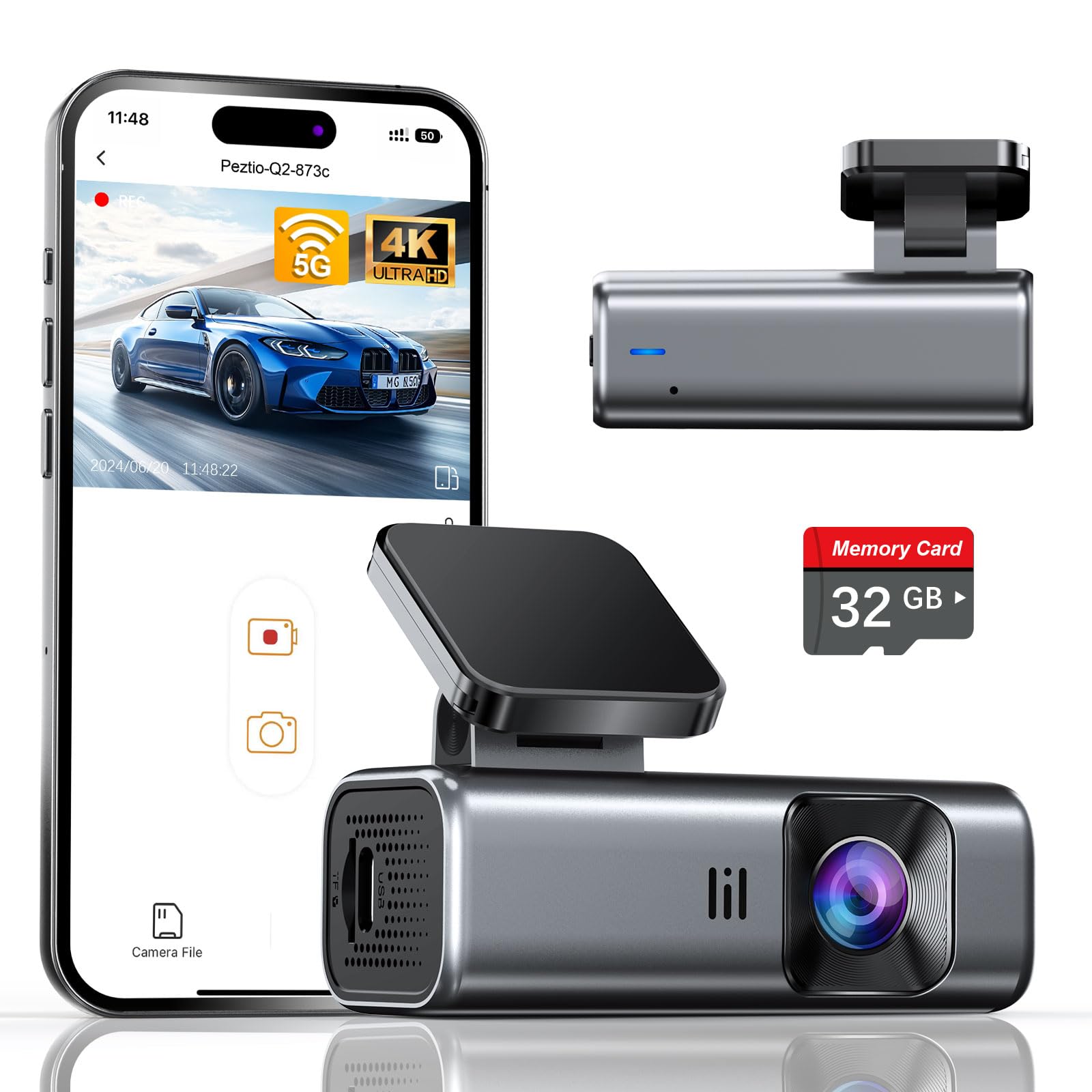
We recommend this dash cam for beginners who want sharp video, simple setup, and phone-based controls without a built-in screen.
Key Pros
- Clear 4K video with a wide viewing angle
- Quick phone transfers through 5GHz Wi-Fi
- Includes a 32GB memory card and setup tools
Key Cons
- The app is required for viewing and changing settings
- Parking mode needs a separate hardwire kit
- The included card may fill quickly with 4K recording
We found the Galphi Q2 easy to mount behind the rearview mirror. Its small, screen-free design kept our view clear, while the included adhesive pads and cable clips made the installation less frustrating for a first-time user.
During daytime driving, the 4K footage looked sharp enough to show road signs and nearby vehicle details. The wide lens covered plenty of the road, although its edges may show some distortion. Night footage remained usable in low light, helped by the wide aperture and WDR.
The phone app handled video playback and downloads without much delay. The 5GHz connection felt faster than basic Wi-Fi when we needed to save a clip, but beginners should expect to spend a few minutes learning the app.
A 32GB card comes installed, so we could start recording without buying an extra accessory. Since 4K files use storage quickly, frequent drivers may want a compatible Class 10, U3, or V30 card with up to 256GB of capacity.
Loop recording replaces older unlocked clips, while the G-sensor can protect footage after a sudden impact. Parking mode adds useful coverage, but it requires the separately sold Type-C hardwire kit.
REDTIGER F7N TOUCH Dash Cam
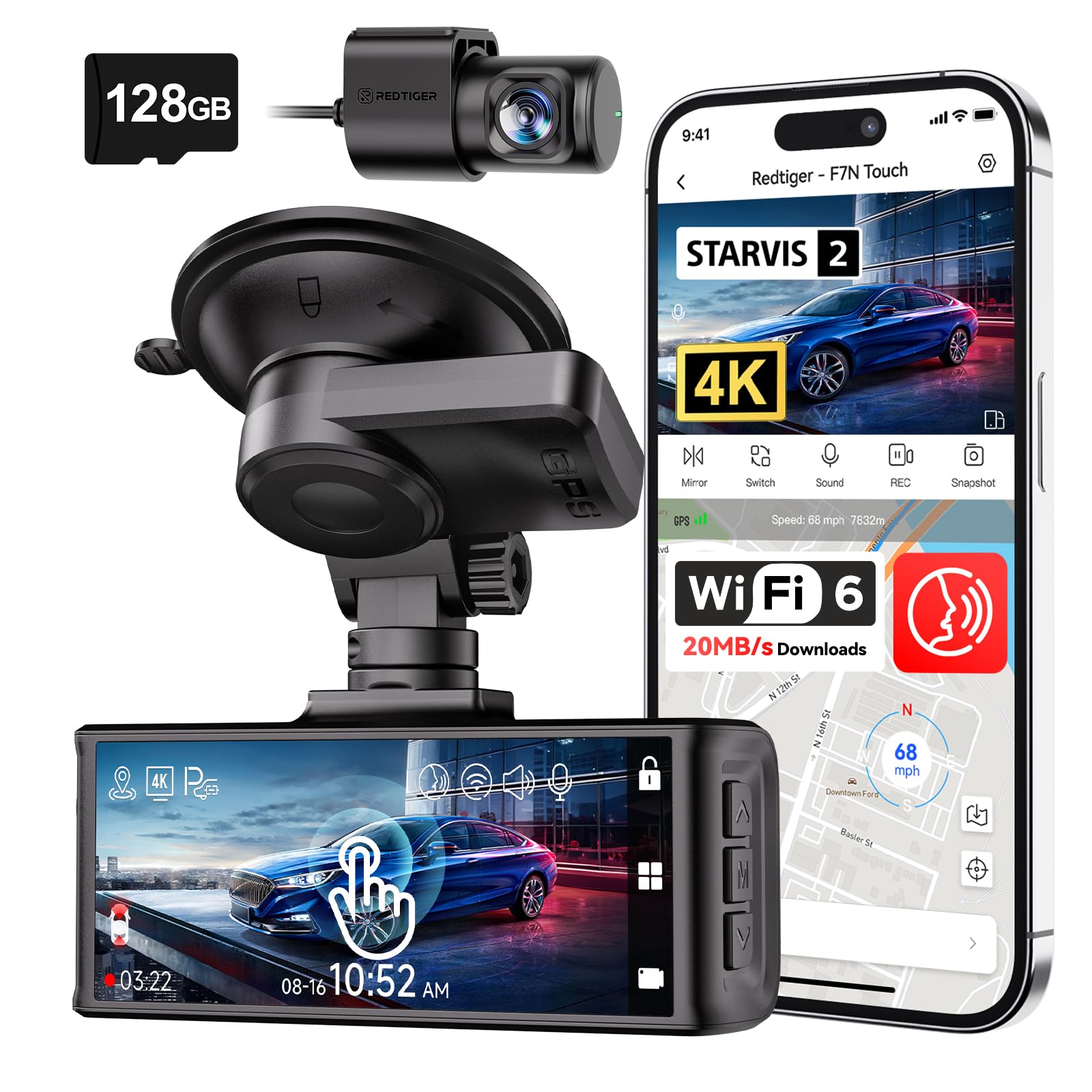
We recommend this dash cam for beginners who want sharp front and rear video, simple controls, and useful safety features in one package.
Key Pros
- Clear 4K front video and 1080p rear video
- Touchscreen, voice control, GPS, and fast Wi-Fi
- Includes a 128GB memory card
Key Cons
- Rear camera installation takes extra time
- Parking mode needs a separate hardwire kit
- The screen feels small for detailed playback
We found the F7N TOUCH easy to set up with its suction-cup mount and long rear-camera cable. The included clips helped us keep the wiring tidy, although hiding the cable still took some patience.
During daytime driving, the front camera captured sharp road details and readable signs. The rear camera added useful coverage behind the car. Night footage remained usable, though bright headlights and dark roads still reduced some detail.
The touchscreen made common tasks simple, such as locking a clip, changing settings, or turning on Wi-Fi. We also liked having voice commands and physical buttons as alternate controls. The phone app helped us download clips without removing the memory card.
Loop recording handles everyday use automatically, while the impact sensor protects footage after a collision. Built-in GPS adds speed and route information to recordings, which may help when reviewing an incident.
Parking monitoring requires an optional hardwire kit, so the included setup does not provide full parked-car coverage. We also needed the app for convenient file sharing, and the small display worked better for checking settings than watching long videos.
REDTIGER F7NP 4K Dash Cam
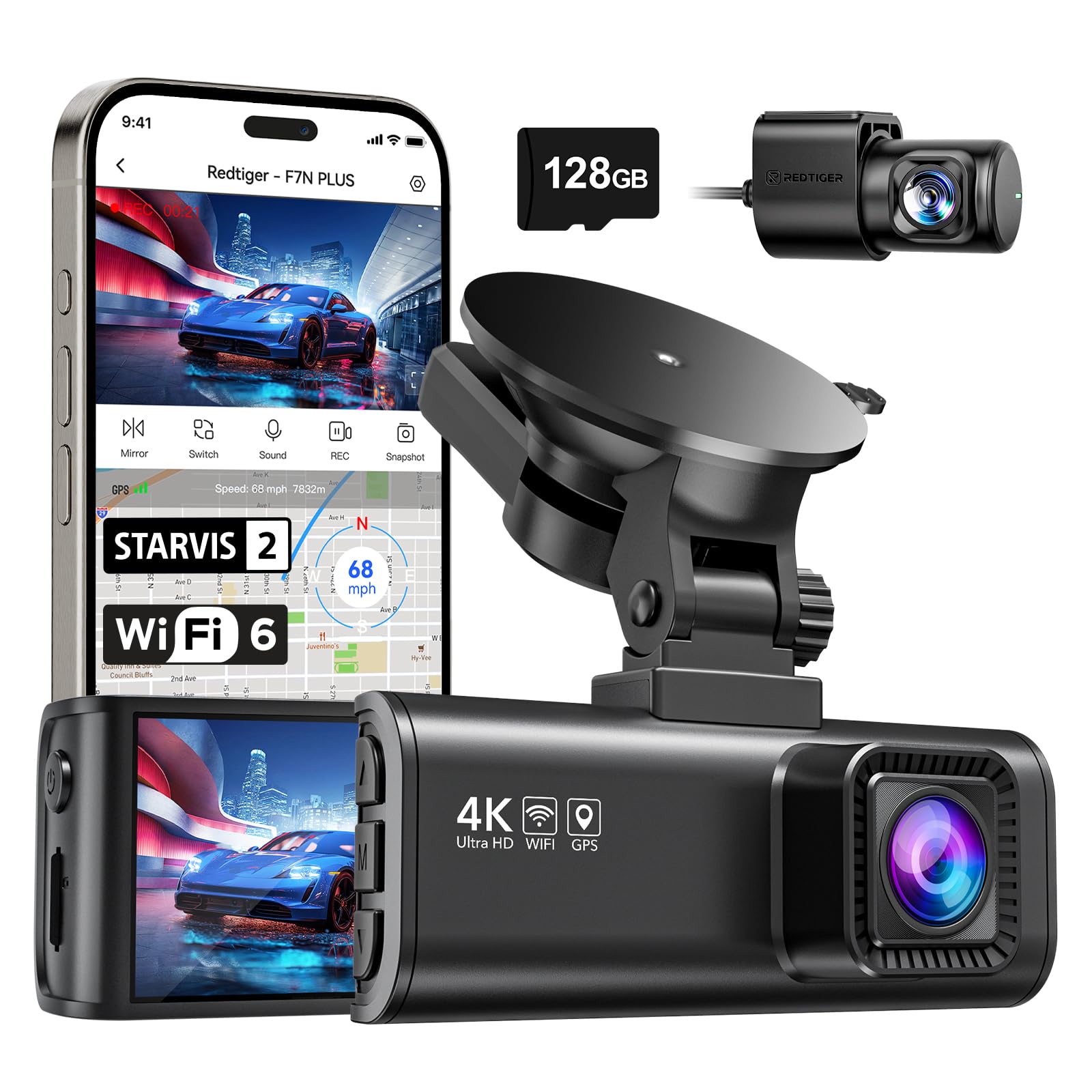
We recommend this dual-camera system for beginners who want clear video, GPS, Wi-Fi, and a memory card without buying extra parts right away.
Key Pros
- Clear front video and useful rear coverage
- Simple app for viewing and downloading clips
- Includes a 128GB memory card
Key Cons
- Parking mode needs a separate hardwire kit
- Cable routing takes some time
- App and connection issues may occur
We found the F7NP easy to start using after mounting the front camera and placing the rear camera. The included cables provide enough length for most cars, though hiding them neatly takes patience. Its compact design keeps it from blocking much of the windshield.
The front camera records sharp daytime footage, while the rear camera adds helpful coverage in traffic and parking lots. Night footage remains usable, but bright headlights and dark roads can reduce detail. The wide view captures more of the road than a narrow camera.
The phone app lets us preview clips, change settings, and download recordings without removing the memory card. Built-in GPS also adds route and speed information. The included card makes setup faster, although high-resolution recording can use storage quickly.
Loop recording replaces older files when the card fills, while the G-sensor locks clips after a detected impact. Parking monitoring requires the optional hardwire kit, so buyers should include that cost if they want protection while parked. The supercapacitor also suits drivers who regularly leave a camera in a warm vehicle.
E-YEEGER S60 Dash Cam
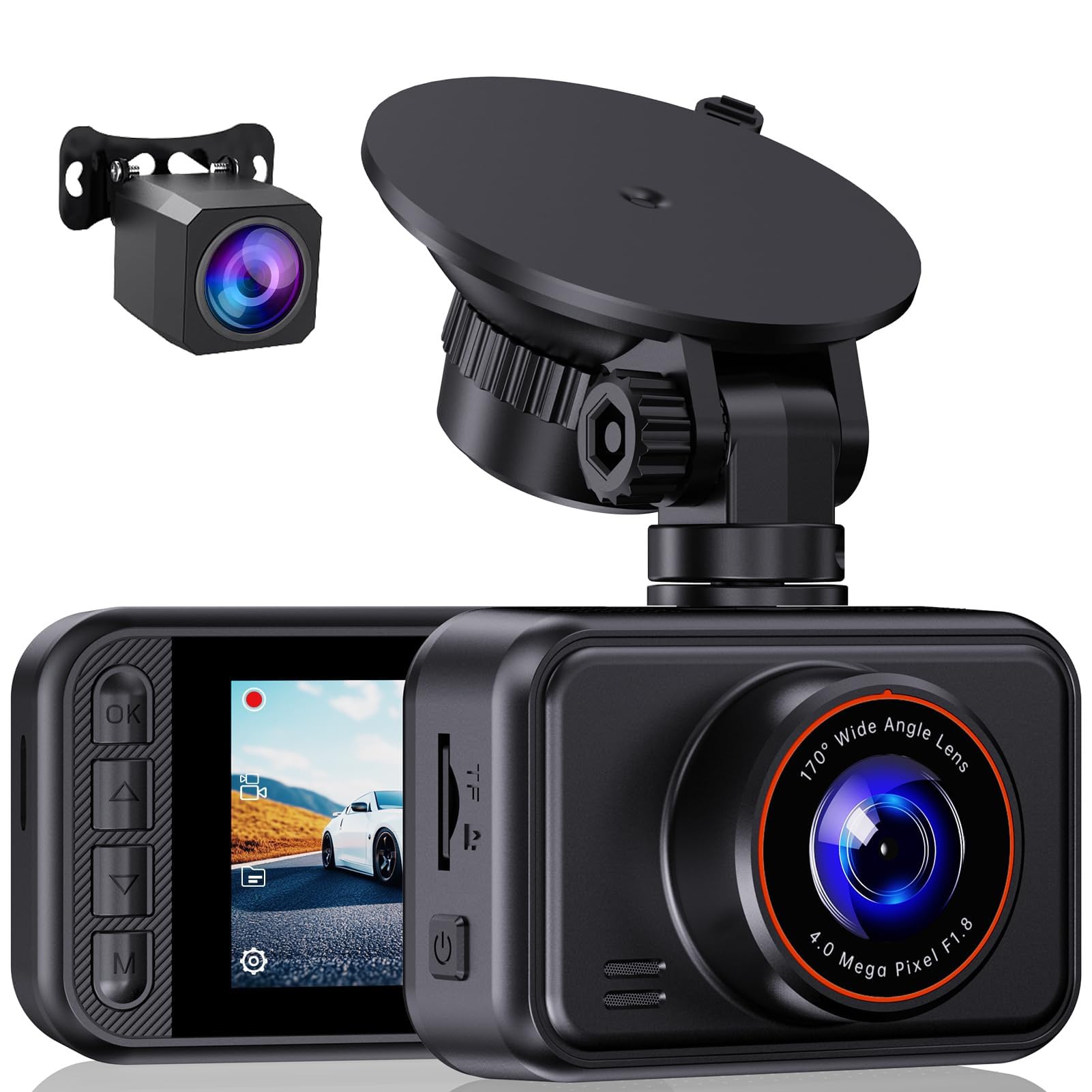
We recommend the E-YEEGER S60 for beginners who want front-and-rear recording, a simple screen, and clear daytime video at a reasonable price.
Key Pros
- Front and rear cameras cover more of the road
- The suction mount makes setup and adjustment easy
- Loop recording and impact locking protect important clips
Key Cons
- A microSD card is not included
- The menu can take time to learn
- The suction mount may loosen in hot weather
We found the S60 easy to install for a first dash cam. The small screen helped us aim the front camera, while the adjustable mount made it simple to change the viewing angle. The rear camera adds useful coverage during traffic stops, parking incidents, and rear-end collisions.
Daytime footage looked clear enough for reviewing road signs, vehicles, and traffic events. At night, WDR helped balance headlights and dark areas, though bright lights could still create glare. The 170-degree front view also captured a broad section of the road.
Loop recording handled storage without much effort, and the G-sensor locked clips after hard braking or an impact. We would buy a compatible microSD card separately, since one does not come with the camera. Parking monitoring also requires an additional hardwire kit.
The S60 offers useful beginner features without relying on a phone for basic controls. However, some users may need patience when navigating the menus, and hot weather can affect the suction mount or startup reliability.
E-YEEGER S50 Dash Cam
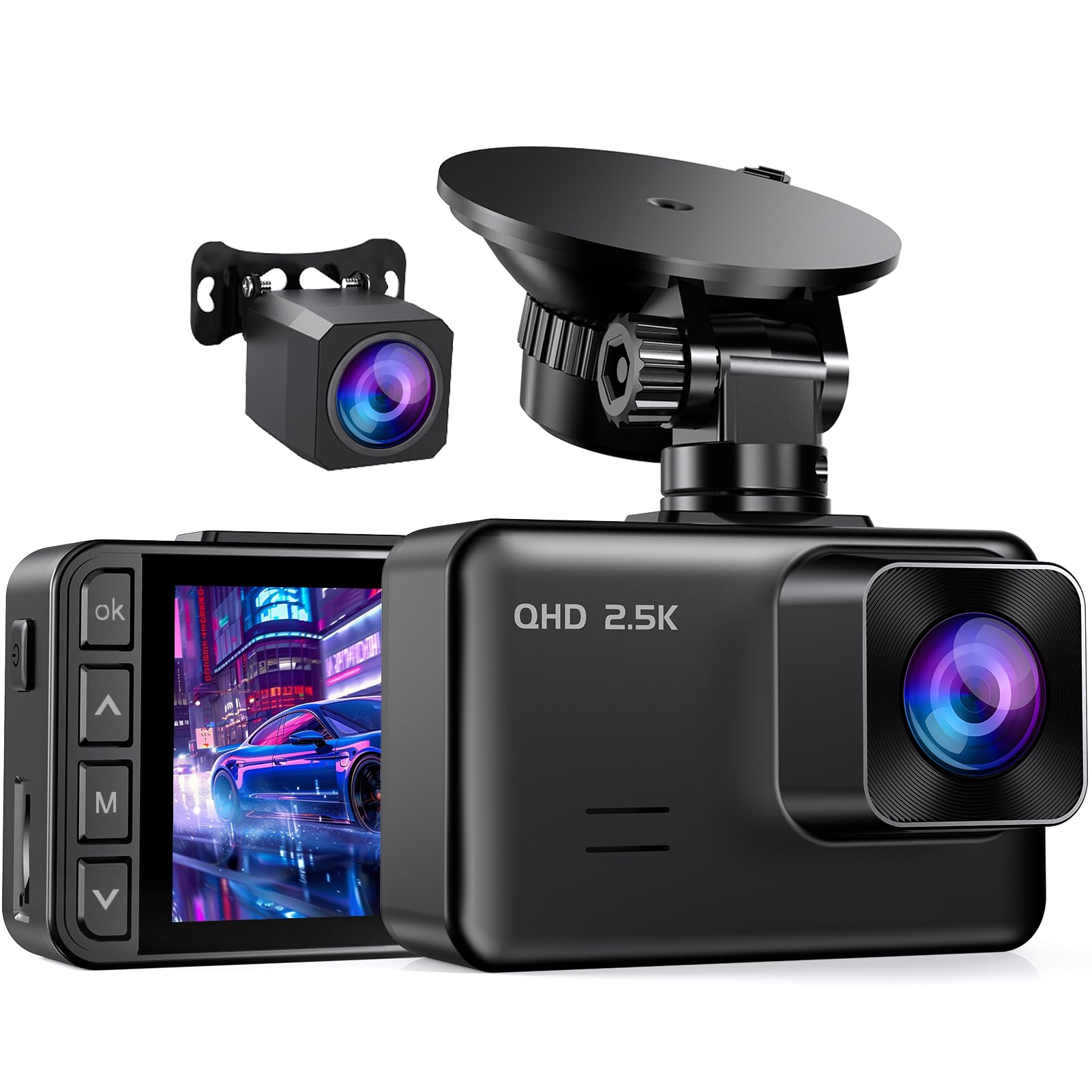
We recommend the E-YEEGER S50 for beginners who want front and rear recording, simple controls, and a low starting price.
Key Pros
- Clear 2.5K front and 1080p rear video
- Simple 2-inch screen with physical buttons
- Long rear-camera cable and included trim tool
Key Cons
- microSD card is not included
- Parking mode needs a separate hardwire kit
- Rear-camera wiring may take time to hide
We found the S50 easy to set up for a basic installation. The included pry tool helped us tuck the cable along the trim, and the 23-foot rear-camera cable gave us enough length for a typical car or SUV.
During the day, the front camera captured useful road detail, while the rear camera added helpful context behind the vehicle. The wide viewing angles also covered a good portion of nearby lanes. At night, the front camera handled headlights and darker areas reasonably well, though we would not expect perfect detail in very dark scenes.
The 2-inch screen made setup and playback straightforward. Physical buttons let us change settings, format the card, and review clips without relying on a phone app. The screen saver can turn off the display while recording continues, which helps reduce distraction.
Loop recording keeps the camera running by replacing older unlocked clips. The G-sensor can protect footage after a crash or sudden stop, but we would still check locked files regularly. A compatible microSD card is required and must be purchased separately.
Parking monitoring requires the optional V5F three-wire hardwire kit. With only the included car charger, the camera records while the vehicle has power, so buyers who want parked-car protection should budget for that extra accessory.
Veement V300 Dash Cam

We recommend this compact dash cam for beginners who want clear front footage, simple phone access, and a low learning curve.
Key Pros
- Sharp 1296p video with useful night visibility
- Small design and straightforward app controls
- Long USB-C cable and parking mode
Key Cons
- Requires a separate microSD card
- Wi-Fi does not provide internet access
- Some phones may not connect reliably
We found the V300 easy to place behind the windshield without blocking much of our view. The included cable gave us enough length to route it neatly around the trim, and the electrostatic sticker made installation less permanent.
Daytime footage looked clear enough to capture road signs and nearby vehicles. The wide view covered several lanes, although the edges showed some typical lens distortion. Night recording remained useful in areas with street lighting, but very dark roads reduced detail.
The VeeCar app let us preview clips and download them without removing the memory card. This worked well for quick sharing, though some users may need to adjust phone settings before the camera connects.
The camera records continuously and protects footage after a detected impact. Parking mode can help monitor the vehicle, but it needs a constant power source. We also had to buy a compatible microSD card separately, which beginners should include in the total cost.
70mai M310 Dash Cam

We recommend the 70mai M310 for beginners who want clear front-facing video, simple phone access, and a low price.
Key Pros
- Clear 1296p video with a wide view
- Compact design and straightforward mounting
- App access, loop recording, and collision protection
Key Cons
- No memory card included
- Parking mode needs a separate hardwire kit
- The camera has no built-in display
We found the M310 easy to place behind the windshield without blocking much of our view. The included car charger and mounting supplies help with setup, although connecting the camera to the app may take a few extra steps.
During daytime driving, the video provides useful detail for road signs and nearby license plates. Its wide view covers several lanes, while WDR helps balance bright and dark areas. Night footage remains usable, but detail drops at longer distances.
The phone app lets us review and download clips without removing the card. We also liked that the built-in G-sensor can protect footage after a collision. The camera supports loop recording, so it keeps recording by replacing older files.
Beginners should remember to buy a compatible Class 10 microSD card. Parking monitoring and time-lapse recording also require the separately sold 70mai UP03 hardwire kit, which adds cost and installation work.
70mai A810 Lite 4K Dash Cam
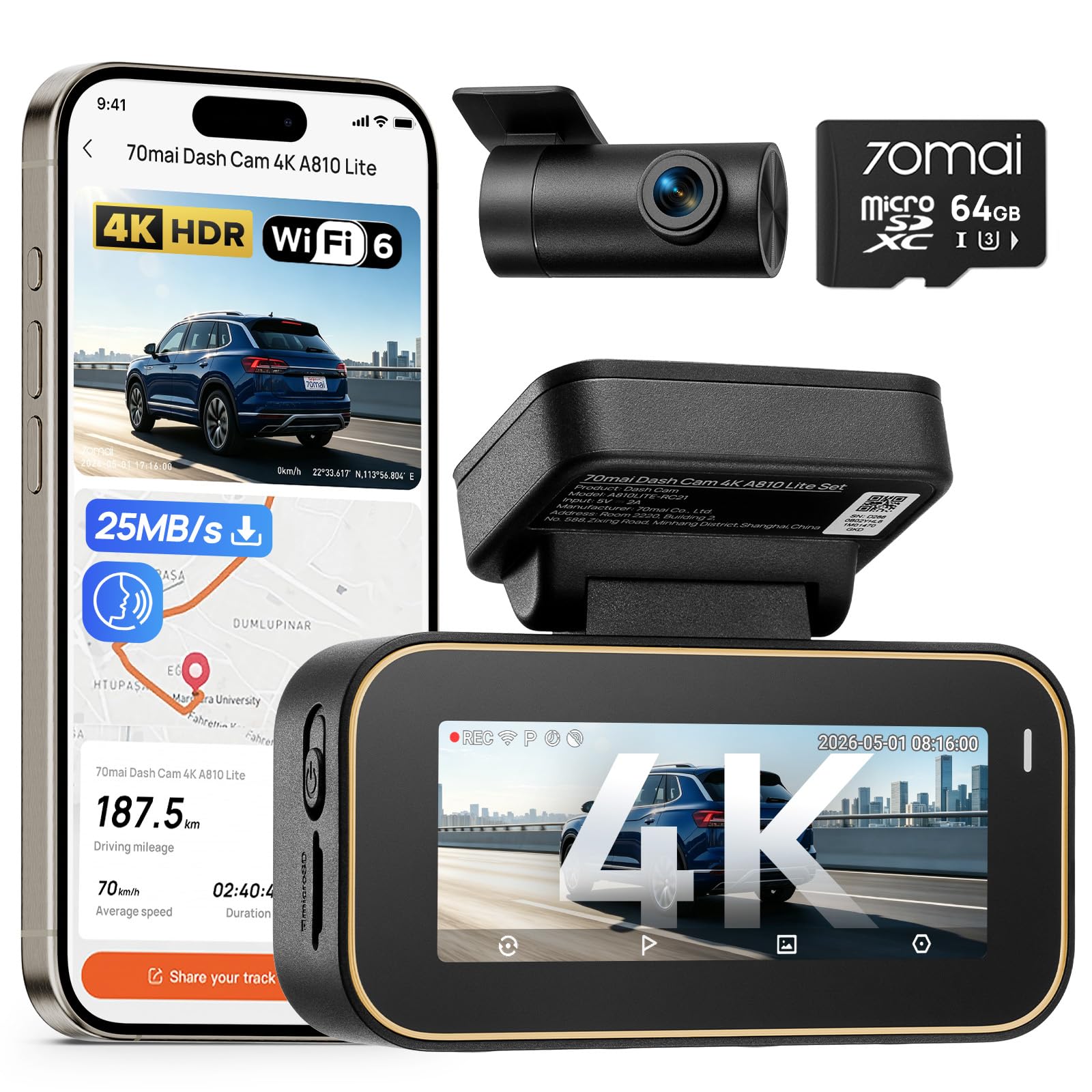
We recommend this dash cam for beginners who want sharp front footage, useful rear coverage, and a simple setup without giving up advanced features.
Key Pros
- Clear 4K front video and 1080p rear video
- Easy app transfers through fast Wi-Fi
- Compact design with voice control and GPS
Key Cons
- Parking mode requires a separate hardwire kit
- Rear-camera wiring takes extra time
- The app may take practice for new users
The A810 Lite felt compact and unobtrusive behind the rearview mirror. We found the initial setup straightforward, and the included memory card let us start recording without buying extra storage right away.
During daytime driving, the front camera produced sharp footage with useful detail on road signs and nearby vehicles. The rear camera added helpful coverage, though routing its cable through the vehicle took more effort than installing the front unit.
Night footage remained clear enough for routine driving, especially when headlights created glare. We also liked using the app to preview and download clips without removing the memory card.
The camera includes GPS, voice controls, loop recording, and impact protection. We would choose the optional hardwire kit for parking mode, but that added cost may matter to beginners who only need recording while driving.
Vantrue E1 Lite Dash Cam
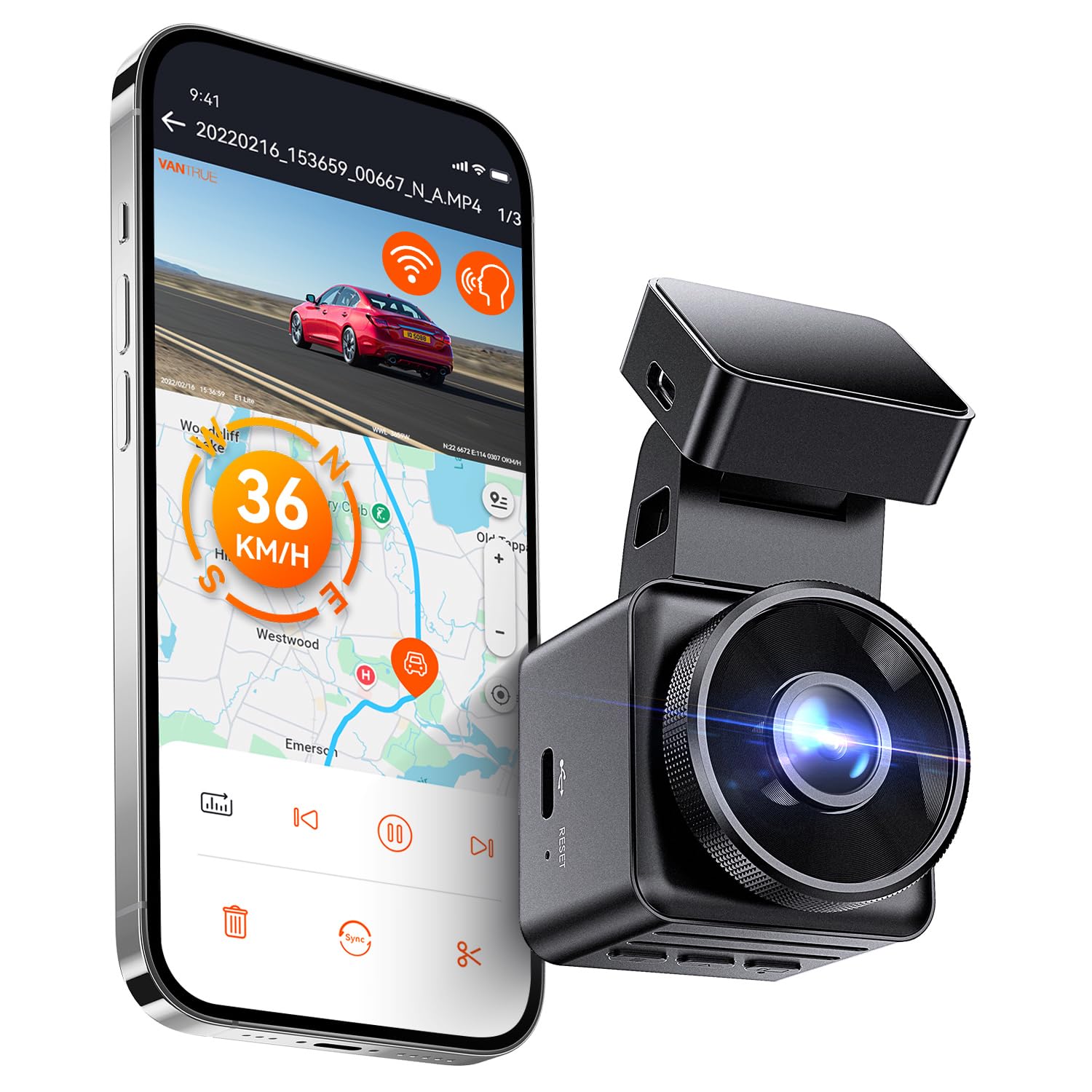
We recommend this compact dash cam for beginners who want clear Full HD video, GPS, Wi-Fi, and simple voice controls without paying for a subscription.
Key Pros
- Small design leaves more of the windshield clear
- Built-in GPS records speed, location, and route
- Wi-Fi app makes it easy to view and save clips
Key Cons
- Parking monitoring needs a separate hardwire kit
- App setup may take some time for new users
- Adhesive mount may not hold well in every vehicle
We found the Vantrue E1 Lite easy to place behind the mirror. Its compact shape stayed out of our view, while the wide lens captured useful footage across several lanes. Daytime video looked sharp, and HDR helped keep details visible when lighting changed.
The built-in GPS added speed and location data to our recordings. That information can help us review a trip or provide more context after an incident. Wi-Fi also let us check clips on a phone without removing the memory card.
Voice control worked well for basic tasks, such as locking a clip or taking a photo. Beginners may need a short setup period, since the app and camera offer several settings. After that, daily use felt straightforward.
Parking mode provides useful coverage when the vehicle sits unattended, but we need to buy Vantrue’s hardwire kit separately. We also must use the included charger because the camera does not support PD fast charging.
Buying Guide
We should start by choosing the camera type that fits our needs. A front-facing model costs less and records the road ahead, while a dual-camera system also records the cabin or rear view. We should check whether the camera includes a rear unit or supports one separately.
Key features to compare include:
| Feature | What we should look for |
|---|---|
| Video quality | Clear footage in daylight and low light |
| Field of view | A wide view without heavy image distortion |
| Storage | Support for a memory card with enough capacity |
| Parking mode | Recording while the vehicle is parked, if needed |
| Installation | Simple mounting and a power cable that reaches the outlet |
| Controls | Clear menus, buttons, and phone access if included |
We should confirm that the camera records a date, time, and location when needed. A GPS feature can add travel data, while a G-sensor can protect footage during a sudden impact.
Storage affects daily use. We should choose a compatible, reliable memory card and learn how the camera manages older files. Some models overwrite the oldest footage automatically, while important clips may need manual protection.
We should also check the warranty, return policy, operating temperature range, and included accessories. If we want parking recording, we need to confirm whether the camera requires a separate power kit and professional installation.
Editor’s Choice
We recommend the Garmin Dash Cam Mini 3 for beginners who want a small, simple camera. Its compact design fits behind most rearview mirrors, while automatic recording starts when we turn on the vehicle.
The camera records clear 1440p video and includes HDR to help balance bright and dark areas. We can control settings and review clips through the Garmin Drive app using a phone.
| Feature | Details |
|---|---|
| Video quality | 1440p with HDR |
| Size | Compact |
| Control | Garmin Drive app |
| Parking mode | Available with a constant power connection |
| Storage | microSD card, sold separately |
We should note that the camera does not include a display. We use the phone app to adjust settings and view recordings, which keeps the unit small but may feel less convenient for some drivers.
We also need to buy a compatible microSD card. For parking mode, we may need an additional constant power cable.
Conclusion
We can choose a beginner-friendly dash cam by focusing on clear video, simple controls, reliable storage, and useful safety features. A model with 1080p or higher resolution, a wide viewing angle, and loop recording meets the needs of most new users.
Before buying, we should check whether the camera includes a memory card, mounting kit, and power cable. We should also confirm that it fits our car and supports the features we need, such as parking mode or GPS.
| Priority | What to look for |
|---|---|
| Video quality | At least 1080p resolution |
| Storage | Loop recording and card support |
| Setup | Simple mount and controls |
| Power | Reliable car adapter or hardwire kit |
| Safety | G-sensor and automatic file protection |
We should format the memory card regularly and review important clips after installing the camera. A simple setup makes it easier for us to use the dash cam correctly every time we drive.
FAQS
What should we look for in a beginner dash cam?
We should choose a camera with clear video, simple controls, loop recording, and automatic emergency file protection. A wide viewing angle and a reliable mounting system also help.
Do we need a front and rear dash cam?
A front camera covers the main view and costs less. We may choose a dual-camera kit if we want footage from behind the car as well.
Does a dash cam record when the car is parked?
Some models offer parking mode, but they may need a hardwire kit or a separate battery pack. We should check the installation requirements before buying.
What size memory card should we use?
We should use a high-endurance microSD card that matches the camera maker’s recommended size. A larger card can store more footage, but it does not replace regular backups.
Do we need a phone app?
An app can make it easier to view and download videos. We can still use many dash cams without an app by removing the memory card or connecting the camera to a computer.
Is 4K necessary for beginners?
No. 1080p video works well for basic driving records and usually costs less. We may choose 4K if we want sharper details, such as license plates, in good lighting.

I’m Alex Rahman, a car enthusiast and automotive writer focused on practical solutions, car tools, and real-world driving advice. I share simple and honest content to help everyday drivers make better decisions.
