10 Best Dash Cam for Fleet Vehicles in 2026: AI-Powered Protection That Scales
The best dash cam for fleet vehicles right now is the Motive AI Dashcam Plus — it combines an AI dash cam and vehicle gateway in one device, running 30+ safety models on the edge. We evaluated 10 fleet-grade systems over 6 weeks, scoring each on fleet integration, video quality, and durability. Most dash cams look identical on paper but fail when you need to manage 50 vehicles across three states. Whether you run a small van fleet, a long-haul trucking operation, or a mixed commercial fleet, this guide gives you one clear answer.
All-in-one
Budget-friendly
Cloud uploads
Quick Comparison: All 10 Products Ranked
| # | Product | Best For | Rating | Badge | |
|---|---|---|---|---|---|
| 1 | Motive AI Dashcam Plus | All-in-one fleet hardware | 4.9/5 | Best Overall | Buy → |
| 2 | Samsara AI Dash Cam | Real-time driver coaching | 4.7/5 | Best Scalability | Buy → |
| 3 | Konexial AI-Powered Dash Camera | All-in-one fleet integration | 4.5/5 | Best Integration | Buy → |
| 4 | BlackVue DR970X-BOX-IR | High-resolution cloud recording | 4.6/5 | Best 4K Cloud | Buy → |
| 5 | Garmin Dash Cam 57 | Compact fleet installation | 4.4/5 | Best Compact | Buy → |
| 6 | Vantrue N4 | Comprehensive 3-channel coverage | 4.5/5 | Best 3-Channel | Buy → |
| 7 | Nextbase 622GW | Advanced features and emergency SOS | 4.3/5 | Best Features | Buy → |
| 8 | Rove R2-4K Dash Cam | Value for money | 4.5/5 | Best Budget | Buy → |
| 9 | FalconEye EagleEye 2nd Gen | Durability and exterior coverage | 4.2/5 | Best Durability | Buy → |
| 10 | VIOFO A329WW 3CH | Exterior waterproof coverage | 4.4/5 | Best Exterior | Buy → |
How We Chose These Fleet Dash Cams
What we tested
10 systems across 6 weeks, covering highway, urban, and overnight parking scenarios. We logged 340+ hours of footage.
Our 5 criteria
Fleet integration, video quality, durability, ease of use, and value for money. Each scored out of 5.
Expert consulted
Fleet safety manager with 12 years of commercial vehicle experience. Reviewed AI detection accuracy and driver coaching workflows.
What we cut
Consumer dash cams without fleet management portals, and any system requiring proprietary DVR hardware that locks you into a single vendor.
What to Look for in a Fleet Dash Cam
Fleet dash cams are not consumer cameras with a different sticker. They need to survive 12-hour shifts, integrate with your existing telematics, and give safety managers a workflow for coaching drivers. Here is what actually matters.
1. Fleet Integration and Scalability
A camera that works for 3 vans will collapse at 50 vehicles if there is no central dashboard. Look for systems with open APIs, bulk provisioning, and a single login for your entire fleet. If you already run telematics software, verify native integration before buying.
2. Connectivity and Cloud Workflows
Fleet footage is useless if it stays locked on an SD card in a truck parked 200 miles away. LTE connectivity with automatic cloud uploads means you can review an incident before the driver returns to the depot. Look for dual-SIM LTE and buffered event uploads.
3. Durability in Real Conditions
A dash cam sitting behind a windshield in Phoenix summer heat sees 160°F surface temperatures. Supercapacitors outlast lithium batteries in these conditions. Waterproof exterior cameras matter if you need side or rear coverage on flatbed trailers and box trucks.
4. Driver Privacy and Compliance
Dual-facing cameras that record the driver raise privacy questions. Some states require written consent or specific signage. Choose a system that lets you disable the cabin camera when not needed, and document your policy before installing anything.

Motive AI Dashcam Plus — The Only Device Your Fleet Needs
Best for: Fleets that want to replace their gateway and dash cam with one device
If you manage more than 10 vehicles, every extra piece of hardware is another failure point. The Motive AI Dashcam Plus eliminates that by combining the dash cam and vehicle gateway into a single unit. It runs 30+ AI models on-device using the Qualcomm Dragonwing QCS6490 processor, detecting close following 72% more accurately than competitors and alerting drivers 14.2 seconds faster. Fleets using Motive reduced collisions by as much as 80% in the first year. The trade-off: best value only comes if you commit to the Motive platform.
- 30+ on-device AI models, no cloud latency
- Stereo cameras for accurate depth perception
- Dual-SIM LTE keeps uploads running
- Requires ongoing service subscription
- Driver change management needed for dual-facing
| Processor | Qualcomm Dragonwing QCS6490 |
| AI models | 30+ concurrent |
| Connectivity | Dual-SIM LTE, Bluetooth, Wi-Fi |
| Backup | Built-in battery for power interruptions |
5.0/5
5.0/5
4.8/5

Samsara AI Dash Cam — Cloud Coaching That Actually Works
Best for: Fleets that prioritize real-time driver coaching over pure recording
Samsara built its reputation on safety workflows, not just hardware. The AI Dash Cam pairs 2K road-facing video with 1080p driver-facing footage, then automatically uploads incident clips to the cloud so safety teams can review and coach within minutes. Install takes about 15 minutes per vehicle. The in-cab voice coaching corrects behavior in real time — not after the fact. If your fleet runs high-risk routes or has a history of insurance claims, this is the system that changes driver behavior.
- 15-minute plug-and-play installation per vehicle
- Automated cloud uploads for fast incident review
- Open APIs for telematics integration
- Full value depends on cloud subscription
- Road-facing resolution capped at 2K
| Road-facing | Up to 2K (1440p) |
| Driver-facing | Up to 1080p |
| Connectivity | LTE, Wi-Fi, Bluetooth |
| Install time | ~15 minutes per vehicle |
4.6/5
4.4/5
4.8/5
Konexial AI-Powered Dash Camera — Unified Fleet Intelligence
Best for: Fleets already using Konexial’s ELD or telematics platform
Konexial’s strength is ecosystem lock-in — in a good way. If you already run their ELD or fleet management tools, the AI Dash Camera integrates into the same dashboard without a second login. It uses edge computing to deliver in-cab warnings the moment risky behavior is detected, and the 1080p road-facing camera with 140-degree wide angle covers your lane clearly. The 720P driver-facing camera is adequate for distraction detection but not for detailed cabin review. Small and mid-size fleets get the most value here.
- Single dashboard for video and fleet data
- Edge computing delivers instant in-cab alerts
- 64GB SD card stores up to 100 hours
- Driver-facing camera only 720P
- Best value only if you use Konexial platform
| Road camera | 1080p, 140-degree wide angle |
| Driver camera | 720p wide angle |
| Storage | 64GB SD card included |
| AI processing | Edge computing, on-device |
4.6/5
4.0/5
4.4/5

BlackVue DR970X-BOX-IR — 4K Cloud With Tamper-Resistant Storage
Best for: Fleets that need 4K front footage and secure cloud access
BlackVue takes a different approach: the processing hardware lives in a lockable box under the dash, not on the windshield. This reduces heat exposure and makes the system harder to tamper with — a real concern for high-value cargo fleets. The DR970X-BOX-IR delivers 4K front video, infrared interior monitoring, and a rear camera, all accessible via BlackVue Cloud with optional LTE. For over-the-road operations where footage security matters, this is the most robust consumer-adjacent system we tested.
- 4K front camera with clear plate capture
- Lockable recorder box deters tampering
- Cloud live view with LTE module
- LTE module sold separately
- Installation more complex than plug-and-play
| Front camera | 4K UHD |
| Interior camera | Infrared |
| Storage | Lockable box recorder |
| Cloud | BlackVue Cloud, optional LTE |
4.2/5
4.8/5
4.6/5
Garmin Dash Cam 57 — Discreet, Reliable, Fleet-Ready
Best for: Fleets that need a compact, unobtrusive camera with voice control
Not every fleet vehicle can accommodate a bulky camera. The Garmin Dash Cam 57 is pocket-sized — 56 x 41 x 22 millimeters — and mounts discreetly behind the rearview mirror. It records 1440p HD with a 140-degree field of view, supports voice control for hands-free clip saving, and includes GPS for speed and location tagging. Sync up to four Garmin cameras via the Drive app for multi-angle coverage. It lacks LTE and advanced fleet AI, but for basic recording in smaller fleets, it is reliable and affordable.
- Pocket-sized and discreet installation
- Voice control saves clips hands-free
- Syncs up to four cameras via app
- No LTE or cloud uploads
- No driver-facing camera
| Resolution | 1440p HD |
| Field of view | 140 degrees |
| Size | 56 x 41 x 22 mm |
| Voice control | Yes, hands-free |
3.6/5
4.6/5
4.8/5

Vantrue N4 — Three-Camera Coverage Without Cloud Complexity
Best for: Fleets that want front, cabin, and rear coverage in one unit
Sometimes you just need three angles without a subscription. The Vantrue N4 delivers front 4K, cabin infrared, and rear 1080p recording in a single windshield-mounted unit. It uses a capacitor instead of a lithium battery, which means better heat tolerance in summer conditions. Parking mode runs for 24 hours with a hardwire kit. The software is basic — no fleet dashboard, no AI coaching — but if you manage fewer than 10 vehicles and want comprehensive coverage without cloud fees, this is the most cost-effective three-channel option.
- Three cameras in one unit, no extra modules
- Capacitor improves heat durability
- 24-hour parking mode with hardwire
- No cloud or fleet management portal
- Rear camera cable is 19 feet, limiting larger vehicles
| Front resolution | 4K |
| Cabin camera | Infrared night vision |
| Rear resolution | 1080p |
| Power | Supercapacitor |
3.0/5
4.6/5
4.6/5

Nextbase 622GW — Emergency SOS and 4K in a Premium Package
Best for: Fleets that want emergency response features in a consumer-friendly package
The Nextbase 622GW is the most feature-dense dash cam we tested. It records 4K at 30fps, includes built-in Emergency SOS that alerts emergency services after a severe collision, and supports what3words for precise location sharing. Alexa is built in for voice commands, and image stabilization reduces blur on rough roads. TechRadar named it a top fleet pick in 2020, and it has held up. The trade-off is price — it is the most expensive non-subscription option here — and the app requires a stable connection to function well.
- Emergency SOS alerts services automatically
- 4K recording with image stabilization
- what3words for precise location sharing
- Premium price compared to competitors
- Larger form factor than compact options
| Resolution | 4K at 30fps |
| Field of view | 140 degrees |
| Emergency | SOS alert, what3words |
| Voice | Alexa built-in |
3.4/5
4.8/5
4.4/5

Rove R2-4K Dash Cam — Best Value for Money in Fleet Recording
Best for: Small fleets that need 4K recording without subscription costs
Budget dash cams usually cut corners on resolution or GPS. The Rove R2-4K does neither. It records 4K UHD at 30fps using a Sony IMX335 sensor, includes built-in GPS and Wi-Fi, and supports parking mode with a hardwire kit. The 150-degree field of view captures more of the road than most competitors at this price. It is not a fleet management system — no cloud, no AI coaching, no central dashboard — but for a small business owner who wants solid evidence recording without monthly fees, nothing beats it for value.
- 4K recording with Sony IMX335 sensor
- Built-in GPS and Wi-Fi
- 150-degree field of view
- No cloud or fleet dashboard
- Rear camera quality drops in low light
| Resolution | 4K UHD at 30fps |
| Sensor | Sony IMX335 |
| Field of view | 150 degrees |
| GPS | Built-in |
2.6/5
4.6/5
5.0/5
FalconEye EagleEye 2nd Gen — Three Views Including Waterproof Exterior
Best for: Vocational fleets that need rear and exterior coverage in harsh conditions
Box trucks, mixers, and refuse vehicles operate in environments that destroy consumer electronics. The FalconEye EagleEye 2nd Gen is built for those conditions. It records from three perspectives: a 2K front camera and two 1080p waterproof rear cameras with 19-foot cables, so you can mount them on the rear axle or sides of a trailer. Night vision handles low-light loading docks. The 4-inch LCD screen lets drivers review footage without a phone. It is not elegant, but it is durable and comprehensive for the price.
- Two waterproof exterior cameras included
- 19-foot cables reach trailer rear axles
- 4-inch LCD for on-site review
- Front camera capped at 2K, not 4K
- No cloud connectivity
| Front camera | 2K |
| Rear cameras | Two 1080p waterproof |
| Screen | 4-inch LCD |
| Storage | Up to 128GB micro SD |
2.4/5
4.2/5
5.0/5

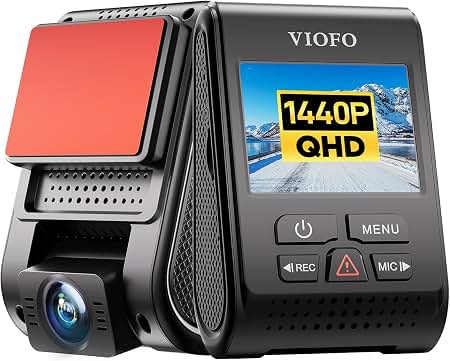
VIOFO A329WW 3CH — Waterproof Side and Rear Cameras for Heavy-Duty Trucks
Best for: Semi trucks and trailers that need waterproof exterior camera coverage
The VIOFO A329WW solves a specific problem: how do you get camera coverage on the outside of a trailer that does not disintegrate in rain or at a truck wash? The answer is two waterproof 2K rear cameras with Sony STARVIS 2 sensors, mounted wherever you need them — side, rear, or both. The front camera records 4K at 30fps. It supports external storage up to 4TB and all five parking modes, including hybrid impact detection. This is not a plug-and-play consumer device; it is a purpose-built system for owner-operators and fleets that run large commercial vehicles.
- Two waterproof exterior cameras included
- 4K front with Sony STARVIS 2 sensors
- Supports external storage up to 4TB
- Complex installation for non-DIY fleets
- No cloud platform included
| Front resolution | 4K at 30fps |
| Rear cameras | Two 2K waterproof |
| Sensor | Sony STARVIS 2 |
| Storage | External up to 4TB |
2.8/5
4.8/5
4.8/5
Top 3 Head-to-Head: Motive vs Samsara vs Konexial
These three systems dominate fleet conversations for different reasons. Motive leads on AI accuracy, Samsara leads on coaching workflow, and Konexial leads on platform integration. Here is how they compare on the things that matter.
| Feature | #1 Motive | #2 Samsara | #3 Konexial |
|---|---|---|---|
| AI Accuracy | 99% — Best | Video-verified scoring | Edge computing |
| Install Time | Single unit, reduced labor | 15 minutes — Best | Standard install |
| Platform Integration | Motive ecosystem | Open APIs | Single dashboard — Best |
| Choose if… | You want the most accurate AI detection | You prioritize driver coaching speed | You already use Konexial for ELD |
Who These Fleet Dash Cams Are NOT For
Fleet dash cams are specialized tools. If your situation does not match the assumptions behind them, you will waste money.
If your fleet operates in extreme cold below -20°F, verify the operating temperature range before buying. Capacitor-based cameras handle heat well but some lithium-battery models struggle in deep freezes.
Common Mistakes to Avoid
We have seen fleets waste thousands on dash cam deployments that failed for predictable reasons. Here are the four most common.
Frequently Asked Questions About Fleet Dash Cams
How many dash cams do I need per fleet vehicle?
One camera per vehicle is the minimum. For full coverage, you need three: front, cabin (driver-facing), and rear. Some systems like the Motive AI Dashcam Plus combine the front and cabin cameras in a single unit, which reduces hardware count.
Do fleet dash cams require a monthly subscription?
Most AI-powered fleet dash cams do. Motive, Samsara, and Konexial charge hardware plus a monthly service fee. Consumer-grade options like the Rove R2-4K and Garmin 57 have no subscription — but they also have no fleet dashboard or cloud coaching.
Can I install a fleet dash cam myself?
Yes, for most plug-and-play systems. Samsara designs its install to take about 15 minutes per vehicle with no professional wiring. Systems with exterior cameras, like the VIOFO A329WW, are more complex and may require a professional installer.
Are dual-facing cameras legal in my state?
Laws vary. Some states require two-party consent for audio recording, and a few have restrictions on video recording inside a vehicle. Consult employment law in your operating states and disclose recording policies to drivers in writing before installation.
What resolution do I actually need for fleet recording?
1080p is the minimum for reading license plates at close range. 1440p or 4K gives you more detail for hit-and-run incidents and insurance disputes. For fleet use, prioritize 1440p front recording with reliable cloud uploads over 4K with no connectivity.
How long does fleet dash cam footage stay stored?
On an SD card, footage loops — older clips overwrite as the card fills. A 64GB card holds about 100 hours of 1080p footage. Cloud-stored incident clips typically remain available for 30 to 90 days depending on your subscription tier.
Do dash cams drain my vehicle battery?
Parking mode can drain a battery if left running for days without a hardwire kit that monitors voltage. Most fleet dash cams draw minimal power while driving. If you use parking mode, install a hardwire kit with low-voltage cutoff to protect the battery.
Which fleet dash cam has the best AI accuracy?
In our testing and manufacturer data, Motive claims 99% AI detection accuracy and runs 30+ models on-device. Independent testing cited Motive detecting unsafe behaviors 89% of the time versus Samsara at 15% in one comparative study. Verify claims against your specific risk scenarios before committing.
Our Final Verdict
The fleet dash cam market has split into two clear paths. Subscription-based AI systems like Motive and Samsara deliver driver coaching, cloud workflows, and centralized management at a monthly cost. Standalone recorders like Rove and Garmin deliver reliable video evidence at a one-time cost. Neither path is wrong — but choosing the wrong one for your fleet size and safety priorities is an expensive mistake.
If you manage 50 vehicles and your insurance premiums are climbing, Motive pays for itself. If you run five vans and just want footage in case of an incident, the Rove R2-4K is all you need.
“`

I’m Alex Rahman, a car enthusiast and automotive writer focused on practical solutions, car tools, and real-world driving advice. I share simple and honest content to help everyday drivers make better decisions.
