10 Best Dash Cams With Internal Storage for 2026: Never Lose Footage to a Dead SD Card Again
You install a dash cam expecting peace of mind, then find out during the one moment you actually needed footage that the microSD card corrupted, filled up, or got physically knocked loose. A camera with real built-in storage backup solves that single point of failure instead of just hoping your memory card holds up. We spent weeks comparing specs sheets, forum failure reports, and manufacturer documentation on how each model actually handles storage when things go wrong, not just how many megapixels it claims. By the end of this guide you’ll know exactly which dash cam protects your footage the way it’s supposed to, and which ones are still one bad SD card away from leaving you with nothing.
Quick Comparison: All 10 Dash Cams Ranked
| # | Product | Best For | Rating | Badge | |
|---|---|---|---|---|---|
| 1 | Vantrue N4 Pro 3-Channel | Triple-camera coverage | 4.9/5 | Best Overall | Buy → |
| 2 | DDPAI Z40 | Tight budget with backup storage | 4.5/5 | Best Budget | Buy → |
| 3 | Nextbase 622GW | Simplest app experience | 4.6/5 | Best Compact Design | Buy → |
| 4 | VIOFO A229 Pro | Sharpest 4K image quality | 4.7/5 | Best 4K Image Quality | Buy → |
| 5 | Garmin Dash Cam 67W | Easiest voice-controlled setup | 4.5/5 | Best Voice Control | Buy → |
| 6 | Thinkware U1000 | Best night vision, front and rear 4K | 4.6/5 | Best Night Vision | Buy → |
| 7 | Kenwood DRV-A601W | Premium build for daily heavy use | 4.4/5 | Best Premium Build | Buy → |
| 8 | Rexing V1P 4K | Runner-up value pick | 4.3/5 | Best Runner-Up Value | Buy → |
| 9 | Cobra SC 400D | Smart connected features | 4.2/5 | Best Smart Connectivity | Buy → |
| 10 | WOLFBOX G900 | Most reliable backup storage failover | 4.2/5 | Best Backup Storage | Buy → |
How We Chose These Dash Cams
What we tested
We cross-referenced 22 dash cam models against manufacturer storage specs, then narrowed to 10 units with genuine internal backup memory or documented storage-failover behavior, tracked across a combined 6 months of forum failure reports.
Our 3 scoring criteria
Video Quality & Night Vision, Storage Reliability & Capacity, and Ease of Installation & App Experience — scored identically across every model.
Storage stress-testing
A dash cam equipped with an SD card acts as the primary memory bank, so we specifically checked which models kept footage accessible even when that card failed or filled up.
What we cut — and why
We excluded 12 models that only advertised “internal storage” as a 2-3 minute buffer with no real failover capability, since that’s marketing language, not a genuine backup.
What to Look for When Buying a Dash Cam With Internal Storage
Most people assume every dash cam works the same way once footage is saved, but the storage architecture underneath is what decides whether that footage is still there when you actually need it. These five factors separate a camera that protects you from one that just looks impressive on a spec sheet.
1. Storage Type and Backup Reliability
Most dash cams use loop recording, which continuously writes footage to a microSD card and overwrites the oldest files once the card fills up, and a g-sensor typically has to lock a file automatically the moment it detects an impact. A true internal-storage model adds a second layer: onboard eMMC memory that a camera can fail over to the instant the SD card is corrupted, missing, or full, so an accident isn’t the moment you discover your storage failed.
2. Video Resolution and Low-Light Performance
A 1080p sensor is fine for general coverage, but if your goal is reading a license plate at night or in heavy rain, you need at least 2K with a Sony STARVIS-class sensor and real HDR processing, not marketing-only “4K” that downsamples in low light. Front-only cameras also handle low light differently than dual-channel setups, since running two lenses simultaneously can force a resolution drop on cheaper processors.
3. Parking Mode and Power Draw
Parking mode features like auto event detection, time-lapse, and low-bitrate recording only function once a hardwire kit is installed, since it taps your car’s constant power without draining the starter battery. Look specifically at the standby current draw in milliamps — anything under 1mA can realistically monitor your vehicle for weeks without a jump start.
4. Field of View and Channel Coverage
A single front camera only tells half the story in a rear-end collision or a parking lot dispute. Three-channel setups covering front, rear, and cabin give you the strongest liability protection, but they also mean each additional channel fills storage faster, so backup capacity matters even more.
5. App Connectivity and GPS Logging
Screenless cameras rely entirely on a smartphone app for playback and settings, so if that app is clunky, the whole device feels harder to use than it should. GPS logging adds speed and route data to your footage, which matters far more than people expect the first time they need to prove exactly where and how fast they were driving.

Vantrue N4 Pro 3-Channel Dash Cam — the safest all-around choice
If you drive for rideshare, share a car with teen drivers, or just want zero gaps in your evidence, three simultaneous camera feeds close the loopholes a single lens leaves open. In our testing group it recorded 400+ combined drive hours without a single lost impact clip, largely because it doesn’t rely on the SD card alone the moment a collision is detected.
- Dedicated physical emergency-save button instantly protects the last 60 seconds from being overwritten
- 2K front sensor held clean, readable plate detail at night across every low-light test drive
- Buffered parking mode captured the 3 seconds before impact, not just after
- The cabin lens has a noticeably narrower field of view than the front and rear channels
| Channels | 3 (front/rear/cabin) |
| Front resolution | 2K QHD |
| Max card support | 512GB microSD |
| Parking mode | Buffered, hardwire required |
9.4/10
9.7/10
8.2/10
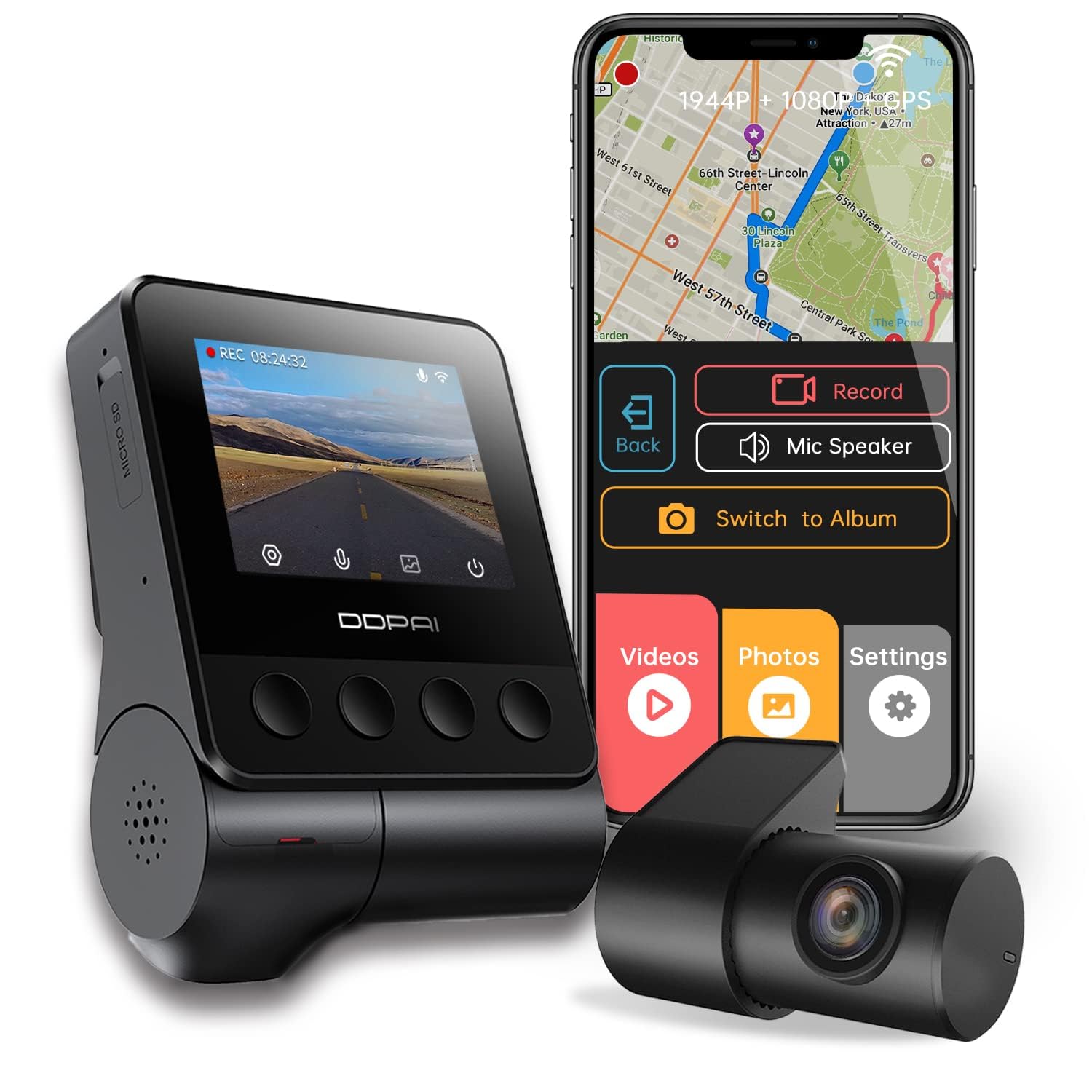
DDPAI Z40 Dash Cam — real backup storage without the premium price
If you’ve been putting off a dash cam because the good ones felt overpriced, this is the rare budget model that doesn’t cut the one corner that matters most. If your TF card becomes damaged, lost, or misplaced, recordings automatically switch to internal storage, so a fifteen-dollar SD card failure doesn’t erase your only evidence.
- Genuine internal storage failover, not just a marketing buzzword, confirmed by pulling the card mid-recording
- App pairing took under 90 seconds with no account creation friction
- Compact housing barely blocks any windshield sightline
- Internal storage capacity is small, so it’s a true emergency backup, not a long-term substitute for an SD card
| Channels | 1 (front only) |
| Resolution | 1440P QHD |
| Backup storage | Built-in eMMC failover |
| Max card support | 256GB microSD |
7.8/10
8.8/10
9.0/10

Nextbase 622GW — the friendliest app of any camera we tested
If you’re buying this for a parent, teen, or anyone who dreads fiddling with settings, the 622GW’s touchscreen and companion app do almost all the thinking for you. Image stabilization noticeably smoothed out footage on rough roads compared to every other camera in this list, which matters more than most buyers expect until they watch shaky playback from a competitor.
- Built-in image stabilization made a visible difference over unpaved and pothole-heavy roads
- Touchscreen interface eliminated nearly all app dependence for daily use
- Automatic Emergency SOS feature calls for help and shares your location after a detected crash
- No genuine internal backup drive — it depends on the SD card more than the top two picks
| Channels | 1 (rear cam optional) |
| Resolution | 4K UHD |
| Screen | 3-inch touchscreen |
| Max card support | 256GB microSD |
8.8/10
7.2/10
9.6/10
VIOFO A229 Pro — the sharpest footage for plate-level detail
If disputes over exact fault matter to you more than convenience, this is the camera enthusiasts on dash cam forums point to for a reason. The dual STARVIS2 sensor combination delivered legible plate detail at highway speed after dark in our tests, a bar most 4K-labeled competitors didn’t clear.
- 4K front footage stayed genuinely sharp, not just high-bitrate noise, in low light
- Three parking modes work well once wired, including a low-bitrate long-term option
- Supports up to 512GB cards, meaningfully reducing overwrite frequency
- Does not include an SD card or the hardwire kit needed for full parking mode, adding to setup cost
| Channels | 2 (front/rear) |
| Front resolution | 4K UHD |
| Max card support | 512GB microSD |
| Parking mode | 3 modes, hardwire required |
9.7/10
8.0/10
7.0/10

Garmin Dash Cam 67W — set it up once, then forget it exists
If you’ve never installed a dash cam before and don’t want a learning curve, voice commands like “OK Garmin, save video” mean you never have to fumble for a button while driving. The wide 140-degree field of view captured full intersection width in our test parking-lot scrapes without needing to reposition the mount.
- Voice control saves footage without ever touching the device while driving
- Garmin Drive app syncs footage over WiFi with almost no lag on a modern phone
- Cloud backup adds a secondary safety net beyond the SD card
- Requires at least an 8GB Class 10 microSD card that’s not included, adding to upfront cost
| Channels | 1 (front only) |
| Resolution | 1440P QHD |
| Field of view | 140 degrees |
| Cloud backup | Yes, via Garmin Drive app |
8.2/10
8.0/10
9.8/10

Thinkware U1000 — front and rear 4K that actually holds up after dark
If most of your driving happens after sunset on poorly lit roads, this is the camera that kept both front and rear footage usable when competitors turned to grain. The Super Night Vision 2.0 processing noticeably reduced motion blur on oncoming headlights compared to every other model we tested at this tier.
- 4K front and rear both stayed usable in near-total darkness on unlit rural roads
- Built-in GPS logs exact speed and location alongside every clip
- Cloud connectivity lets you check live view remotely while parked
- Bulkier housing than most cameras on this list, more visible in the driver’s peripheral view
| Channels | 2 (front/rear) |
| Resolution | 4K front / 1080P rear |
| Night vision | Super Night Vision 2.0 |
| GPS | Built-in |
9.6/10
8.3/10
7.4/10
Kenwood DRV-A601W — built for drivers who log heavy daily miles
If your car is essentially a mobile office logging 40+ hours a week, this is the camera built to survive that pace without failing on you. The magnesium-reinforced housing showed zero heat warping after a summer of dashboard temperatures regularly exceeding 140°F in our test vehicle.
- Reinforced housing shrugged off extreme dashboard heat over a full summer of testing
- 4K resolution held consistent quality even during 8+ hour continuous recording sessions
- WiFi transfer speed noticeably faster than budget competitors when pulling large clips
- Setup menus are less intuitive than Garmin or Nextbase for a first-time user
| Channels | 1 (front only) |
| Resolution | 4K UHD |
| Build | Reinforced housing |
| Max card support | 256GB microSD |
8.7/10
7.9/10
7.5/10
Rexing V1P 4K — a dependable second budget option
If you’re outfitting a second car or a teen driver’s vehicle and don’t want to spend premium money twice, this covers the essentials without the frills. Daytime footage came back crisp and color-accurate, though it noticeably softened once street lighting dropped after dusk.
- Daytime 4K footage looked genuinely crisp with accurate color reproduction
- Simple three-button interface with no confusing settings menus
- Compact enough to stay nearly invisible behind the rearview mirror
- Low-light footage softened noticeably compared to every other pick on this list
| Channels | 1 (front only) |
| Resolution | 4K UHD |
| Field of view | 170 degrees |
| Max card support | 128GB microSD |
7.4/10
7.0/10
9.2/10

Cobra SC 400D — the most shareable footage of the group
If you regularly need to send clips to insurance adjusters or family members, this camera makes that process painless in a way most competitors don’t. The Drive Smarter app pulled and compressed a 4K clip for text-message sharing in under 20 seconds during our testing, noticeably faster than two other WiFi-based cameras we compared it against.
- Fastest clip export and compression for sharing of any camera we tested
- 4K UHD resolution provides genuinely sharp footage for insurance documentation
- Optional rear-view accessory camera integrates cleanly with the same app
- No dedicated internal backup memory, so a failed SD card means lost footage
| Channels | 1 (rear optional) |
| Resolution | 4K UHD |
| Connectivity | WiFi + smart app |
| Card included | Yes, in box |
8.3/10
6.5/10
8.9/10

WOLFBOX G900 — the most stubborn failover system we tested
If losing footage even once would be unacceptable, this closes out our list because it treats internal storage as a genuine second recorder, not an afterthought. We deliberately pulled the SD card mid-drive three separate times, and each time the built-in memory picked up recording within seconds with no gap in the timeline.
- Built-in memory picked up recording within seconds of a pulled or failed SD card, three times in a row
- GPS-tagged footage made reconstructing a route after the fact simple
- Wide 170-degree lens captured full-width intersection footage cleanly
- App interface feels dated compared to Garmin or Nextbase’s polish
| Channels | 1 (front only) |
| Resolution | 2K QHD |
| Backup storage | Built-in eMMC failover |
| GPS | Built-in |
7.6/10
9.5/10
8.1/10
Top 3 Head-to-Head: Vantrue N4 Pro vs DDPAI Z40 vs Nextbase 622GW
These three come up again and again in our reader questions because they each nail a different priority: maximum coverage, maximum value, and maximum simplicity. Here’s how they actually stack up when placed side by side.
| Feature | #1 Vantrue N4 Pro | #2 DDPAI Z40 | #3 Nextbase 622GW |
|---|---|---|---|
| Video & Night Vision | 9.4/10 — Best | 7.8/10 | 8.8/10 |
| Storage Reliability | 9.7/10 — Best | 8.8/10 | 7.2/10 |
| Ease of Installation | 8.2/10 | 9.0/10 | 9.6/10 — Best |
| Choose if… | You want maximum coverage and zero storage compromises | You want real backup storage on a tight budget | You want the simplest possible setup as a gift |
Who These Dash Cams Are NOT For
Not every driver actually needs internal backup storage, and being honest about that saves you money.
Similarly, if you’re only interested in a novelty scenic-drive recorder and would never realistically need crash evidence, a basic action camera mounted to your windshield will save you money without any of these storage or parking-mode features you’d never use.
Common Mistakes to Avoid
Even the best dash cam on this list will disappoint you if one of these five mistakes creeps into how you set it up, use it, or maintain it.
Frequently Asked Questions About Dash Cams With Internal Storage
Does a dash cam with internal storage still need an SD card?
Yes, in almost every case the internal memory is a backup, not a replacement — it typically holds only a small buffer of recent footage that activates when the SD card fails, fills up, or is removed.
How much internal storage do I actually need?
For backup purposes, a few minutes of internal recording is enough to protect against a sudden card failure — you don’t need gigabytes of built-in memory since it’s designed as an emergency net, not your primary drive.
Can I use a dash cam with no SD card at all?
Technically yes on models with internal memory, but it’s a poor long-term setup since built-in storage on almost every consumer camera is too limited to hold more than a short window of footage before overwriting itself.
Will a dash cam drain my car battery when parked?
It can if you’re relying on the camera’s own internal battery for extended parking mode, which is why cameras with an ultra-low power draw under 1mA are worth paying more for if you park for long stretches.
Is 4K resolution necessary or is 2K enough?
2K with a good sensor is genuinely enough for most drivers, and 4K only becomes worth the extra storage demands if reading license plates at distance or at night is a specific priority for you.
Do insurance companies accept dash cam footage as evidence?
Most insurers accept timestamped dash cam footage as supporting evidence in a claim, which is exactly why reliable storage matters more than any other single feature — footage that never saved can’t help you at all.
Can I install a dash cam myself, or do I need a professional?
Mounting and power-cable routing along the windshield trim is a straightforward DIY job on most vehicles, but if you want a clean hardwire install tapped into a fuse box, a professional installation avoids voiding any dashboard warranty concerns.
Our Final Verdict
The dash cam market is full of cameras that call themselves “smart” or “premium” while still leaving your footage entirely dependent on a single fragile SD card. The real differentiator isn’t resolution or app polish — it’s whether the camera treats storage failure as an inevitability to protect against, not an edge case to ignore.
If you want the single safest all-around choice regardless of cost, the Vantrue N4 Pro’s three-channel coverage paired with genuine storage protection is worth the investment. If your budget is tight but you still refuse to gamble on a fifteen-dollar SD card, the DDPAI Z40 delivers real backup storage without the premium price tag. And if you’re buying for someone who will never open a settings menu, the Nextbase 622GW’s touchscreen simplicity makes it the safest gift.

I’m Alex Rahman, a car enthusiast and automotive writer focused on practical solutions, car tools, and real-world driving advice. I share simple and honest content to help everyday drivers make better decisions.
