10 Best Dash Cam for Low Light: Top Night Vision Picks
Dash cams record the road ahead and can provide useful evidence after a crash or other incident. Low-light driving creates extra challenges, including glare from headlights, dark roads, and unclear license plates, so a camera that performs well at night can offer more useful footage.
For the best low-light dash cam, we look for clear night video, strong HDR, a wide view, reliable mounting, and simple controls. We also consider parking-mode features, storage options, heat resistance, and whether the camera needs extra equipment, such as a hardwire kit. We tested and researched dash cams to find the models that capture the clearest footage in low-light conditions and make everyday use simple.
Best Dash Cams for Low Light
We reviewed dash cams that deliver clear video in low-light conditions, including at night and in dim areas. Our list highlights the models with strong image quality, useful features, and reliable performance.
ROVE R2-4K Dual Dash Cam
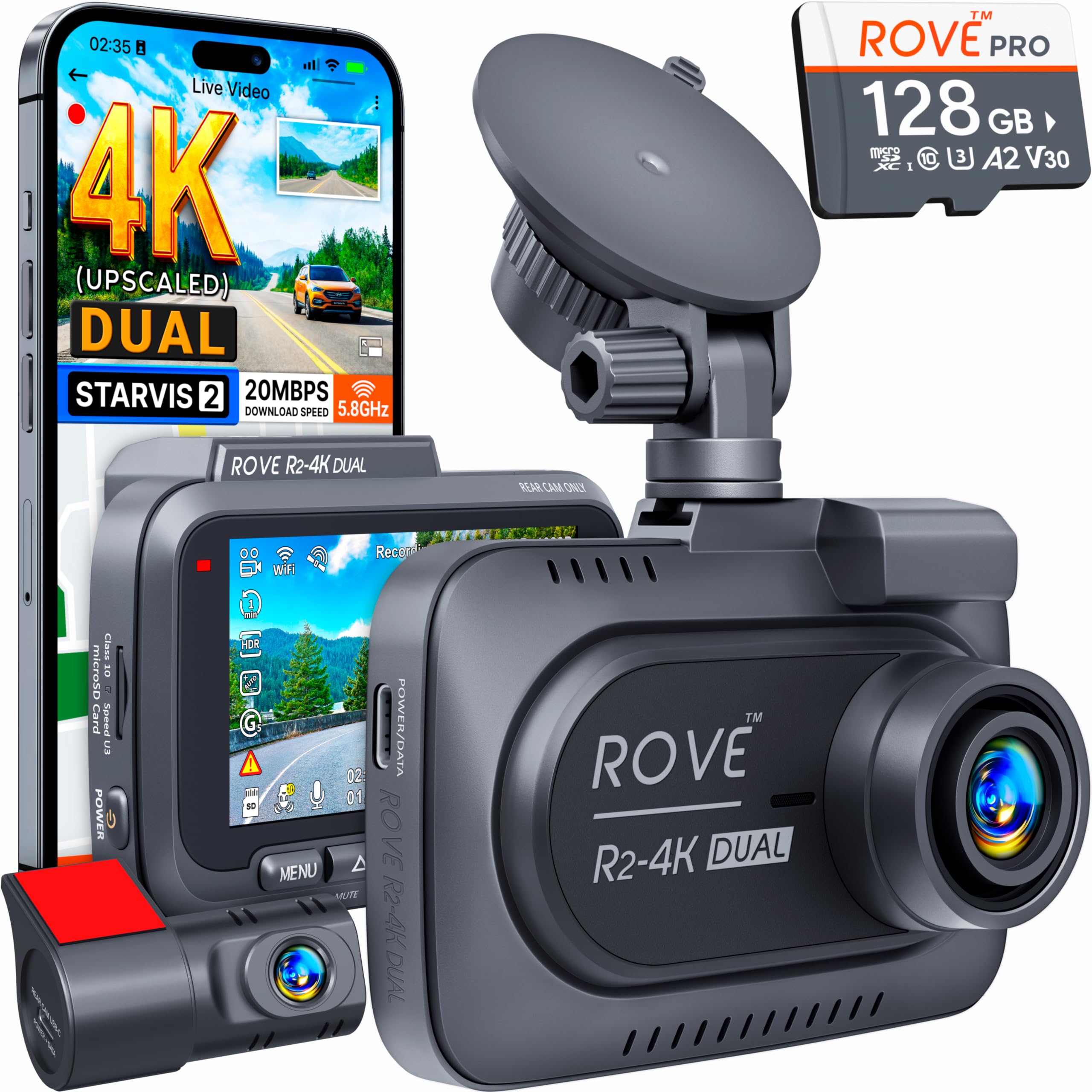
We recommend this dash cam for drivers who want stronger low-light footage from both the front and rear cameras.
Key Pros
- Clearer night footage from the STARVIS 2 sensor and HDR
- Includes a 128GB memory card and useful mounting tools
- Fast video transfers through 5.8GHz Wi-Fi
Key Cons
- Front video uses upscaling rather than native 4K
- Rear footage may look less detailed at night
- Parking mode needs a separate hardwire kit
During evening drives, we found the front camera handled streetlights, headlights, and darker roads well. Its wide F1.5 aperture helped brighten scenes, while HDR reduced some glare from oncoming traffic. Details looked sharper than standard 1080p footage, although the advertised 4K setting is upscaled from 2.5K.
The rear camera records in 1080p and gives useful coverage behind the vehicle. It works well in normal conditions, but we saw less detail in very dark areas than with the front camera. The wide viewing angles also capture more of the surrounding road.
Setup was straightforward because the package includes the cables, mounts, clips, trim tool, and 128GB microSD card. We could review clips on the 3-inch screen or transfer them to a phone through the ROVE app. The built-in GPS also adds speed and route data to recordings.
For overnight parking coverage, we would plan for the optional hardwire kit. The camera supports motion, impact, and time-lapse modes, but the included car charger cannot power those features while the vehicle is off.
Galphi 4K Dash Cam
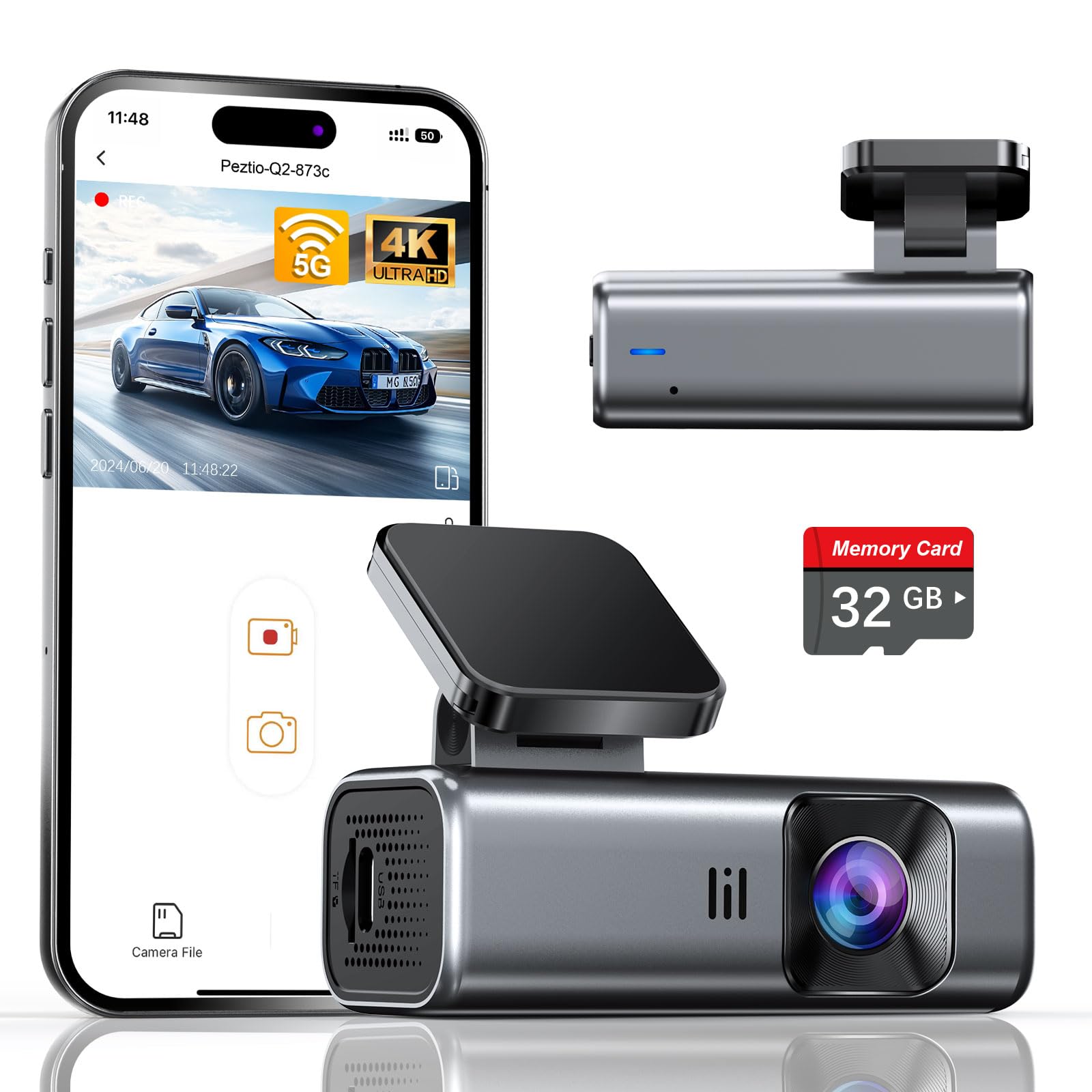
We recommend this compact front dash cam for drivers who want sharp low-light video, simple installation, and quick phone access without a built-in screen.
Key Pros
- Clear 4K video with strong night detail
- Fast 5GHz Wi-Fi transfers
- Includes a 32GB memory card
Key Cons
- No display for reviewing footage in the car
- Hardwire kit for parking mode costs extra
- The included card may fill quickly with 4K recording
We found the Galphi easy to place behind the rearview mirror, where its small body stayed out of our view. The included adhesive materials and cable clips helped keep the installation neat, even for a first setup.
At night, the wide aperture and WDR helped preserve detail from streetlights, headlights, and darker road areas. The footage looked clearest near the vehicle, while glare from bright headlights could still reduce detail, as with many compact dash cams.
The screen-free design kept the cabin less cluttered. We used the app and built-in 5GHz Wi-Fi to view and download clips, and transfers felt faster than those from many 2.4GHz cameras.
A 32GB card lets us start recording immediately, but 4K files can use storage quickly. We would choose a high-speed 128GB or 256GB card for regular driving. Parking mode also requires a separate Type-C hardwire kit, which adds to the total cost.
VIOFO A329S 4K Dash Cam
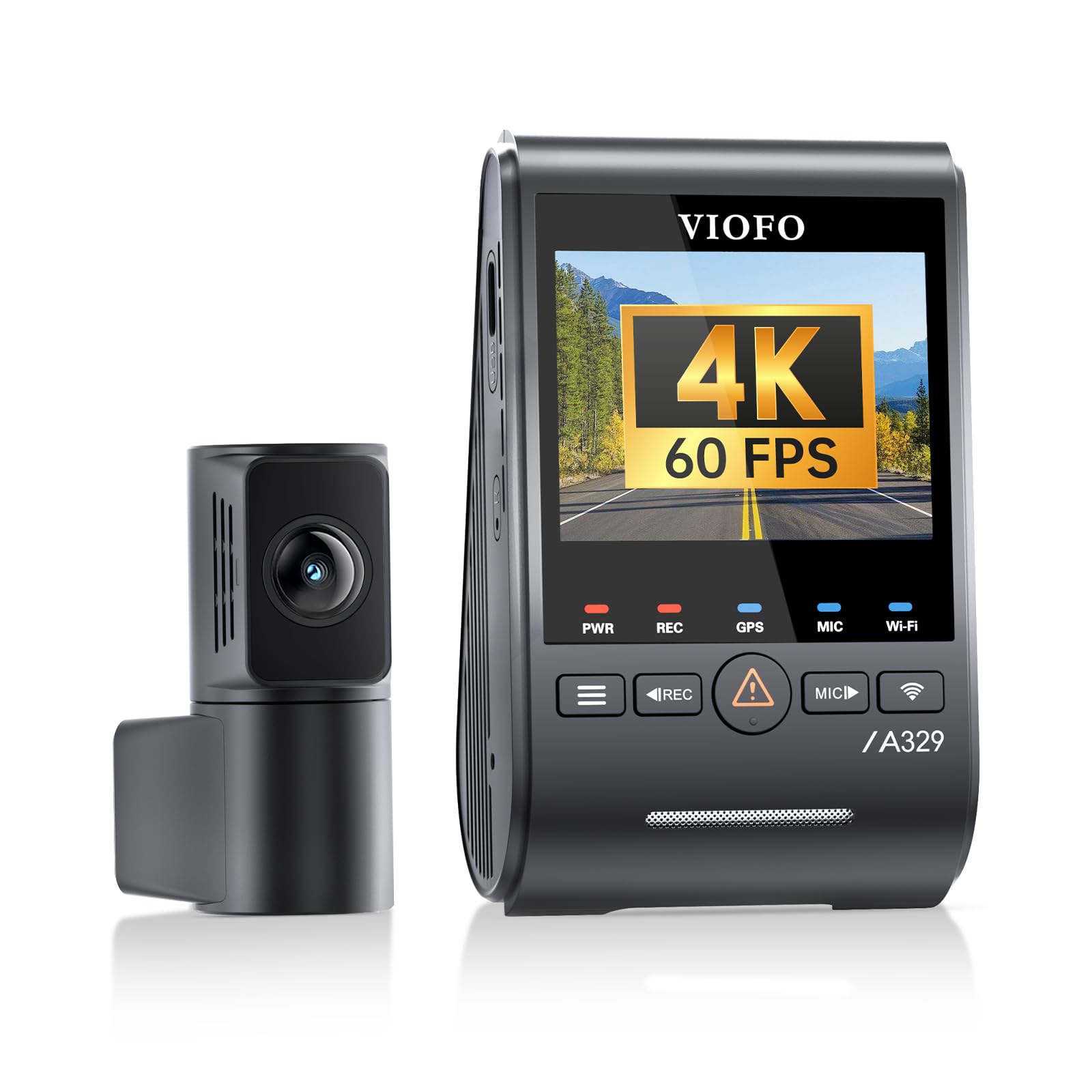
We recommend the VIOFO A329S for drivers who want sharp low-light video, strong front-and-rear coverage, and advanced recording options.
Key Pros
- Clear night footage with STARVIS 2 sensors
- Smooth 4K front recording and 2K rear video
- Fast file transfers through Wi-Fi 6
Key Cons
- Hardwire kit and storage sold separately
- Rear camera installation takes time
- Some advanced settings may feel complex
During our testing, the A329S produced clean video on dark roads and in areas with uneven lighting. The front camera showed useful detail without adding too much noise, while HDR helped balance bright headlights and darker surroundings. We found that 4K at 60 frames per second is unavailable when HDR is active, so we had to choose between smoother video and better exposure control.
The rear camera added helpful coverage at night, although its lower resolution did not match the front camera’s detail. The included CPL filter reduced windshield reflections, which made signs and nearby vehicles easier to see.
Installation felt manageable but not quick. Routing the rear cable took the most effort, and buyers who want parking mode must purchase a compatible hardwire kit. The camera supports large microSD cards and external SSD storage, giving us more room for long trips.
The VIOFO app made it simple to preview and download clips. Wi-Fi 6 moved large files quickly, while voice controls let us save footage without reaching for the camera. Overall, the A329S suits drivers who value low-light video and do not mind a more involved installation.
IIWEY N6 360° Dash Cam
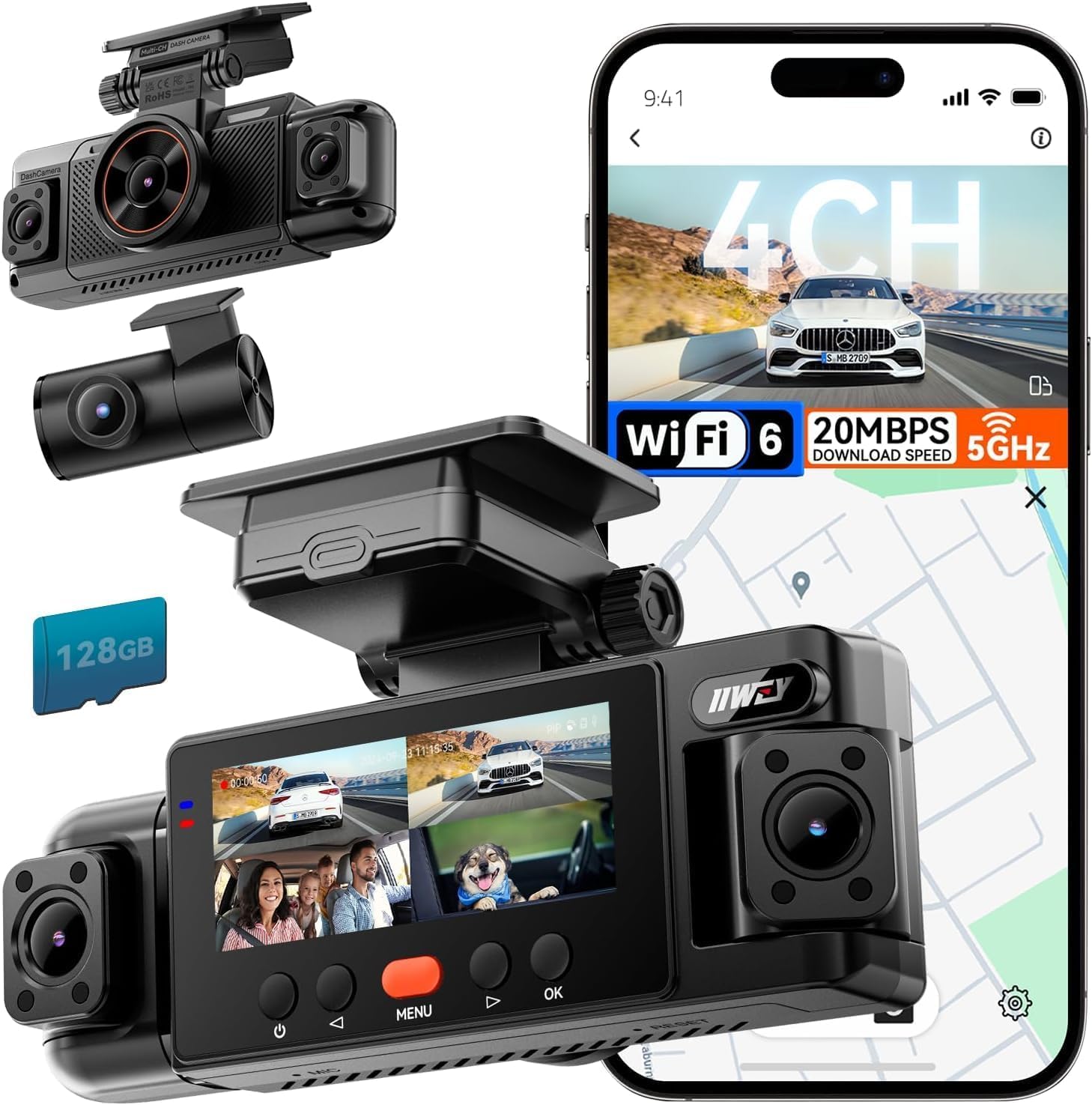
We recommend the IIWEY N6 for drivers who want broad coverage and useful low-light recording from four cameras.
Key Pros
- Four-camera coverage helps reduce side and rear blind spots
- Infrared support improves visibility in dark areas
- Includes a 128GB memory card and GPS
Key Cons
- Headlight glare can affect night footage
- Parking mode requires a separate hardwire kit
- Four cameras require more installation space and cable routing
We found the N6 useful when driving at night because its side cameras add views that standard front-and-rear models miss. The infrared support helps in darker areas, while streetlights can make plates and lane markings easier to see.
The front and rear cameras record at 1080p, and the wide viewing angles capture a large area around the vehicle. Video looked clear in normal conditions, though bright headlights created some glare in nighttime clips.
Setup was straightforward with the included mount, cables, and memory card. The free app lets us preview and download clips over Wi-Fi, while GPS adds route and speed information during playback.
The built-in parking features only work with the separately sold hardwire kit. For regular driving, the included car charger is enough, but buyers who want overnight monitoring should plan for the extra accessory and installation.
REDTIGER F7N TOUCH Dash Cam
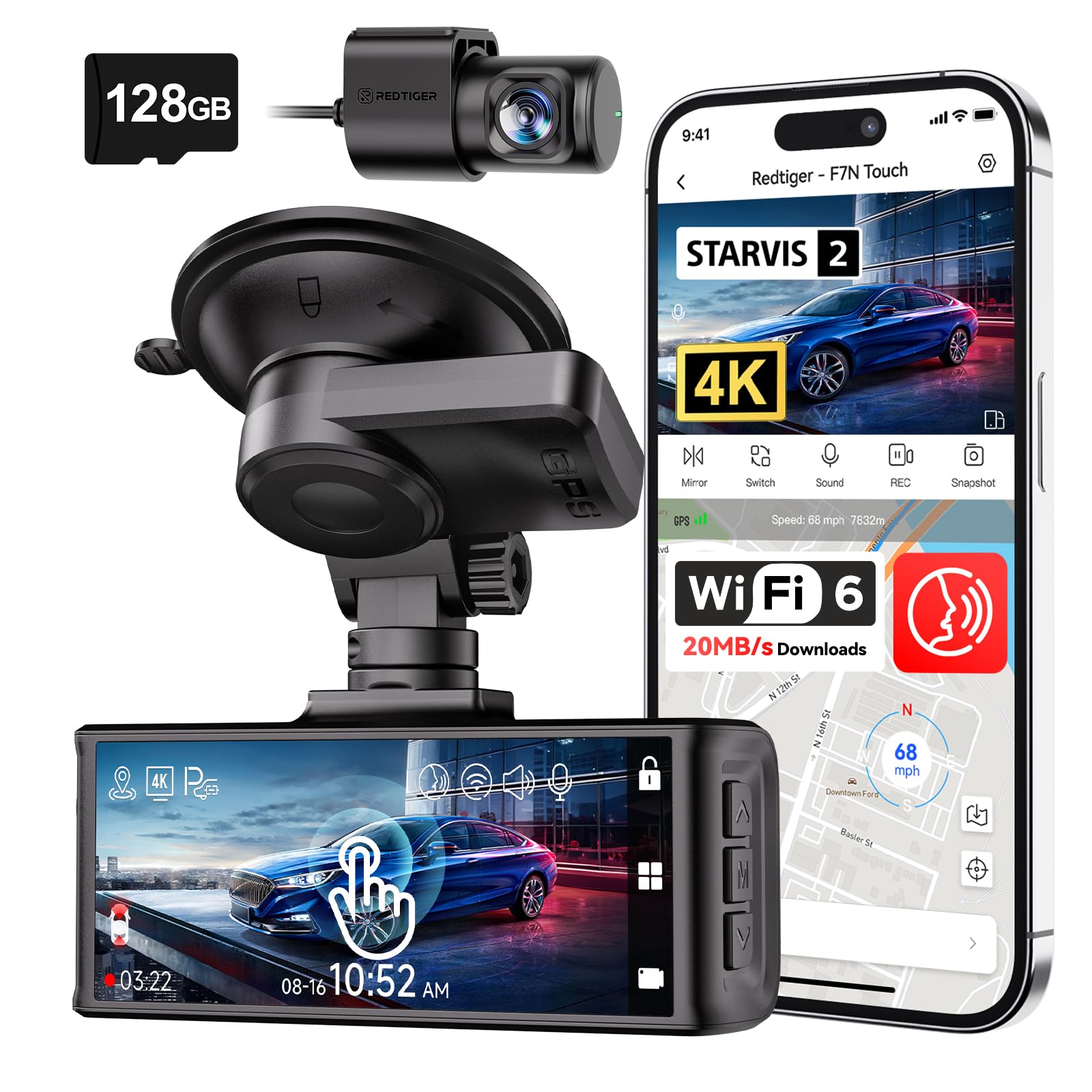
We recommend this dash cam for drivers who want clear front and rear footage in low light, plus simple controls and useful phone features.
Key Pros
- Sharp 4K front video with STARVIS 2 night imaging
- Touchscreen, voice control, GPS, and fast Wi-Fi
- Includes a 128GB memory card
Key Cons
- Rear camera records at lower 1080p resolution
- Parking mode needs a separate hardwire kit
- App setup may take some time
After testing the REDTIGER F7N TOUCH, we found that its front camera handled dark roads well. Streetlights and headlights did not overwhelm the image as easily as they can with basic dash cams. The 4K recording also helped preserve useful details, though image quality still depended on road lighting and weather.
The rear camera gave us helpful coverage behind the car, but its 1080p video looked less detailed than the front footage. The wide viewing angles covered a large area, which made it easier to capture nearby traffic and lane changes.
We liked using the touchscreen for quick actions, such as locking a clip or turning on Wi-Fi. Voice control offered another way to manage the camera without reaching toward it. The phone app made it simple to review and download clips, while built-in GPS added speed and route data.
Installation was straightforward with the suction mount and included cable tools. The long rear-camera cable gave us enough room to hide wiring in a typical car. Parking monitoring adds value, but we would need to buy the optional hardwire kit for that feature.
Overall, the F7N TOUCH combines strong low-light front video with practical controls and a generous included memory card. We would choose it for drivers who want broad coverage and easy clip access without paying for a more advanced professional system.
70mai A810 Lite 4K Dash Cam
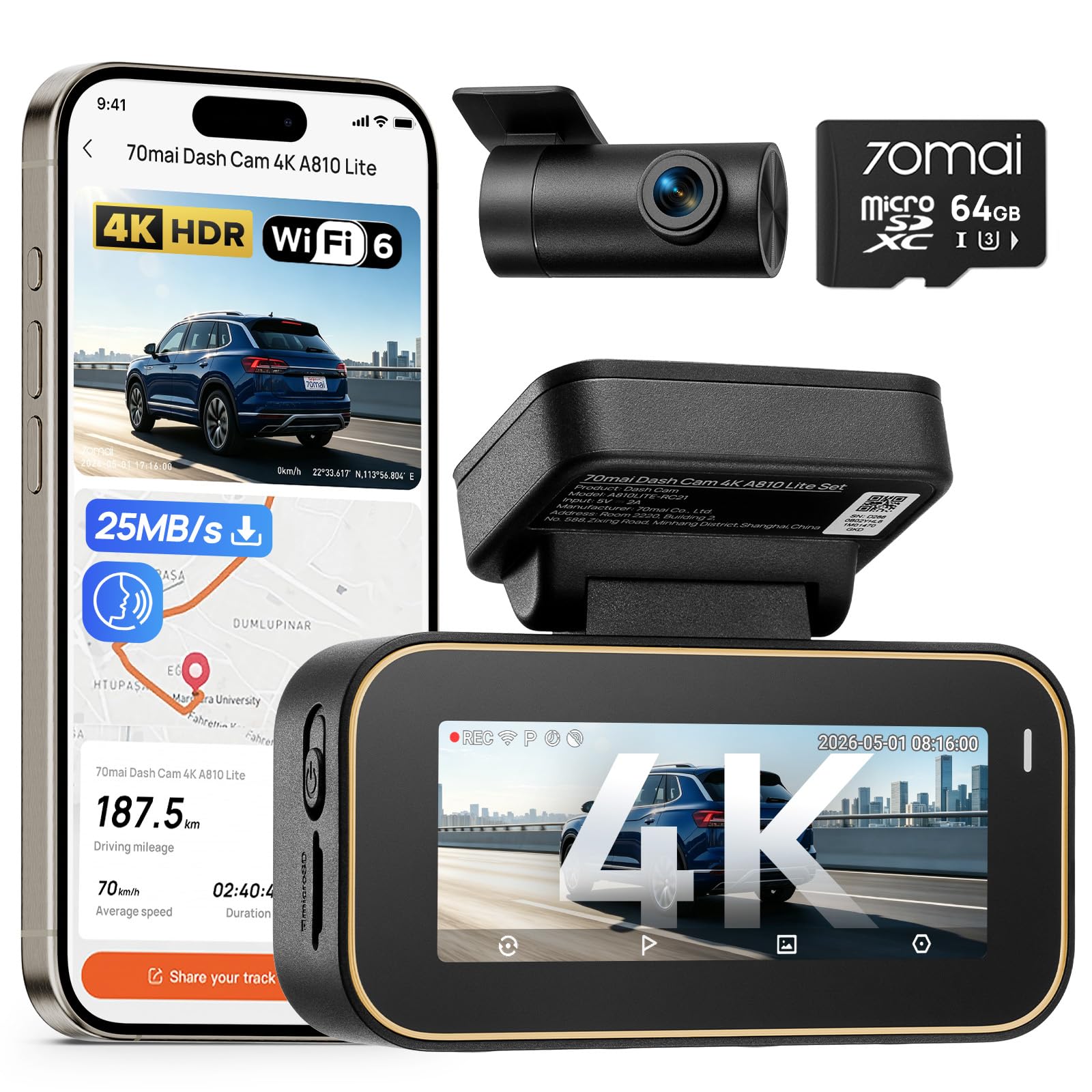
We recommend this dash cam for drivers who want strong low-light detail, 4K front video, and a 1080p rear camera in one compact kit.
Key Pros
- Clear night footage with HDR and a wide F1.55 aperture
- Sharp 4K front video and useful 1080p rear coverage
- Fast phone transfers through 5GHz Wi-Fi 6
Key Cons
- Parking mode requires a separate hardwire kit
- Rear-camera wiring takes extra time to install
- 4G remote access also needs optional hardware
In our testing, the front camera produced crisp footage after sunset. HDR helped balance dark roads and bright headlights, while the wide aperture kept more detail in dim areas. License plates remained easier to see at close range, though results still depended on speed, weather, and traffic.
The rear camera added helpful coverage without making the main unit bulky. Daytime video looked clean, and nighttime footage stayed usable. Running the rear cable took more effort than mounting the front camera, but the included clips and tools made the process manageable.
We also found the app practical for checking clips and changing settings. Wi-Fi 6 made downloads faster than older dash cams, and GPS added route and speed data to recordings. The compact body fit neatly behind the mirror and did not distract us while driving.
Drivers who want parking surveillance should plan for the added cost of a compatible hardwire kit. The same applies to 4G tracking and remote viewing, which require the optional UP05 kit. With those limits in mind, this 70mai offers a balanced mix of low-light performance, coverage, and convenient controls.
XYGCACO D65 4-Channel Dash Cam
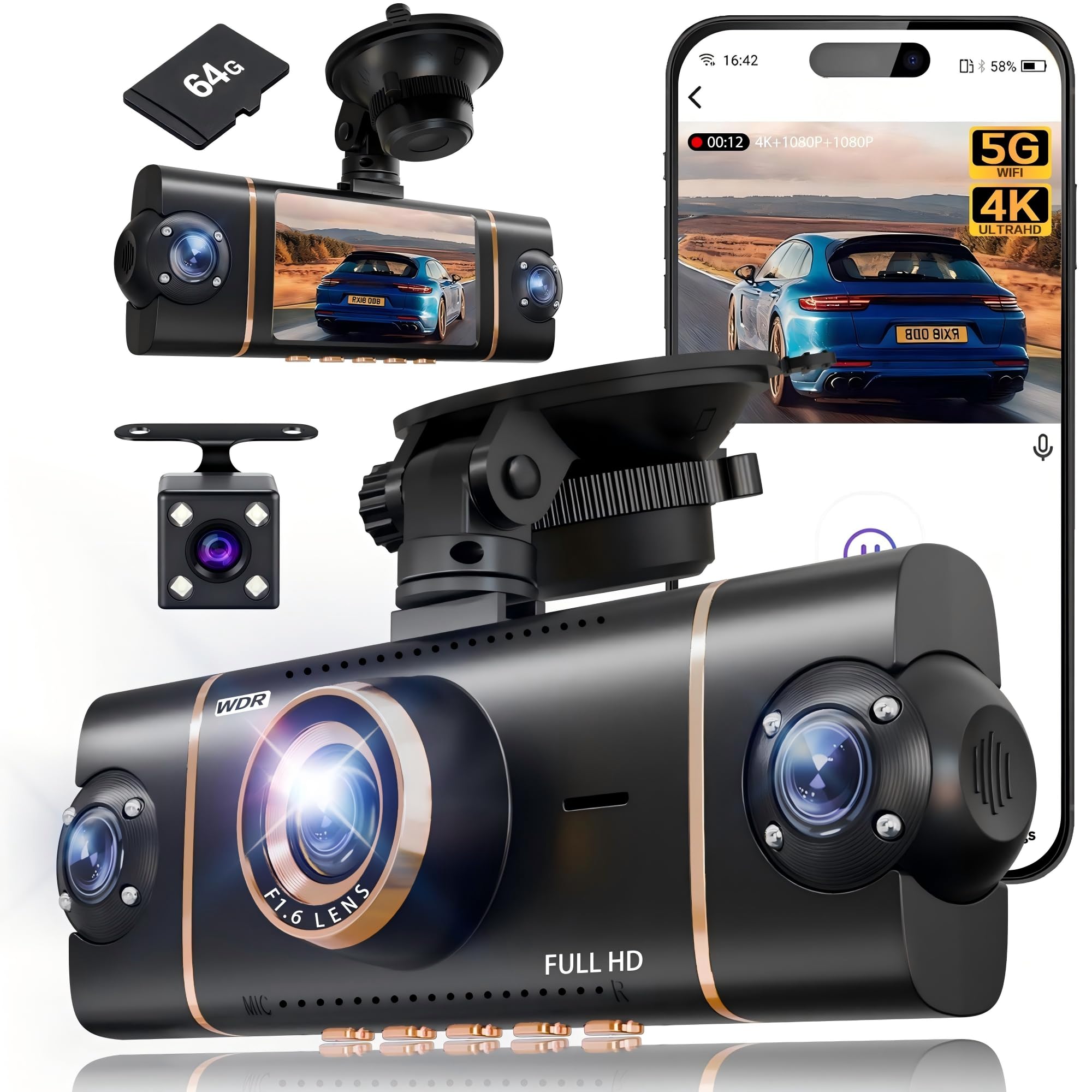
We recommend this dash cam for drivers who want wide coverage and useful low-light features in one system.
Key Pros
- Four-camera coverage records the front, rear, and sides.
- The wide-aperture lens and WDR help balance dark roads and bright headlights.
- Wi-Fi, GPS, and a 64GB card simplify video access and storage.
Key Cons
- Side cameras may require careful adjustment during installation.
- Four video channels can fill the memory card quickly.
- Parking mode requires a separate hardwire kit.
We found the four-camera setup useful in busy streets and tight parking areas. The front camera records in 4K, while the rear and side cameras add coverage that a standard front-facing model cannot provide.
At night, the F1.6 lens, infrared lights, and WDR help produce a more balanced view when headlights enter the frame. Bright lights can still affect fine detail, but the exposure control reduces the harsh contrast we often see with basic dash cams.
The 3-inch screen lets us check all four views at once. We also used the Viidure app to review clips and check GPS data without removing the memory card. The included 64GB card makes setup easier, though frequent driving may call for a larger compatible card.
Installation was simple with the suction mount and included cable tool. Parking mode adds useful coverage after we leave the car, but the separate hardwire kit adds to the total cost. Overall, this model fits drivers who value full vehicle coverage more than a compact, simple installation.
VIOFO A119M Pro 4K Dash Cam
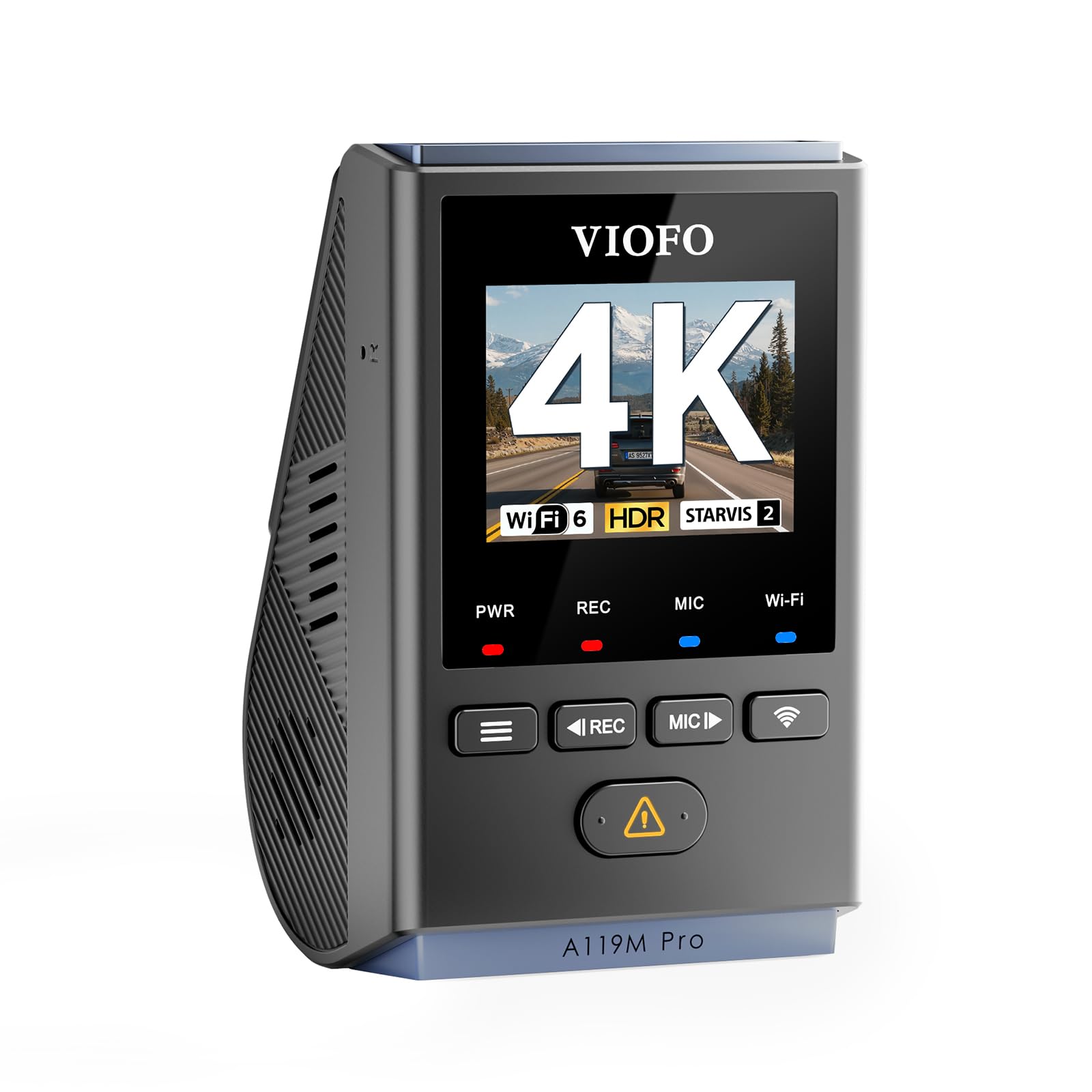
We recommend this compact dash cam for drivers who want sharp low-light video, HDR, and reliable GPS tracking without a bulky camera.
Key Pros
- Clear 4K video with the STARVIS 2 sensor
- HDR, night vision, and CPL filter reduce glare
- Compact design with Wi-Fi 6 and GPS
Key Cons
- MicroSD card and hardwire kit cost extra
- Small 1.5-inch screen limits on-camera viewing
- Front-camera coverage may not suit drivers seeking multiple angles
During nighttime drives, we found the A119M Pro produced detailed footage with controlled noise and useful contrast. HDR helped balance bright headlights with darker areas, while the CPL filter reduced reflections from the windshield.
The low-profile body fit neatly behind the rearview mirror and did not block much of our view. Its 130-degree angle covered the road well, though it focused only on the front.
We could transfer clips through the VIOFO app without removing the card. GPS added location and speed data, and voice controls made it easier to lock footage while keeping our hands on the wheel.
The camera supports buffered parking recording, but we would need the separate HK6 hardwire kit for that feature. It also requires a microSD card, so buyers should include both items in the total cost.
REDTIGER F17 4K 3-Channel Dash Cam

We recommend this dash cam for drivers who want strong low-light coverage from the front, rear, and cabin cameras.
Key Pros
- Sharp front footage with the STARVIS 2 sensor
- Three-camera coverage for added protection
- Fast video transfers through 5GHz Wi-Fi
Key Cons
- Rear footage may look dark in some conditions
- Parking monitoring requires a separate hardwire kit
- The adhesive mount can be difficult to reposition
The front camera captured clear video on dim streets, with good exposure and less visible noise than many basic dash cams. License plates remained readable when lighting and traffic conditions were reasonable. The cabin camera also performed well at night because its infrared lights helped illuminate the interior.
We liked having front, rear, and inside views in one system. This setup suits rideshare drivers, families, and anyone who wants more complete coverage. We could also switch off the cabin camera to use higher-resolution front recording with the rear camera.
The phone app made it easy to review and download clips. Its Wi-Fi connection worked well, although we needed to connect directly to the camera rather than use regular internet access. The built-in GPS also added route and location data to recordings.
Rear footage may appear too dark in certain scenes, especially at night or when the camera angle is not ideal. Installation remains simple, but the rear cable takes time to hide neatly. Parking modes add useful protection, though they require the separately sold hardwire kit.
Vantrue N4S 3-Channel Dash Cam

We recommend the Vantrue N4S for drivers who need clear low-light coverage inside, ahead of, and behind the vehicle.
Key Pros
- Clear nighttime video from all three cameras
- Interior camera helps cover rideshare trips
- Fast phone access through 5GHz Wi-Fi
Key Cons
- Requires careful rear-camera wiring
- Parking mode needs added installation work
- Some owners report heat-related shutdowns
We found the N4S useful on dark roads, in garages, and during evening drives. Its low-light video keeps road details visible, while HDR helps reduce the effect of bright headlights against darker areas. License plates may still blur when cars move quickly, but the image remains useful for most driving events.
The three-camera setup covers the road, cabin, and rear of the vehicle. We especially value the interior view for rideshare work, while the rotating rear camera gives us the option to watch passengers, cargo, or traffic behind the car.
Installation feels straightforward with the magnetic mount and included cable clips. However, we would take extra care when connecting the rear-camera cable, since a loose connection can cause problems. The unit also needs a separate microSD card, and parking features may require additional wiring.
The Vantrue app lets us view and download clips without removing the card. That makes it easier to share an incident, though the camera’s small screen remains useful for quick checks. Its 18-month warranty after registration adds some extra support for long-term use.
Buying Guide
We should focus on image quality, sensor performance, and useful low-light features rather than simply choosing the highest resolution. A good dash cam should capture clear plates, road signs, and lane markings in dim conditions.
| Feature | What to look for |
|---|---|
| Night image quality | Clear footage with limited noise, glare, and blur |
| Low-light sensor | A sensor designed to record detail in dark scenes |
| HDR | Balanced exposure when headlights and dark areas appear together |
| Frame rate | Smooth video that reduces motion blur |
| Wide dynamic range | Detail in both bright and shadowed areas |
| Parking mode | Recording while the vehicle remains parked |
| Storage support | Compatibility with a reliable, high-endurance memory card |
| Temperature range | Operation suited to the climate where we drive |
We should check sample footage recorded at night, not just daytime clips. Look for readable details under streetlights, smooth exposure changes, and limited reflection from headlights or wet roads.
A front camera may meet basic needs, while a front-and-rear setup gives us broader coverage. We should also consider GPS, impact detection, app access, and a polarizing filter if reflections often reduce visibility.
Installation affects performance. We should place the camera behind the rear-view mirror, keep the lens clean, and confirm that the mount stays stable. A dependable power connection also helps prevent gaps in recording.
Editor’s Choice
We choose the Viofo A229 Pro as our top dash cam for low-light driving. Its 4K front camera captures clear detail at night, while HDR helps balance bright headlights and dark roads.
The camera uses a Sony STARVIS 2 sensor, which performs well in dim conditions. We also value its polarizing filter, which can reduce glare and reflections from the windshield.
| Feature | Details |
|---|---|
| Front video | 4K resolution |
| Low-light sensor | Sony STARVIS 2 |
| HDR | Front and rear cameras |
| GPS | Built in |
| Parking mode | Available with hardwire kit |
We recommend adding the rear camera for wider coverage. The optional hardwire kit enables parking mode, but professional installation can help prevent battery drain or wiring problems.
The A229 Pro costs more than many basic models, but we find its image quality, reliable controls, and useful safety features justify the higher price. It suits drivers who want strong night performance without moving to a professional camera system.
Conclusion
When we choose a dash cam for low-light driving, we should focus on clear footage, strong night exposure, and reliable recording. A wide dynamic range sensor can help balance headlights, dark roads, and streetlights in the same scene.
We should also check practical features before buying:
- High-resolution video: 2K or 4K can capture more detail.
- Night vision: Infrared support may help in very dark areas.
- HDR or WDR: These features can reduce glare and improve contrast.
- Parking mode: Useful when the car stays parked in low-light areas.
- Large storage support: Higher video quality uses more memory.
No dash cam can make every dark scene clear. We should install the camera behind the rearview mirror, keep the lens clean, and use a fast memory card that matches the manufacturer’s requirements. Regularly checking saved footage also helps us confirm that the camera works as expected.
FAQs
What makes a dash cam good in low light?
We look for a large image sensor, a wide aperture, and strong night recording. HDR can help balance bright headlights with dark roads, while infrared features may improve visibility inside the car.
Is 4K necessary for night driving?
We do not consider 4K essential. A well-tuned 1440p camera can record clearer night footage than a poorly tuned 4K model, especially when it uses HDR and a quality sensor.
Should we choose a dash cam with HDR?
Yes. HDR helps the camera manage sharp differences between dark areas, streetlights, and headlights. We still check sample footage because HDR performance varies between models.
Do we need a polarizing filter?
A polarizing filter can reduce reflections from the windshield and dashboard. It may improve contrast, but it can also make footage darker, so we should adjust it carefully for night use.
Can a dash cam record when the car is parked?
Many models support parking mode, but we usually need a hardwire kit or an external battery. We should choose a camera with low-voltage protection to help prevent vehicle battery drain.
What storage card should we use?
We should use a high-endurance microSD card that matches the camera’s required capacity and speed. Regular cards may wear out faster because dash cams record continuously.

I’m Alex Rahman, a car enthusiast and automotive writer focused on practical solutions, car tools, and real-world driving advice. I share simple and honest content to help everyday drivers make better decisions.
