What Is Bidirectional Control on a Scan Tool?
Quick Answer
Bidirectional control on a scan tool allows the scanner to send commands to supported vehicle control modules, not just read information from them. Also called active testing, this feature lets you operate certain components, such as cooling fans, fuel pumps, solenoids, or door locks, to help identify faults. Available tests depend on the vehicle, control module, and scanner.
A diagnostic trouble code can point you toward a problem, but it does not always tell you which component has failed. For example, a cooling fan fault could involve the fan motor, wiring, power supply, relay, or control system. Reading a code alone may not distinguish between these possibilities.
Bidirectional control gives a compatible scan tool another way to investigate. Instead of only observing what the vehicle reports, you can request a supported action and check how the system responds.
What Does Bidirectional Control Mean on a Scan Tool?
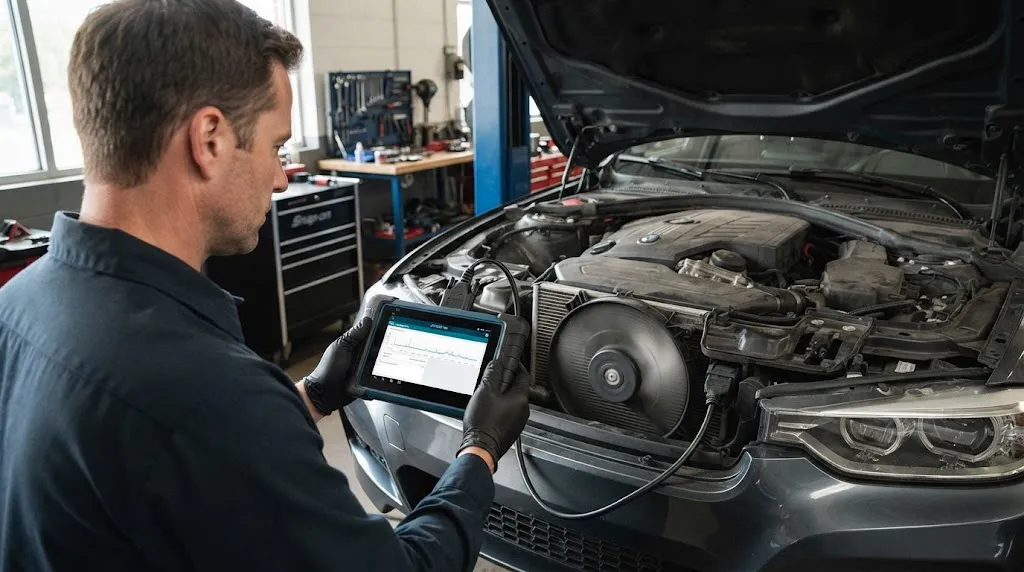
Bidirectional control means a diagnostic scan tool can both receive information from a vehicle and send supported commands to its electronic control modules. Those commands can request specific components to operate or initiate certain system tests.
For example, a compatible scanner might let you command a radiator cooling fan to switch on, activate a fuel pump, operate a door lock, or cycle a solenoid. The scanner sends the request through the vehicle’s diagnostic communication system, and the relevant module responds if the function is supported and its operating conditions are satisfied.
This feature is commonly called active testing, actuator testing, or output control. The U.S. Environmental Protection Agency’s scan-tool evaluation materials also distinguish bidirectional control from basic functions such as reading diagnostic trouble codes.
The key benefit is that you can test a system’s response more directly rather than relying entirely on symptoms or stored codes. However, a successful command does not automatically prove that the complete system is working correctly.
How Does Bidirectional Control Work?
A bidirectional test involves communication between the scan tool and a compatible electronic control unit (ECU). Depending on the vehicle, the module may control the engine, transmission, anti-lock braking system, body electronics, or another system.
- Connect the scan tool. Plug the scanner into the vehicle’s diagnostic connector and establish communication using the appropriate software and interface.
- Select the vehicle and control module. Choose the correct make, model, year, and available system. Some scanners identify the vehicle automatically.
- Open the active-test menu. Select a supported component or output, such as a cooling fan, fuel pump, or solenoid.
- Issue the command. Follow the scanner’s instructions to request the component to operate. Some tests allow you to select an operating state or specified value.
- Observe the response. Check whether the component operates and review relevant live data or other test results.
- Interpret the evidence. Compare the commanded action with the physical response, measured values, and any related fault codes before deciding what to test next.
The exact menu names and available commands differ between scan tools and vehicles. Some tests require the ignition to be on, the engine to be running or stopped, a particular transmission position, or other prerequisites.
What Can You Test With Bidirectional Control?
Available active tests vary by vehicle and scanner. Common examples include the following:
- Cooling fans: Request fan operation to help investigate a fan that does not switch on when expected.
- Fuel pumps: Command supported pump circuits to operate while checking power, control, and fuel-delivery evidence.
- Solenoids and valves: Activate supported electronic valves or solenoids to investigate control problems.
- Door locks and windows: Operate compatible body-system components to help isolate faults involving switches, wiring, actuators, or control modules.
- ABS components: Some tools support specific anti-lock braking system actuator tests, including pump or valve operation under prescribed conditions.
- Air-conditioning controls: Certain scanners can request operation of supported components, such as an A/C clutch.
- Other manufacturer-specific outputs: Depending on coverage, a scanner may support wipers, lights, relays, or additional actuators.
These are examples, not a guarantee of coverage. A scanner may support active tests on one vehicle but offer fewer functions on another. Some operations also require a dedicated service procedure rather than a simple on/off command.
How Is Bidirectional Control Different From Reading Codes?
Code reading, live-data monitoring, and bidirectional control provide different types of diagnostic evidence. They work best when used together.
| Function | What it does | Main limitation |
|---|---|---|
| Code reading | Retrieves stored or reported diagnostic faults. | A code may identify a circuit or condition without proving which part failed. |
| Live data | Displays supported sensor readings, system states, and operating values. | Observing data does not necessarily test an actuator directly. |
| Bidirectional control | Requests a supported action from a control module. | A command or response alone does not prove the entire system is healthy. |
For example, a cooling fan code may direct attention toward the fan circuit. Live data may show the requested fan state or engine temperature, while an active test can request the fan to operate. Checking the actual fan movement and electrical circuit helps determine what the results mean.
For additional background on standard diagnostic information, the California Bureau of Automotive Repair explains common OBD-II data and diagnostic trouble code concepts in its On-Board Diagnostic Test Reference.
Can Bidirectional Control Tell You Which Part Is Bad?
It can help narrow down the cause, but it cannot always identify a failed part by itself. An active test shows how a supported system responds to a requested command. The meaning of that response depends on the component, circuit, operating conditions, and other diagnostic evidence.
Suppose a cooling fan does not run when commanded. Possible explanations include:
- A failed fan motor.
- A blown fuse or faulty relay, where applicable.
- Damaged wiring or a poor electrical connection.
- A power supply or ground problem.
- A control module that cannot deliver the required output.
- A test that is unsupported or blocked by unmet operating conditions.
If the fan runs during the test, that is useful evidence, but it does not establish that the fan operates at every speed or under all normal driving conditions. An intermittent fault may also remain undetected.
Use the test result to decide what to check next. Depending on the system, this may mean measuring voltage, checking wiring continuity, reviewing live data, inspecting connectors, or following the manufacturer’s diagnostic procedure.
Key Insight
Bidirectional control tests a commanded response. A failed response identifies a diagnostic direction, not automatically a failed component. Confirm the result with circuit measurements and the correct service procedure.
Does Every OBD2 Scanner Support Bidirectional Control?
No. Many basic OBD2 code readers focus on engine-related diagnostic trouble codes, emissions information, and supported live data. Bidirectional control generally requires a scanner with the appropriate active-test capability and vehicle-specific software coverage.
Even when a scanner advertises bidirectional control, that does not mean it can command every component on every vehicle. Coverage may differ by:
- Make, model, and model year: The supported diagnostic functions depend on the vehicle’s electronics and communication systems.
- Control module: A tool may offer active tests for the engine module but not for the ABS or body-control module.
- Specific test: A scanner may support one actuator test but not another operation on the same vehicle.
- Software and access requirements: Updates, manufacturer-specific coverage, security access, or additional subscriptions may affect what is available.
Before relying on a scanner for a particular repair, check its official compatibility information for the exact vehicle and required active test. A general claim such as “full-system diagnostics” should not be treated as proof that every output can be controlled.
What Should You Check Before Running an Active Test?
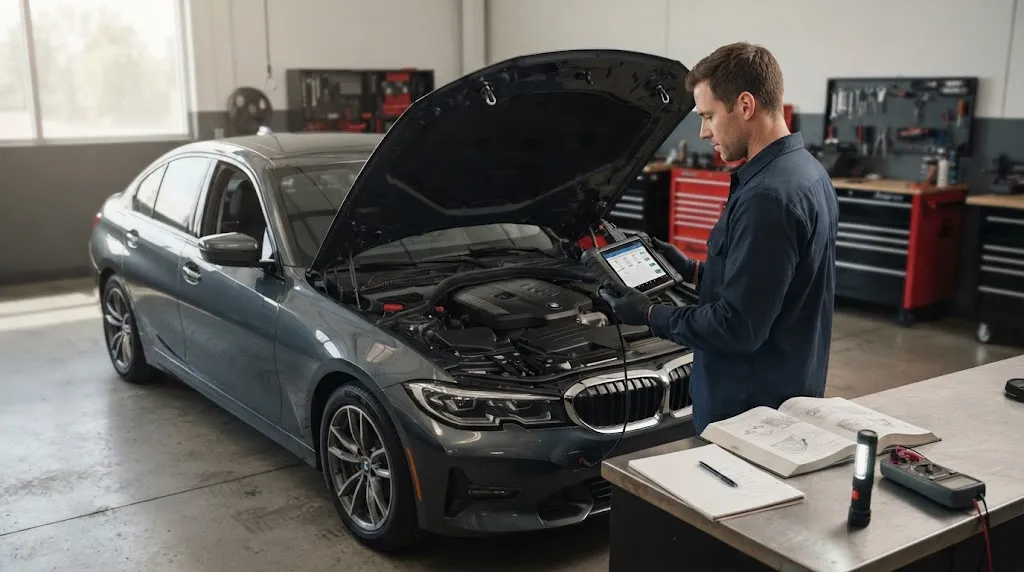
Bidirectional commands can operate real vehicle components, so preparation matters. Follow the vehicle manufacturer’s instructions and the scan tool’s on-screen warnings.
- Identify the vehicle correctly. Confirm the make, model, year, engine, and relevant module.
- Read existing codes first. Record relevant diagnostic trouble codes and available data before running tests or clearing information.
- Check the test prerequisites. Verify ignition, engine, transmission, temperature, and other conditions specified for the procedure.
- Make the vehicle safe. Keep people and loose objects away from moving parts. Secure the vehicle as required, and never perform a test in an unsafe environment.
- Use only supported commands. Follow the manufacturer’s procedure, including limits on duration, operating conditions, or repeated activation.
- Record the result. Note the commanded action, the observed response, and any changes in live data or fault codes.
Do not use an active test as a substitute for a required mechanical or electrical inspection. Some procedures can operate pumps, motors, valves, or braking-system components unexpectedly. If a test involves high-pressure fuel, moving machinery, or safety-critical systems, use the appropriate service information and equipment.
When Is Bidirectional Control Worth Using?
Bidirectional control is especially useful when a fault requires you to determine whether a component responds to a direct request. It can help reduce guesswork and guide the next diagnostic step.
- Use it when: You need to check a supported actuator, investigate an output-circuit problem, or compare a commanded action with the actual response.
- Combine it with other tests when: The component responds inconsistently, the fault is intermittent, or electrical and mechanical causes remain possible.
- Choose another diagnostic approach when: The required test is unsupported, the fault needs a physical inspection, or the manufacturer’s procedure calls for dedicated measuring equipment.
For someone who only needs to read an occasional engine code, bidirectional control may not be necessary. For deeper troubleshooting across supported vehicle systems, it can be a valuable additional capability.
Related Tool: Bidirectional OBD2 Scan Tool
If you need to test components directly, look for a scanner that explicitly supports active tests for your vehicle’s make, model, year, and target system. Confirm the exact functions before purchasing rather than relying on the bidirectional label alone.
Check Bidirectional Scan Tools on Amazon
As an Amazon Associate, we earn from qualifying purchases.
Frequently Asked Questions
1. What is another name for bidirectional control?
Bidirectional control is also called active testing, actuator testing, or output control. These terms describe functions that let a compatible scan tool send supported commands to a vehicle control module.
2. Can a Bluetooth OBD2 scanner perform bidirectional tests?
Yes, some Bluetooth scanners support active tests, but Bluetooth connectivity alone does not provide that capability. Check the scanner’s supported functions and vehicle coverage before buying or attempting a test.
3. Can bidirectional control test an ABS pump?
Some scan tools can command supported ABS pumps or valves through specific service tests. Availability and required safety procedures vary by vehicle, so confirm compatibility and follow the manufacturer’s instructions.
4. Does bidirectional control clear diagnostic trouble codes?
Bidirectional control and code clearing are separate functions. A scanner may support both, but sending an active-test command does not automatically erase a stored trouble code or prove that its underlying cause has been repaired.
5. Why might an active test fail to run?
The test may be unsupported, the wrong module may be selected, required operating conditions may not be met, or access to the module may be restricted. Check the scanner’s instructions, vehicle compatibility, and any displayed error messages before proceeding.
6. Is bidirectional control necessary for basic car diagnostics?
No. Basic code reading and live-data functions can help with many routine diagnostic tasks. Bidirectional control becomes useful when you need to command a supported component and observe its response as part of a more focused diagnosis.
Conclusion
Bidirectional control adds an important capability to an automotive scan tool: the ability to command supported vehicle components instead of only reading diagnostic information. Active tests can help investigate problems involving fans, pumps, solenoids, door locks, and other electronically controlled systems.
Its real value comes from interpreting the response correctly. A component that operates during a commanded test may still have an intermittent fault, while a component that fails to respond may have a wiring, power, access, or control problem rather than a failed motor. Combine active testing with trouble codes, live data, electrical measurements, and the appropriate service procedures to reach a more reliable diagnosis.

I’m Alex Rahman, a car enthusiast and automotive writer focused on practical solutions, car tools, and real-world driving advice. I share simple and honest content to help everyday drivers make better decisions.
