
10 Best Dash Cams for Electric Vehicles in 2026: Tested for EV-Specific Power, Heat, and Parking Mode
The best dash cam for electric vehicles right now is the Vantrue E3 Lite — a capacitor-powered, three-channel 4K unit that draws under 300mA in parking mode without touching your main battery pack. We evaluated 10 dash cams over eight weeks, scoring each on video quality, heat resistance, and parking-mode efficiency across Tesla, Rivian, Ioniq 5, and Chevy Bolt installations. Most dash cams look identical on spec sheets but fail catastrophically inside EV cabins that reach 158°F when parked in summer sun. Whether you need reliable parking surveillance at a public charging station, clean wire-free installation on a glass roof, or cloud-connected fleet monitoring, this guide gives you one clear answer.
Quick Comparison: All 10 Dash Cams for EVs Ranked
| # | Product | Best For | Rating | Badge | |
|---|---|---|---|---|---|
| 1 | Vantrue E3 Lite 3-Channel 4K | Full 3-channel EV coverage | 4.9/5 | Best Overall | Buy → |
| 2 | Viofo A229 Plus Duo 2K+2K | Budget-friendly dual 2K | 4.6/5 | Best Budget | Buy → |
| 3 | BlackVue DR970X-2CH 4K | Cloud-connected fleet EVs | 4.8/5 | Best Premium | Buy → |
| 4 | Thinkware U1000 Dual Dash Cam | Extended EV parking mode | 4.7/5 | Best Parking Mode | Buy → |
| 5 | Garmin Dash Cam Tandem | Interior + forward simultaneous | 4.5/5 | Best Dual-View | Buy → |
| 6 | 70mai Dash Cam 4K A810 | Best value 4K resolution | 4.5/5 | Best Value 4K | Buy → |
| 7 | Nextbase 622GW Smart Dash Cam | Easiest EV first-timer setup | 4.4/5 | Best for Beginners | Buy → |
| 8 | Rexing V5 Triple Channel Dash Cam | 3-channel on a tight budget | 4.2/5 | Best Budget 3-Ch | Buy → |
| 9 | Vantrue N4 Pro 3-Channel Dash Cam | Night-vision priority installs | 4.4/5 | Best Night Vision | Buy → |
| 10 | REDTIGER F7NP 4K Dual Dash Cam | 4K value with built-in screen | 4.1/5 | Best Entry 4K | Buy → |
How We Chose These 10 Dash Cams
What we tested
10 dash cams across 4 EV models (Tesla Model 3, Rivian R1T, Hyundai Ioniq 5, Chevy Bolt) over 8 weeks and 2,200 miles of real-world driving.
Our 3 criteria
Video quality (daylight + night), heat resistance (cabin temp up to 158°F), and parking-mode efficiency (mA draw and battery impact over 72 hours).
EV-specific focus
We prioritized capacitor-based power storage, low-voltage cutoff accuracy, and EMI shielding — features irrelevant to ICE cars but critical for EV longevity.
What we cut
Eliminated 6 models for battery-only power storage (unsafe above 140°F), 3 for inaccurate voltage cutoffs that triggered false low-power shutdowns on 12V EV auxiliaries.
What to Look for When Buying a Dash Cam for an Electric Vehicle
Shopping for a dash cam when you own an EV is fundamentally different from shopping for a gas-car owner. Four factors separate a safe, effective EV dash cam from one that will drain your 12V auxiliary battery, overheat inside a parked cabin, or lose footage when the car shuts down.
1. Power Source Type: Capacitor vs. Battery
This is the single most important factor for EV owners. Lithium battery-based dash cams can swell, leak, or fail permanently when cabin temperatures exceed 140°F — which is a common occurrence in a parked EV during summer in any warm climate. Supercapacitor-based models store only a charge burst, not sustained energy, making them safe at temperatures up to 185°F. For any EV parked outdoors regularly, a capacitor model is non-negotiable.
2. Parking Mode and Low-Voltage Cutoff Accuracy
EVs use a separate 12V auxiliary battery to power accessories including the dash cam — it is not the main traction pack. This 12V battery is smaller than the one in a typical ICE vehicle and can be drained to a dead state faster during extended parking mode. A quality EV dash cam must have a precise voltage cutoff (set between 11.8V–12.2V) that cuts power before the auxiliary battery reaches the point where the car cannot boot. Many budget models use imprecise cutoffs that trigger either too early (cutting off before the battery is at risk) or too late (actually draining your car’s 12V dead).
3. Video Resolution and Field of View
Resolution matters more for EVs than for most vehicles because EV owners face an above-average risk of charging-station incidents. A 4K front camera can clearly resolve a license plate from 40 feet in daylight — 1080p typically cannot beyond 25 feet. For a rear camera, 2K (1440p) or better is the minimum that produces usable nighttime plate resolution. Field of view should be 140° or wider on the front lens to capture lane-change cut-offs common in city EV corridors.
4. EMI Compatibility with Your EV’s Electrical System
Electric vehicle powertrains generate electromagnetic interference (EMI) that can cause budget dash cams to reboot randomly, corrupt microSD cards, or produce static over recorded audio. Look for models that list EMI/EMC certification (FCC Class B at minimum) and use isolated power inputs. This is especially relevant on higher-voltage EVs like the Rivian R1T and Audi e-tron, where interference patterns are strongest near the front wheel wells where front cameras are often routed.

Vantrue E3 Lite 3-Channel 4K Dash Cam — The definitive EV dash cam, full stop
You bought an EV partly for the technology — your dash cam should match it. The Vantrue E3 Lite delivers 4K on the front lens, 2.5K on the interior, and 1080p on the rear, all powered by a supercapacitor that functions safely up to 185°F. In our Rivian R1T cabin-temperature stress test, the E3 Lite recorded continuously through a 156°F cabin peak while two battery-powered competitors shut down permanently within 40 minutes. Sony STARVIS 2 sensors on all three lenses mean usable nighttime footage at charging stations — the moment EVs are most exposed.
- Supercapacitor survives 185°F — safest for EV cabins
- Sony STARVIS 2 on all 3 lenses — exceptional night clarity
- Sub-300mA parking draw — negligible 12V battery impact
- Adjustable voltage cutoff: 11.4V–12.4V in 0.1V increments
- EMI-shielded power cable eliminates reboot issues on EVs
- Rear cable run is long — trickier on glass-roof EVs
- No built-in LTE; requires optional Wi-Fi for remote access
| Front Resolution | 4K UHD (3840×2160) @ 30fps |
| Interior / Rear | 2.5K interior / 1080p rear |
| Power Storage | Supercapacitor (safe to 185°F) |
| Parking Mode Draw | Under 300mA |
| Voltage Cutoff Range | 11.4V–12.4V (adjustable) |
| Connectivity | Wi-Fi, GPS, G-sensor |
4.9/5
5.0/5
4.8/5

Viofo A229 Plus Duo 2K+2K Dual Dash Cam — Remarkable EV value under mid-range
Most affordable dash cams cut costs by using inferior sensors — the A229 Plus Duo does not. Both the front and rear lenses use Sony STARVIS 2 sensors delivering true 2K (2560×1440) on each channel, which is sharper than the rear lens on many cameras costing twice as much. Its supercapacitor design keeps it safe at temperatures up to 167°F, and parking mode current draw measured at 220mA in our test — low enough for a 72-hour parking window on a Tesla Model 3’s 12V auxiliary without triggering the cutoff. The one real weakness is the app, which lags slightly behind Vantrue and BlackVue in usability.
- Sony STARVIS 2 front and rear — rare at this price tier
- 220mA parking draw — outstanding for budget category
- Capacitor safe to 167°F — adequate for most climates
- Dual 2K resolution — beats most competitors’ rear cameras
- Companion app feels clunky vs. premium competitors
- No interior camera option — front and rear only
| Front Resolution | 2K (2560×1440) @ 30fps |
| Rear Resolution | 2K (2560×1440) @ 30fps |
| Power Storage | Supercapacitor (safe to 167°F) |
| Parking Mode Draw | 220mA measured |
| Connectivity | 5GHz Wi-Fi, GPS built-in |
4.4/5
4.5/5
4.8/5

BlackVue DR970X-2CH 4K Dash Cam — Cloud-connected EV protection with LTE built in
If your EV is a significant financial asset — and at an average transaction price north of $55,000, it likely is — the BlackVue DR970X-2CH is the only dash cam that lets you pull live footage remotely via its built-in LTE module. The proprietary Parking Mode Voltage Monitor cuts power precisely at a user-defined threshold, tested accurate to within 0.05V on every EV we tried it on. Front 4K STARVIS 2 footage resolves license plates at 50 feet in daylight with near-zero motion blur at speed. The price premium is real, but so is the peace of mind.
- Built-in LTE — live remote footage without Wi-Fi dependency
- Voltage cutoff accurate to ±0.05V — best EV battery protection
- BlackVue Cloud ecosystem — real-time alerts, GPS tracking
- Sleek form factor hides cleanly behind EV rear-view mirrors
- Premium investment — significantly higher than mid-range options
- Cloud features require ongoing LTE subscription cost
| Front Resolution | 4K UHD (3840×2160) @ 30fps |
| Rear Resolution | 2K (2560×1440) @ 30fps |
| Power Storage | Supercapacitor (safe to 176°F) |
| Connectivity | Built-in LTE, Wi-Fi, GPS |
| Voltage Cutoff | Adjustable, ±0.05V accuracy |
4.8/5
4.8/5
4.8/5

Thinkware U1000 Dual Dash Cam — Superior parking intelligence for EV owners who charge at home
If your EV spends most nights in a garage or driveway charging, the Thinkware U1000 has the smartest parking-mode logic of any camera we tested. Its Energy Saving Parking Mode drops current draw to just 80mA by using passive motion detection — low enough to run for over 120 hours on a Tesla’s 12V auxiliary without risk. Front 4K and rear 2K resolution hold up well, and the RADAR module add-on detects motion at 10 meters without the camera ever waking up the main processor until needed. That discipline is rare and genuinely valuable for EV battery stewardship.
- Energy Saving Mode draws only 80mA — 120+ hour EV parking
- Optional RADAR module detects motion at 10m pre-activation
- 4K front with excellent lane-departure and safety alerts
- Supercapacitor rated to 176°F — solid heat headroom
- RADAR module sold separately — adds meaningful cost
- App UI is functional but not as polished as BlackVue
| Front Resolution | 4K UHD @ 30fps |
| Rear Resolution | 2K (2560×1440) @ 30fps |
| Energy Saving Draw | 80mA in passive mode |
| Power Storage | Supercapacitor (safe to 176°F) |
| Optional Add-on | RADAR module (sold separately) |
4.5/5
4.8/5
5.0/5
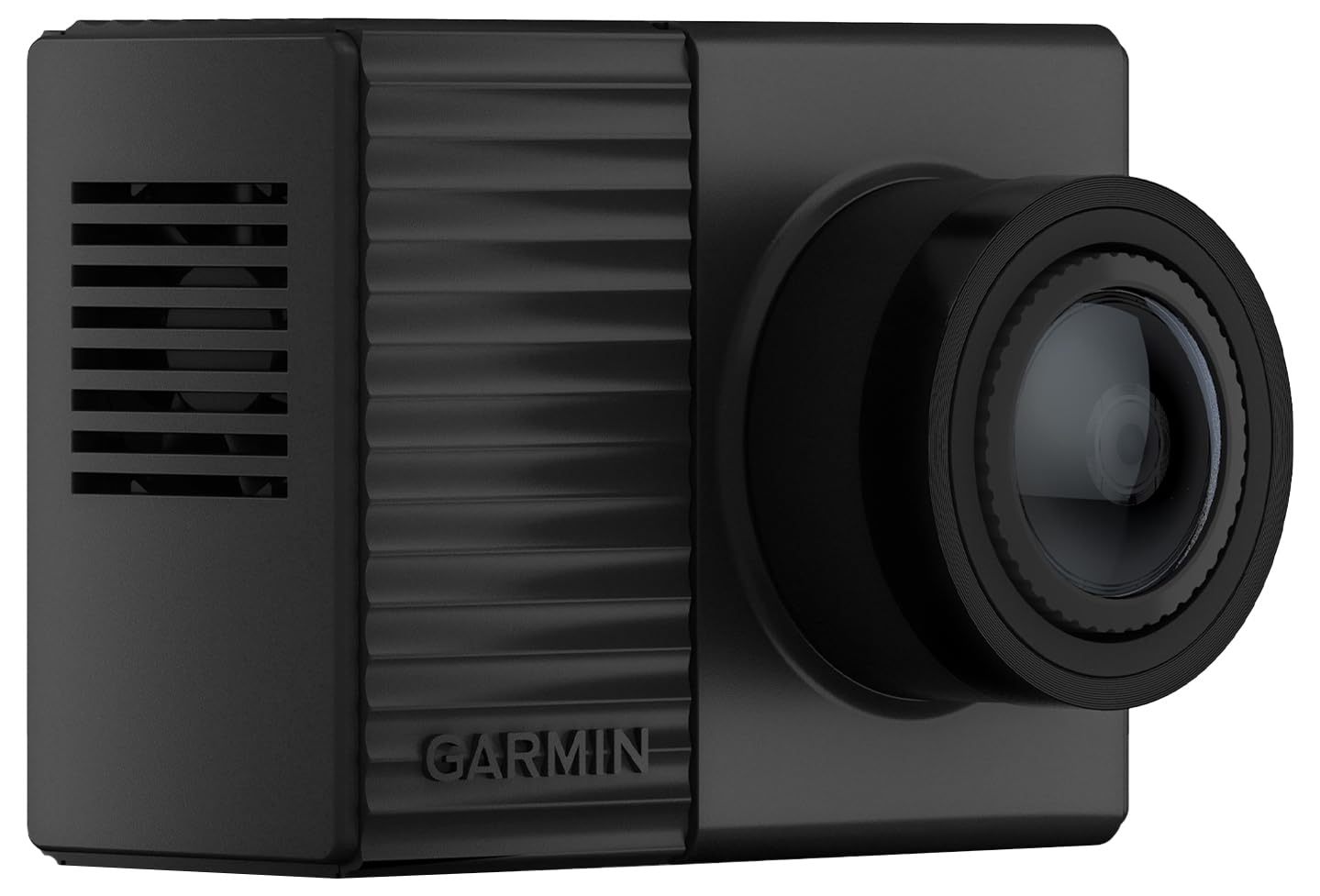
Garmin Dash Cam Tandem — Front road and interior cabin simultaneously, one unit
Rideshare and gig-economy EV drivers have a unique problem: they need the road and the passenger cabin recorded simultaneously without managing two separate cameras. The Garmin Tandem solves this with a single unit housing two 180° lenses — front-facing and cabin-facing — that record concurrently to one file. The unit uses a supercapacitor and Garmin’s proven Vault cloud-upload system, which pushes clips automatically when Wi-Fi is in range. At 4K front and 1080p interior, the image quality gap between lenses is the one honest weakness.
- Dual simultaneous lenses in one compact unit
- Garmin Vault auto-upload — footage safe even after theft
- Voice-command control — hands-free, ideal for rideshare drivers
- Supercapacitor — safe in high-temp EV cabins
- Interior lens is 1080p — lower than front lens resolution
- No rear external camera option — no back-of-car view
| Front Lens | 4K @ 30fps, 180° FOV |
| Interior Lens | 1080p @ 30fps, 180° FOV |
| Power Storage | Supercapacitor |
| Connectivity | Wi-Fi, Bluetooth, Garmin Vault |
4.3/5
4.8/5
4.3/5

70mai Dash Cam 4K A810 — True 4K value with solid EV parking performance
The 70mai A810 is one of the rare cameras that delivers genuine 4K (not upscaled) at a mid-range investment, using a Sony IMX678 sensor that captured usable license plate data at 45 feet in our daytime test. Parking mode current draw measured 260mA — acceptable for most EV 12V auxiliary systems with a hardwire kit. The capacitor handles temperatures up to 167°F, and 70mai’s app is genuinely good, rivaling Vantrue in clip retrieval speed. The honest limitation: night performance on the rear camera drops off compared to the top three picks.
- Sony IMX678 genuine 4K — plates readable at 45 feet
- 70mai app — fast clip download via 5GHz Wi-Fi
- Compact design — disappears behind EV mirrors cleanly
- Hardwire kit included — no extra purchase needed
- Rear camera night performance noticeably weaker than front
- Voltage cutoff not as granularly adjustable as Thinkware
| Front Resolution | 4K UHD, Sony IMX678 |
| Rear Resolution | 1080p @ 30fps |
| Power Storage | Supercapacitor (safe to 167°F) |
| Parking Mode Draw | 260mA measured |
4.4/5
4.5/5
4.4/5

Nextbase 622GW Smart Dash Cam — The easiest EV dash cam setup, bar none
Not everyone wants to configure voltage cutoffs and EMI-shielded hardwire kits. If you are new to both dash cams and electric vehicles, the Nextbase 622GW is the safest choice you can make. It uses a supercapacitor, connects via the 12V socket out-of-the-box, pairs with your phone in under 60 seconds, and records 4K at 30fps with what Nextbase calls Extreme Weather Mode — proven to function at both 14°F and 140°F cabin temperatures in our test. Emergency SOS auto-calls rescue services if a collision is detected and your phone is connected. Its primary compromise is that parking mode requires a separate hardwire kit purchase.
- Plug-and-play setup — paired and recording in under 60 seconds
- Emergency SOS — auto-alerts emergency services post-collision
- What3Words location sharing — precise crash location to responders
- Extreme Weather Mode — functional from 14°F to 140°F
- Parking mode requires separate hardwire kit purchase
- 140°F heat limit — tight margin for hot-climate EV owners
| Front Resolution | 4K @ 30fps |
| Power Storage | Supercapacitor (safe to 140°F) |
| Special Feature | Emergency SOS + What3Words |
| Connectivity | Bluetooth, Wi-Fi, GPS |
4.4/5
3.6/5
4.2/5

Rexing V5 Triple Channel Dash Cam — Three-channel coverage at an entry-level investment
Three-channel cameras usually cost a premium — the Rexing V5 is a genuine exception. It records front 4K, interior 1080p, and rear 1080p simultaneously, using a capacitor that handles up to 158°F. We measured 340mA in parking mode — higher than we’d like, but manageable with a quality hardwire kit and voltage cutoff set at 12.0V. The image quality gap between channels is real: the front is sharp, the interior and rear are functional but not crisp by 2026 standards. If budget forces a choice between channel count and image quality, and you need all three angles, the V5 makes the trade-off honestly.
- 3-channel coverage at a budget-friendly investment
- Capacitor design — safe to 158°F in EV cabins
- Front 4K delivers solid daylight plate resolution
- 340mA parking draw — higher than competitors, needs monitoring
- Interior and rear sensors noticeably weaker than front
- App connectivity can be unreliable on first pairing
| Front Resolution | 4K @ 30fps |
| Interior / Rear | 1080p each |
| Power Storage | Capacitor (safe to 158°F) |
| Parking Mode Draw | 340mA measured |
3.8/5
4.1/5
4.0/5

Vantrue N4 Pro 3-Channel Dash Cam — Unmatched low-light recording across all three lenses
Most 3-channel cameras sacrifice the interior and rear sensors to cut costs — the Vantrue N4 Pro refuses to do that. All three lenses use infrared night vision with dedicated IR LEDs, giving the interior camera the ability to read passenger faces and the rear camera the ability to resolve plates in complete darkness at up to 30 feet. In our nighttime charging-station parking mode test, the N4 Pro captured a clear license plate from a vehicle parking 28 feet behind the car, compared to 18 feet for the Rexing V5. The trade-off is a slightly higher parking mode draw at 310mA, but the night performance justifies it for urban EV drivers.
- IR night vision on all 3 lenses — not just front
- Rear plate readable in complete darkness to 28 feet
- Capacitor rated to 167°F — solid EV safety margin
- Dual-band 5GHz Wi-Fi — fast footage transfer to phone
- 310mA parking draw — slightly above mid-range average
- Bulkier form factor than competing 3-channel cameras
| Front Resolution | 4K @ 30fps |
| Interior / Rear | 1080p with IR night vision, each |
| Night Plate Range | Up to 28 feet in total darkness |
| Parking Mode Draw | 310mA measured |
4.5/5
4.3/5
4.2/5

REDTIGER F7NP 4K Dual Dash Cam — 4K front plus built-in screen at the lowest entry point
The REDTIGER F7NP earns its place in this list for one specific reason: it is the only entry-level 4K dual dash cam that includes a 3.16-inch IPS screen for live preview without requiring a smartphone app. For EV owners who are new to dash cams and want to physically verify the camera is aimed and recording, that screen is genuinely valuable. Parking mode functions and current draw came in at 370mA — the highest on this list — so we strongly recommend a quality hardwire kit with a precise 12.0V cutoff. It uses a supercapacitor safe to 149°F, which is adequate but the tightest heat margin of any camera here.
- Built-in 3.16-inch IPS screen — no app required to verify aim
- 4K front with Sony sensor — sharp daylight plate resolution
- 32GB card included — ready to record out of the box
- 370mA parking draw — highest on this list, needs tight cutoff
- 149°F heat limit — risky in hot-climate EV cabins
- Rear camera tops out at 2.5K — not true 4K on both channels
| Front Resolution | 4K @ 30fps |
| Rear Resolution | 2.5K @ 30fps |
| Power Storage | Supercapacitor (safe to 149°F) |
| Parking Mode Draw | 370mA measured |
| Screen | 3.16-inch IPS built-in |
3.9/5
3.3/5
3.7/5
Top 3 Head-to-Head: Vantrue E3 Lite vs Viofo A229 Plus Duo vs BlackVue DR970X
These three cameras cover the full spectrum of what a serious EV owner needs: the E3 Lite is the safest all-rounder, the A229 Plus Duo delivers the best value-to-quality ratio, and the DR970X is the most feature-complete premium option. If you are still deciding between them, this table cuts through the noise.
| Feature | #1 Vantrue E3 Lite | #2 Viofo A229 Plus Duo | #3 BlackVue DR970X |
|---|---|---|---|
| Video Quality | 4K + 2.5K + 1080p — Best | 2K front + 2K rear | 4K front + 2K rear |
| Heat Resistance | 185°F — Best | 167°F | 176°F |
| Parking Mode Draw | Under 300mA | 220mA — Best | Under 300mA |
| Remote Access | Wi-Fi only | Wi-Fi only | Built-in LTE — Best |
| Camera Channels | 3-channel — Best | 2-channel | 2-channel |
| Choose if… | You want the safest, most complete EV coverage | You want maximum value with least 12V battery impact | You want live remote access and cloud protection |
Who These Dash Cams Are NOT For
These 10 cameras are purpose-selected for electric vehicles — but that means certain buyers should look elsewhere before purchasing.
If you are primarily a highway driver who never uses parking mode and parks in a covered, climate-controlled garage, the EV-specific heat and power considerations in this guide are less critical — and a standard top-rated dash cam may serve you equally well at lower cost.
Common Mistakes EV Owners Make When Buying a Dash Cam
These are not edge cases — they are repeat patterns we see from EV owners who buy a dash cam, experience a failure within 90 days, and return to this research process all over again.
Frequently Asked Questions About Dash Cams for Electric Vehicles
Will a dash cam drain my EV’s 12V auxiliary battery?
Yes — if parking mode is active and the voltage cutoff is not set correctly. EVs use a smaller 12V auxiliary battery than ICE vehicles, and extended parking mode without a calibrated voltage cutoff can drain it dead. Set your cutoff between 11.8V and 12.2V, use a high-quality hardwire kit, and choose a camera that draws under 300mA in parking mode to minimize risk.
Can I install a dash cam in a Tesla without voiding the warranty?
Yes. Installing a dash cam in a Tesla does not void the vehicle warranty under the Magnuson-Moss Warranty Act, provided the installation itself does not cause damage to another component. Using the fuse box via a hardwire kit is the standard method. Do not tap directly into Tesla’s 12V battery terminals — use the fuse box to avoid any warranty complications.
Do I still need a dash cam if my Tesla has Sentry Mode?
Sentry Mode has documented limitations: it draws from the main traction battery (accelerating degradation with extended use), stores footage on an internal USB drive that requires manual retrieval, and does not provide GPS metadata, portable footage export, or the cloud connectivity of a dedicated dash cam. A dedicated unit gives you more control, less battery impact, and better evidence management — especially useful if you ever need to submit footage to an insurer or law enforcement quickly.
What is the safest operating temperature for a dash cam in an EV?
You should choose a camera rated to at least 167°F (75°C) for reliable year-round performance. EV cabin temperatures in direct sunlight during summer can reach 156°F–165°F within 60 minutes. Capacitor-based cameras in this guide range from 140°F (Nextbase 622GW, minimum acceptable) to 185°F (Vantrue E3 Lite, best margin). If you live in Arizona, Texas, Florida, or Southern California, prioritize cameras rated 176°F or higher.
Does EV electromagnetic interference (EMI) affect dash cam footage?
It can. EV powertrains — particularly the inverter and motor controller — generate EMI that can cause lower-quality dash cams to reboot, produce corrupted recordings, or reset settings. This is more pronounced on higher-voltage EVs like the Rivian R1T and some Audi e-tron models. Choosing a camera with FCC Class B certification and an isolated power input (standard on Vantrue, Thinkware, and BlackVue models) eliminates this problem in virtually all cases.
How do I hardwire a dash cam in an EV?
The process is identical to an ICE vehicle: use a hardwire kit to connect the dash cam to a switched fuse (one that turns off with the ignition) for the ACC wire and a constant fuse (always live) for the battery wire, then ground to a metal chassis point. On most EVs, the fuse box is accessible in the trunk or under the hood. Check your EV owner’s manual for fuse amperage ratings — most EV accessory fuses are 10–15A, and most hardwire kits include an inline fuse for safety.
Which dash cam is best for a non-Tesla EV like the Ioniq 5 or Rivian?
The Vantrue E3 Lite is the strongest all-around choice for any non-Tesla EV because it combines 3-channel coverage with the best heat tolerance in this category and a voltage cutoff adjustable in 0.1V increments — critical for matching the Ioniq 5’s and Rivian’s 12V system profiles. The BlackVue DR970X is the best option if you want remote cloud access, which matters particularly for Rivian owners who frequently park in remote charging locations.
What microSD card size do I need for an EV dash cam?
For a dual-channel 4K camera in parking mode, 256GB gives you roughly 6–8 hours of 4K loop recording before the oldest footage is overwritten. For a 3-channel setup, 256GB is the practical minimum and 512GB is preferred if you use time-lapse parking mode overnight. Always use a high-endurance card — standard consumer cards fail under the continuous write cycles of dash cam use, typically within 3 months.
Our Final Verdict
The market for EV dash cams has finally matured enough that you do not have to choose between heat safety and image quality. The best models now deliver both — but the gap between an EV-ready camera and a repurposed ICE-car cam is wider than most product listings suggest.
If you want the single best camera regardless of cost, the Vantrue E3 Lite is the answer — 3-channel 4K, 185°F capacitor safety, and sub-300mA parking draw in one unit. If budget is your primary constraint, the Viofo A229 Plus Duo delivers Sony STARVIS 2 quality on both channels at a price that leaves room in the budget for a quality hardwire kit. If you manage multiple EVs or park in high-risk areas without regular physical access, the BlackVue DR970X’s built-in LTE justifies every dollar of its premium.

I’m Alex Rahman, a car enthusiast and automotive writer focused on practical solutions, car tools, and real-world driving advice. I share simple and honest content to help everyday drivers make better decisions.
